In the realm of industrial automation and smart systems, proximity and ultrasonic sensors stand as pivotal components, enabling machines to perceive their environment without physical contact. This article delves into the operational principles, key distinctions, and practical applications of these two fundamental sensor types, providing essential knowledge for electrical engineers and system designers.
Understanding Proximity Sensors
Proximity sensors are devices that detect the presence or absence of an object within a defined range, typically without any physical contact. They operate based on changes in an electromagnetic field or beam. The most common types include:
Inductive Proximity Sensors: These sensors generate an oscillating electromagnetic field. When a metallic object enters this field, it induces eddy currents within the object, causing a change in the oscillation amplitude. This change is detected by the sensor's circuitry, triggering an output signal. They are ideal for detecting ferrous and non-ferrous metals and are widely used in machine automation, position sensing, and metal detection applications.
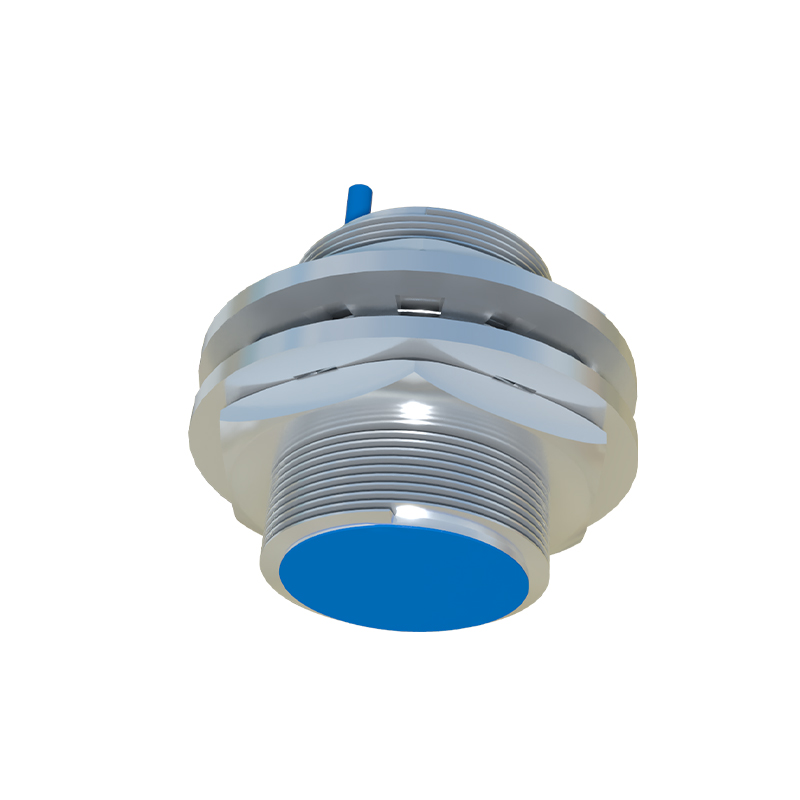
Capacitive Proximity Sensors: These sensors can detect both metallic and non-metallic objects (like plastic, wood, or liquids) by sensing changes in capacitance. The sensor forms one plate of a capacitor, with the target object acting as the other plate. As the object approaches, the capacitance increases, and once it reaches a threshold, the sensor switches. They are commonly used in level detection for liquids and granular materials, and in applications involving non-metallic objects.
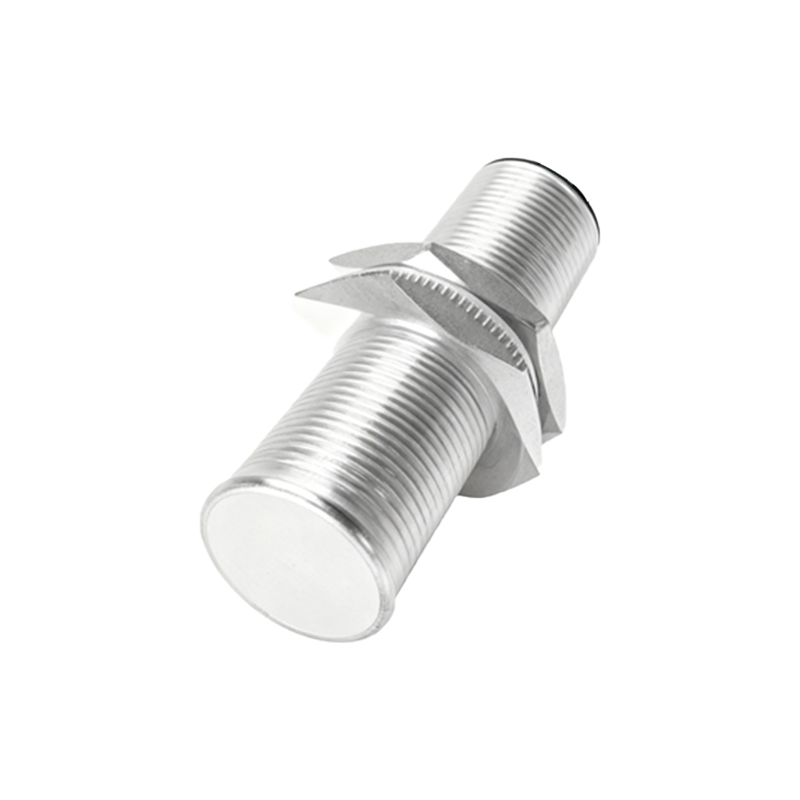
Photoelectric Sensors: While often categorized separately, photoelectric sensors function as proximity devices. They emit a beam of light (visible, infrared, or laser) and detect its reflection or interruption. The through-beam, retro-reflective, and diffuse-reflective modes offer various range and application possibilities for detecting objects of almost any material.
Understanding Ultrasonic Sensors
Ultrasonic sensors measure distance or detect objects using sound waves at frequencies above the human hearing range (typically 20 kHz to several hundred kHz). They operate on the principle of echolocation, similar to sonar. The sensor emits a burst of ultrasonic pulses and then listens for the echo reflected from a target object. By calculating the time interval between the emission and reception of the sound wave (Time-of-Flight or ToF), the sensor can precisely determine the distance to the object.
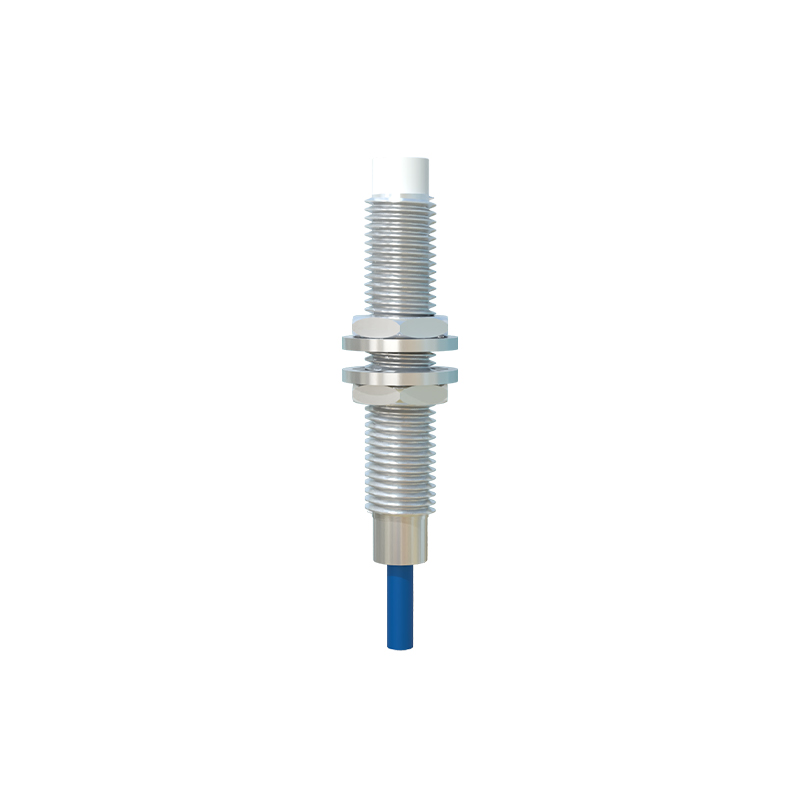
Key advantages of ultrasonic sensors include their ability to detect objects regardless of color, transparency, or material (though soft materials may absorb sound), and their effectiveness in challenging environments with dust, smoke, or vapors where optical sensors might fail. Common applications include:
Liquid level measurement in tanks.
Object detection and distance measurement on AGVs (Automated Guided Vehicles) and robotics.
Presence detection in packaging and material handling.
Parking assistance systems in vehicles.
Key Differences and Selection Criteria
Choosing between a proximity sensor and an ultrasonic sensor depends heavily on the application requirements:
1. Target Material: Inductive sensors are limited to metals; capacitive sensors handle a broader range but can be influenced by environmental factors; ultrasonic sensors are largely material-agnostic.
2. Detection Range: Standard inductive and capacitive sensors have relatively short ranges (a few millimeters to tens of millimeters). Ultrasonic sensors offer much longer ranges, from a few centimeters up to several meters.
3. Environmental Factors: Ultrasonic sensors perform well in dirty or foggy conditions but can be affected by temperature gradients and wind. Inductive sensors are robust in harsh industrial environments with chips, oil, and coolant. Acoustic noise does not interfere with ultrasonic sensors as they operate at much higher frequencies.
4. Precision and Response Time: Proximity sensors (especially inductive) offer very fast switching speeds and high repeatability for close-range detection. Ultrasonic sensors provide precise distance measurement but may have slower response times due to the ToF calculation.
5. Output: Proximity sensors typically provide a simple digital (on/off) output when an object is within range. Ultrasonic sensors often provide analog (e.g., 4-20 mA, 0-10V) or digital outputs corresponding to the measured distance, enabling continuous monitoring.
Integration and Wiring Considerations
For electrical engineers, integration is straightforward. Most modern sensors feature standard PNP or NPN transistor outputs (for DC models) or relay contacts, compatible with PLCs (Programmable Logic Controllers) and control systems. Key wiring considerations include:
Ensuring correct voltage supply (12-24V DC is common).
Proper shielding and separation from high-voltage power lines to prevent electrical noise interference, especially for analog ultrasonic sensors.
Adhering to mounting specifications (e.g., leaving sufficient clearance around inductive sensors to avoid side-effects from metallic surroundings).
In conclusion, both proximity and ultrasonic sensors are indispensable tools in the electrical engineer's arsenal