Slot-type proximity sensors, also known as through-beam or fork sensors, are widely used in industrial automation for non-contact object detection. These sensors operate based on the interruption of a light beam or magnetic field between two opposing elements housed within a U-shaped or forked structure. The fundamental principle involves an emitter on one side and a receiver on the other, forming a continuous beam across the gap. When an object passes through this slot, it obstructs the beam, causing the receiver to detect a change in signal intensity. This triggers an output switch, typically in the form of a digital signal, which can be utilized for counting, positioning, or safety interlocking applications.
There are two primary types of slot-type proximity sensors: photoelectric and inductive. Photoelectric slot sensors employ infrared or visible light. The emitter transmits a modulated light beam to the receiver. To enhance reliability in harsh environments, the light is often pulsed at a specific frequency, allowing the receiver to distinguish it from ambient light. This modulation reduces false triggers caused by external light sources, such as factory lighting or sunlight. The receiver continuously monitors the beam's integrity; any interruption lasting beyond a set duration is interpreted as a valid object detection. These sensors are ideal for detecting transparent or opaque objects, including glass, plastic, and metal, with high precision and fast response times, often in the microsecond range.
Inductive slot-type sensors, on the other hand, generate an electromagnetic field between the two prongs. They contain a coil-driven oscillator on one side and a sensing circuit on the other. When a metallic object enters the slot, it disturbs the electromagnetic field, causing a change in oscillation amplitude or frequency. This alteration is detected and converted into a switching action. Inductive sensors are specifically designed for metal detection and are immune to non-metallic materials like dust, oil, or water, making them suitable for rugged industrial settings such as machining lines or metal stamping.
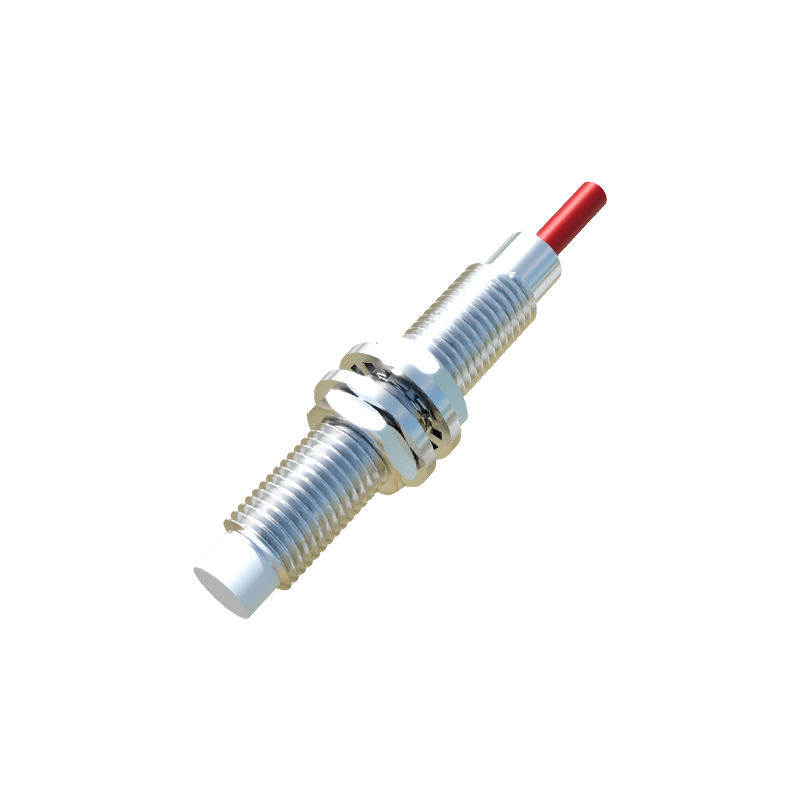
Key performance parameters include sensing distance, slot width, response time, and output configuration. The sensing distance is effectively the width of the slot, which can range from a few millimeters to several centimeters. Designers must select a slot width slightly larger than the target object to ensure reliable detection while minimizing the risk of misalignment. Response time is critical for high-speed applications, such as counting small parts on a conveyor belt. Outputs are commonly NPN or PNP transistor-based, providing compatibility with programmable logic controllers (PLCs) and other control systems. Some advanced models feature adjustable sensitivity or built-in timers to filter out brief interruptions, such as those caused by vibration or debris.
Installation and environmental considerations are paramount for optimal performance. Photoelectric sensors may require periodic lens cleaning to prevent dust or grease buildup from attenuating the light beam. In environments with heavy particulate matter, sensors with higher ingress protection (IP) ratings, such as IP67, are recommended to ensure longevity. Alignment between the emitter and receiver must be precise; even minor misalignment can lead to reduced sensing range or failure. Inductive sensors are generally more robust against contamination but must be positioned to avoid interference from adjacent metal structures, which could cause false triggering.
Applications of slot-type proximity sensors are diverse. In packaging machinery, they detect the presence of labels or products on production lines. In automotive assembly, they verify component insertion or count fasteners. Safety systems use them as interlocking devices on guards or doors to halt machinery when breached. Their through-beam design offers superior accuracy compared to diffuse reflective sensors, as the detection is not influenced by the object's color, reflectivity, or surface texture. This makes them a preferred choice for critical detection tasks where reliability is non-negotiable.
In summary, slot-type proximity sensors provide a reliable, non-contact solution for object detection in automation. By understanding their operating principles—whether photoelectric or inductive—engineers can select the appropriate type based on material composition, environmental conditions, and performance requirements. Proper installation and maintenance further ensure consistent operation, contributing to enhanced productivity and safety in industrial processes. As technology advances, these sensors continue to evolve with features like IO-Link communication for diagnostics and integration into Industry 4.0 frameworks, solidifying their role in modern manufacturing.