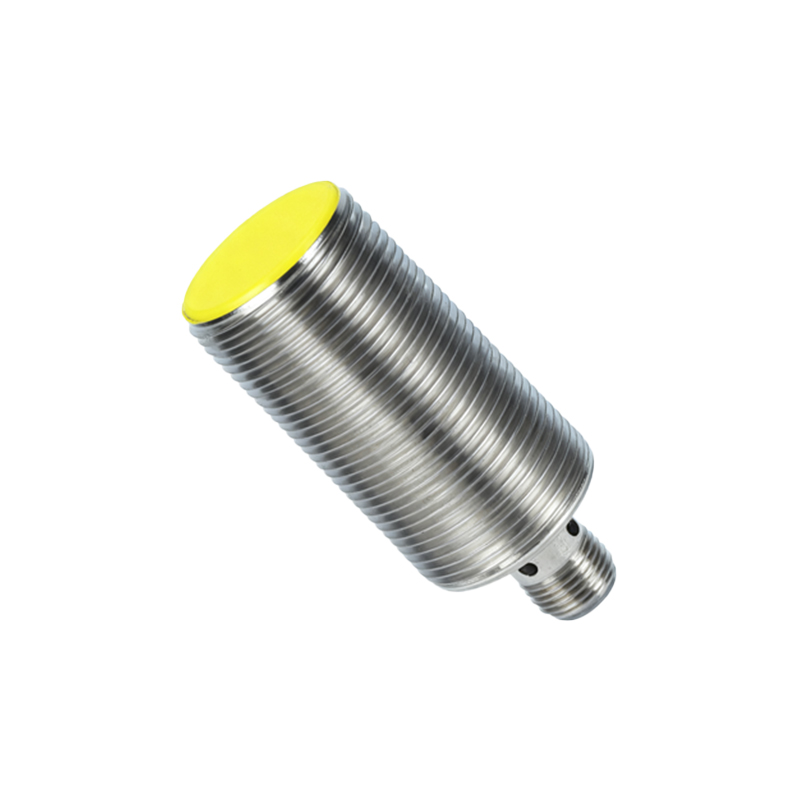
In the automated landscape of modern industry, the ability to detect the presence or absence of metallic objects without physical contact is fundamental. This critical task is reliably performed by inductive proximity sensors. As a cornerstone of factory automation, these robust devices offer unparalleled durability and precision in harsh industrial environments. This article delves into the operating principles, key characteristics, diverse applications, and essential selection criteria for industrial inductive proximity sensors.
The core operating principle of an inductive proximity sensor is electromagnetic induction. The sensor contains a coil wound around a ferrite core, which forms part of an oscillator circuit. When an alternating current is applied, it generates a high-frequency electromagnetic field at the active face of the sensor. When a metallic object enters this oscillating field, eddy currents are induced on the surface of the target. These eddy currents draw energy from the oscillator, resulting in a reduction of its oscillation amplitude. This amplitude change is detected by a threshold circuit, which subsequently triggers a solid-state output switch (typically PNP or NPN). The sensor thus provides a discrete signal indicating the object's presence. It is crucial to note that these sensors are primarily designed for detecting ferrous metals like steel and iron, which cause the most significant damping effect. However, they can also detect non-ferrous metals like aluminum, brass, and copper, albeit with a reduced sensing distance, often specified by a correction factor.
Key performance characteristics define the suitability of an inductive sensor for a given application. The nominal sensing distance (Sn) is a fundamental parameter, indicating the standard detection range for a defined standard target (usually mild steel). Practical installation requires a safety margin, leading to the concept of the effective operating distance (Sr), typically 0.9 x Sn. The repeat accuracy, or the sensor's ability to consistently detect an object at the same point, is vital for precision tasks. Another critical specification is the switching frequency, which denotes how many times per second the sensor can switch its output. This is paramount in high-speed counting or indexing applications. Environmental robustness is a hallmark of industrial inductive sensors. Most are housed in rugged metal (stainless steel or brass) or high-grade plastic bodies, offering high degrees of protection against dust and water ingress, as defined by IP (Ingress Protection) ratings like IP67 or IP69K. They are inherently resistant to common industrial contaminants like oil, coolants, and dust. Furthermore, their non-contact nature eliminates mechanical wear, ensuring a long operational life.
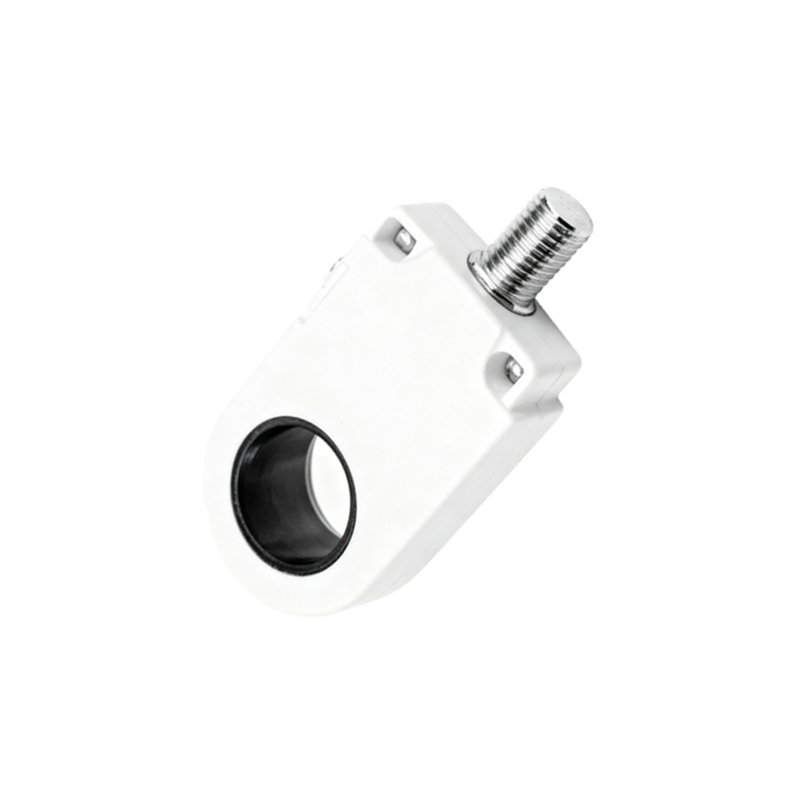
The applications for inductive proximity sensors are vast and integral to industrial processes. They are ubiquitous in machine tools for monitoring tool position, detecting part presence in fixtures, and confirming end-of-travel for slides and spindles. In material handling and packaging machinery, they count products on conveyors, control sorting gates, and verify the position of robotic grippers. Within automated assembly lines, they ensure components are correctly positioned before a welding or fastening operation. They serve as limit switches to prevent over-travel in linear actuators and cylinders, providing a more reliable alternative to mechanical limit switches. In the automotive industry, they monitor robotic welding arms and verify the presence of engine blocks or other metal components. Their ability to function in dirty, wet, or oily conditions makes them indispensable in foundries, stamping plants, and food processing facilities where washdowns are frequent.
Selecting the right inductive proximity sensor requires careful consideration of several factors. First, identify the target material and required sensing distance, applying correction factors for non-ferrous metals. The sensor's housing shape and size must fit the mechanical constraints of the installation—common styles include cylindrical barrels (e.g., M8, M12, M18, M30 threaded barrels) and rectangular block types. The electrical output type must match the control system's input card; a 3-wire DC sensor can be either PNP (sourcing) or NPN (sinking). Output configuration, such as Normally Open (NO) or Normally Closed (NC), must also be specified. For challenging environments, consider sensors with advanced features like weld-field immunity (for resistance welding applications), increased switching frequency, or all-metal housings for extreme physical abuse. Finally, always consult the manufacturer's datasheet for detailed specifications on temperature ranges, voltage supply, and connection methods.
In conclusion, industrial inductive proximity sensors are a mature yet continually evolving technology. Their simplicity, robustness, and reliability make them an essential component in the toolkit of any automation engineer. By understanding their underlying principles and carefully matching their specifications to the application's demands, engineers can ensure precise, maintenance-free operation, thereby enhancing the efficiency, safety, and productivity of automated industrial systems. As Industry 4.0 and smart manufacturing advance, these sensors continue to serve as the fundamental "eyes" of the machine, providing the critical binary data that drives modern industrial logic.