In the realm of industrial automation and control systems, proximity switch sensors stand as fundamental components for non-contact detection of metallic and, in some cases, non-metallic objects. Among the various wiring configurations available, the five-wire system represents a sophisticated and highly versatile approach, offering distinct advantages in terms of functionality, diagnostics, and integration. This article delves into the technical intricacies, operational principles, and practical applications of five-wire proximity sensors, providing a detailed guide for electrical engineers and industry professionals.
The core distinction of a five-wire proximity sensor lies in its internal switching mechanism and the corresponding external wiring. Unlike simpler two-wire or three-wire sensors, a five-wire sensor typically incorporates a dual solid-state relay output configuration. This design provides two independent, electrically isolated switching channels within a single housing. The standard wire color coding and functions, though subject to manufacturer specifications, generally follow this pattern: Brown wire for DC positive supply voltage (+V), Blue wire for DC common or negative supply (0V), Black wire for the normally open (NO) output of the first channel, White wire for the normally closed (NC) output of the first channel, and Black wire (often with a stripe) or another color like Gray for the second independent output channel (which can be configured as NO or NC).
This architecture enables several advanced operational modes. Primarily, it allows for the implementation of complementary or redundant switching. One channel can be configured as normally open (NO) and the other as normally closed (NC) for the same sensing event. This is invaluable in safety-critical applications or circuits requiring a "watchdog" signal. For instance, a machine can be programmed to halt if the NO contact closes (indicating target presence) while simultaneously requiring the NC contact to open; a failure in one channel that doesn't match the expected state of the other can trigger a fault condition, enhancing system reliability.
Furthermore, the two independent outputs can be used to control two completely separate circuits or devices based on the same sensing point. This eliminates the need for external relays or additional sensors, simplifying panel design and reducing wiring complexity. For example, a single five-wire sensor detecting a part on a conveyor could use one output to activate a pneumatic cylinder and the other to send a signal to a Programmable Logic Controller (PLC) for counting purposes.
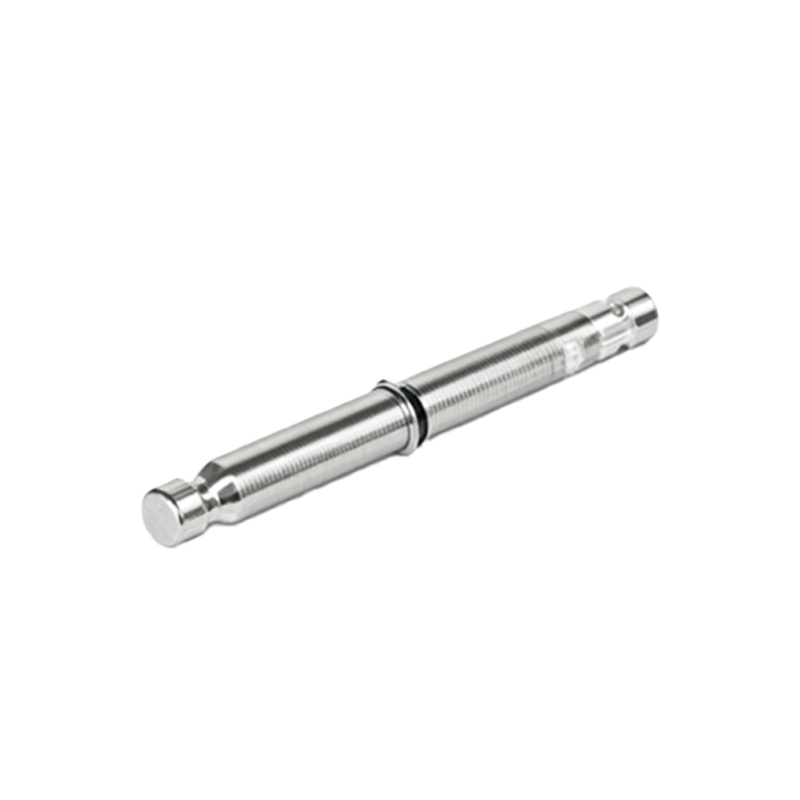
The wiring and integration of a five-wire sensor require careful attention. The power supply (typically 10-30V DC) is connected to the Brown (+) and Blue (-) wires. The load devices (e.g., PLC inputs, relay coils, indicator lamps) are then connected to the output wires. It is crucial to consult the specific sensor's datasheet for voltage, current, and leakage current specifications for each output channel. The loads must be connected between the output wire and either the positive or negative supply rail, depending on whether the sensor provides a sourcing (PNP) or sinking (NPN) output. Most five-wire sensors are available in both PNP and NPN variants, and the wiring differs accordingly. In a PNP (sourcing) configuration, the load is connected between the output wire and the Blue (0V) wire. When activated, the sensor switches the output to supply voltage (+V). In an NPN (sinking) configuration, the load is connected between the output wire and the Brown (+V) wire. When activated, the sensor switches the output to connect to 0V.
Diagnostic capabilities are significantly enhanced with the five-wire system. The complementary NO/NC outputs provide a built-in diagnostic tool. By monitoring both states in the control system, technicians can quickly identify sensor failures, such as a welded solid-state switch or a loss of power, which would cause both outputs to settle in an invalid logic state. Some advanced models also include a separate diagnostic output or an LED indicator for each channel, further simplifying troubleshooting.
Typical applications for five-wire proximity sensors are found in environments demanding high reliability, functional flexibility, or space constraints. These include automated assembly lines, robotic work cells, material handling systems, packaging machinery, and safety interlock systems. Their ability to provide two signals from one sensing point makes them ideal for applications requiring both a direct action and a confirmation feedback loop to a higher-level controller.
In conclusion, the five-wire proximity sensor system offers a powerful solution for complex sensing tasks. Its dual-output design provides flexibility for control logic, enhances system diagnostics, and contributes to more compact and reliable control panel layouts. For electrical engineers designing or maintaining automated systems, a thorough understanding of the five-wire configuration—its wiring, PNP/NPN operation, and application strategies—is essential for optimizing performance, safety, and maintainability in modern industrial settings. Always prioritize consulting the manufacturer's technical documentation for precise specifications and wiring diagrams before installation