In the rapidly evolving landscape of industrial automation, automotive safety, and smart consumer devices, proximity sensor companies are the silent architects of seamless interaction. These firms develop and manufacture sensors that detect the presence or absence of nearby objects without physical contact, utilizing technologies like infrared (IR), ultrasonic, capacitive, and inductive sensing. Their components are the unseen enablers, allowing machines to "see" and react to their environment, from a smartphone screen turning off when held to the ear to a robotic arm safely halting before colliding with an operator.
The market is characterized by a diverse ecosystem. Established semiconductor giants like Texas Instruments, STMicroelectronics, and Omron dominate with broad portfolios and deep research and development capabilities. These leaders continuously push the boundaries of miniaturization, power efficiency, and integration, embedding sophisticated sensing solutions into single chips. Their sensors are fundamental in automotive applications for parking assistance and blind-spot detection, and in factories for precise object positioning on conveyor belts.
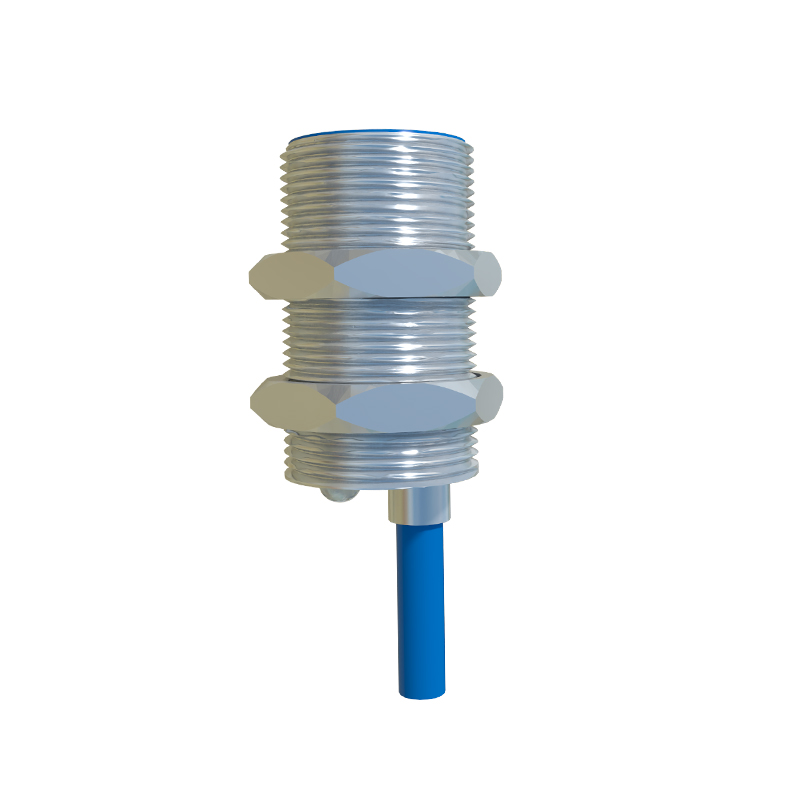
Alongside these titans, specialized sensor manufacturers carve out critical niches. Companies such as Pepperl+Fuchs and Balluff excel in developing robust, high-precision inductive and capacitive sensors designed for harsh industrial environments. Their products are engineered to withstand extreme temperatures, vibrations, and exposure to chemicals, ensuring reliability in manufacturing plants, food processing, and heavy machinery. Their focus is on durability and precision, providing the critical data needed for Industry 4.0 and smart factory initiatives.
The rise of the Internet of Things (IoT) and consumer electronics has fueled a new wave of innovation and competition. Firms like Vishay Intertechnology and ams OSRAM produce extremely compact, low-power proximity and ambient light sensors that are integral to modern smartphones, tablets, and wearables. These sensors manage display functionality, enable gesture control, and contribute to battery conservation. The demand here is for ever-smaller form factors, superior accuracy in varying light conditions, and cost-effective mass production.
A key trend propelling the industry is the integration of multiple sensing functions. Modern proximity sensors often combine with ambient light, gesture, and even time-of-flight (ToF) sensors into single modules. This sensor fusion, driven by companies like Broadcom Inc. and ROHM Semiconductor, creates more intelligent and context-aware systems. For instance, a single module in a smart home device can detect a person's approach, gauge the room's brightness, and interpret simple hand gestures to control lighting or music.
The automotive sector remains a powerhouse of demand, pushing companies toward higher-performance and safety-critical applications. Proximity sensors are essential for Advanced Driver-Assistance Systems (ADAS), enabling features like automatic emergency braking and pedestrian detection. Suppliers like NXP Semiconductors and Infineon Technologies are at the forefront, developing LiDAR and radar-based proximity sensing systems that must meet stringent automotive safety standards (ASIL). The transition towards autonomous vehicles hinges on the reliability and accuracy of these sensing technologies.
Challenges persist, including managing interference from environmental factors like sunlight or dust, reducing false triggers, and achieving consistent performance across diverse materials and surfaces. Leading companies invest heavily in signal processing algorithms and adaptive calibration techniques to overcome these hurdles. Furthermore, the global supply chain dynamics and the need for local manufacturing resilience are shaping corporate strategies.
Looking ahead, the trajectory for proximity sensor companies is one of embedded intelligence. The next generation of sensors will not merely detect presence but will also classify objects, measure velocity, and integrate with AI processors at the edge for immediate decision-making. As robotics, smart infrastructure, and personal electronics continue to advance, these companies will remain indispensable, providing the essential digital senses that connect the physical and digital worlds. Their ongoing innovation ensures that machines interact with their surroundings more safely, efficiently, and intuitively than ever before.