Proximity sensors are a cornerstone of modern automation, enabling machines to detect the presence or absence of an object without physical contact. Their operation hinges on a variety of physical principles, each suited to different applications and environments. Understanding these core detection methods is essential for selecting the right sensor for any industrial, automotive, or consumer application.
The most common type is the inductive proximity sensor. This sensor generates an oscillating electromagnetic field from a coil wound around a ferrite core at its sensing face. When a metallic object enters this field, eddy currents are induced on the object's surface. These currents draw energy from the sensor's oscillator, causing a reduction in the oscillation amplitude. An internal circuit monitors this change and triggers a solid-state switch when the amplitude drops below a set threshold. Inductive sensors are robust, resistant to environmental contaminants like dust and oil, and are exclusively used for detecting metals, with detection range and sensitivity varying based on the metal's properties (e.g., steel is detected at a greater distance than aluminum).
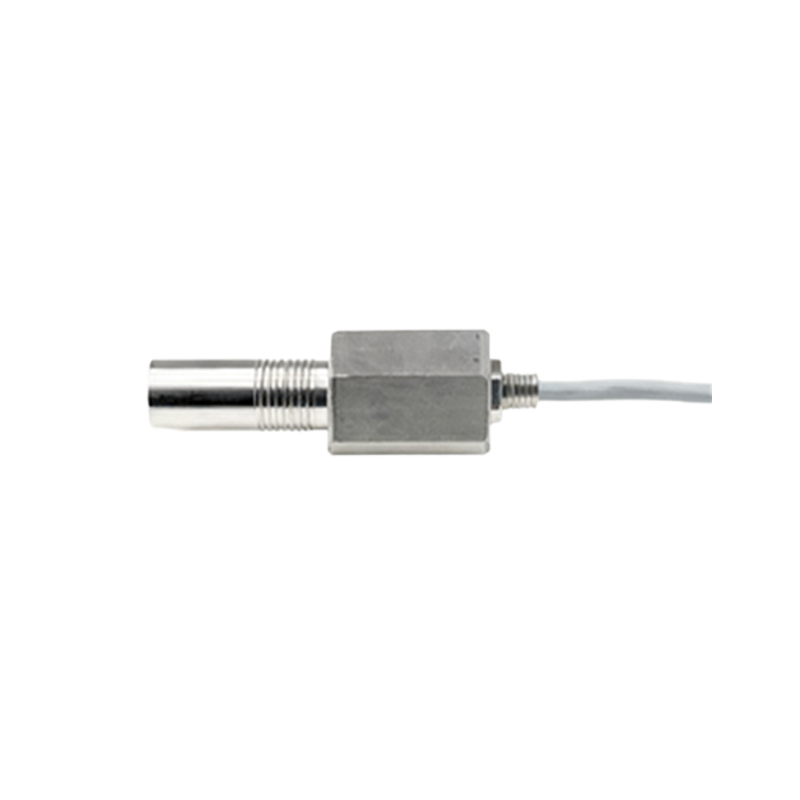
For non-metallic objects, capacitive proximity sensors are the tool of choice. They function similarly to an open capacitor. One plate is the sensor's active face, and the other is the external object (or a ground plane). The sensor generates an electrostatic field. The introduction of any material with a dielectric constant different from air (plastics, wood, liquids, powders, or even a human hand) alters the capacitance of this system. This change in capacitance is measured by the sensor's circuitry, which then switches its output. Capacitive sensors can detect virtually any material and are often used for level detection in tanks, but they are more susceptible to environmental factors like humidity and temperature.
A third major category is the photoelectric sensor, which uses light to detect objects. It consists of a light emitter (usually an LED producing visible red, infrared, or laser light) and a receiver. There are three primary operating modes. The through-beam (or opposed) mode has separate emitter and receiver units placed opposite each other; detection occurs when the object interrupts the light beam. The retro-reflective mode uses a single unit and a reflector; the object is detected when it blocks the reflected beam. The diffuse (or proximity) mode relies on the reflection of light from the object itself back to the receiver housed in the same unit. Photoelectric sensors offer long sensing ranges and can detect objects of any material, but their performance can be degraded by ambient light, color, and surface reflectivity.
Ultrasonic proximity sensors operate on a principle akin to sonar. They emit high-frequency sound pulses (inaudible to humans) and then listen for the echo. A built-in timer measures the time interval between the emitted pulse and the received echo. Since the speed of sound in air is known, the sensor's microprocessor can calculate the distance to the target object. Ultrasonic sensors are excellent for detecting objects regardless of color, transparency, or material, and are ideal for challenging conditions like fog, dust, or where optical sensors fail. They are commonly used for distance measurement, level control, and presence detection of irregularly shaped objects.

Magnetic proximity sensors, or reed switches, are simple devices activated by the presence of a permanent magnet. They contain two ferromagnetic reeds sealed in a glass tube. When a magnetic field of sufficient strength is applied, the reeds attract each other and make contact, closing the circuit. These sensors are extremely reliable for detecting the position of moving parts, such as in cylinder position sensing, and are immune to most environmental contaminants.
Each detection principle presents distinct advantages and limitations. The choice depends on critical factors: the target material (metal, plastic, liquid), the required sensing distance, environmental conditions (presence of dirt, moisture, or temperature extremes), the required response speed, and installation constraints. Inductive sensors excel in harsh industrial metal-detection roles. Capacitive sensors handle diverse materials including granular substances. Photoelectric sensors provide versatility and long range for clean environments. Ultrasonic sensors solve complex detection and ranging problems unaffected by object surface properties. By matching the fundamental physics of the sensor to the application's demands, engineers can build reliable, efficient, and contact-free detection systems that form the sensory foundation of automated processes worldwide.