In the rapidly evolving landscape of industrial automation and precision measurement, laser-induced sensors have emerged as a cornerstone technology, offering unparalleled accuracy, non-contact operation, and robust performance in demanding environments. These sensors operate on the principle of using a focused laser beam to interact with a target material or medium, inducing a measurable response such as fluorescence, plasma emission (Laser-Induced Breakdown Spectroscopy - LIBS), or changes in surface acoustic waves. The detected signal is then analyzed to extract critical information about the target's composition, distance, velocity, or surface characteristics.
The core mechanism often involves photodetectors, such as photodiodes or avalanche photodiodes (APDs), which convert the induced optical signal into an electrical current. Sophisticated signal processing algorithms filter noise and amplify the relevant data, enabling real-time monitoring and control. One of the most significant advantages is their ability to perform measurements without physical contact, eliminating mechanical wear and contamination risks. This is particularly vital in industries like semiconductor manufacturing, where even microscopic particles can cause catastrophic defects.

A prominent application is in environmental monitoring and gas detection. Tunable diode laser absorption spectroscopy (TDLAS), a type of laser-induced sensor, can detect trace concentrations of specific gases like methane, carbon dioxide, or ammonia with parts-per-billion sensitivity. By tuning the laser to a wavelength absorbed by the target gas molecule and measuring the attenuation of the beam, these systems provide continuous, in-situ analysis for industrial safety and emissions control.
In material science and quality control, Laser-Induced Breakdown Spectroscopy (LIBS) has revolutionized elemental analysis. A high-power pulsed laser is focused onto a sample, creating a micro-plasma. The light emitted from this plasma is spectrally resolved to identify and quantify the elemental composition of the material. This technique is used for alloy verification in metal fabrication, sorting of scrap materials for recycling, and monitoring coating thickness and composition in automotive and aerospace production lines.
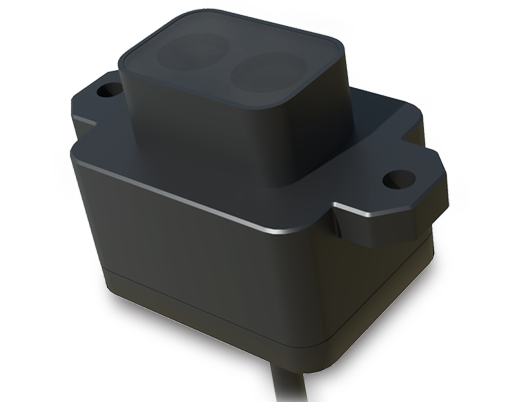
Furthermore, laser-induced ultrasonic sensors are employed for non-destructive testing (NDT). A pulsed laser generates ultrasonic waves within a material, and a second laser interferometer detects the waves reflected from internal flaws or boundaries. This allows for the inspection of composite structures, weld integrity, and subsurface defects in critical components without causing any damage.

The integration of these sensors with Industrial Internet of Things (IIoT) platforms and data analytics is a key trend. Sensor data can be fed into predictive maintenance models, optimizing equipment lifespan and reducing unplanned downtime. For instance, laser-induced vibration sensors can monitor the health of rotating machinery like turbines and pumps by detecting subtle changes in frequency spectra that indicate imbalance or bearing wear.
Despite their advantages, challenges remain. The performance of laser-induced sensors can be affected by ambient conditions such as dust, fog, or extreme temperatures. High-power systems may also pose eye safety concerns, necessitating proper enclosure and interlock systems. Ongoing research focuses on developing more compact, cost-effective, and energy-efficient laser sources, such as quantum cascade lasers and vertical-cavity surface-emitting lasers (VCSELs), to broaden their adoption.
In conclusion, laser-induced sensors represent a critical enabling technology for the Fourth Industrial Revolution. Their ability to deliver precise, non-invasive, and real-time data across diverse parameters—from chemical composition to physical displacement—is driving advancements in manufacturing quality, environmental protection, and operational safety. As laser technology continues to mature and costs decline, we can expect their deployment to expand into new frontiers, including biomedical diagnostics, agricultural sensing, and advanced robotics, solidifying their role as indispensable tools for modern engineering.