Magnetic proximity sensors are widely used in industrial automation, automotive systems, and consumer electronics for non-contact detection of objects. Their operation is fundamentally based on the interaction between a sensor's internal magnetic field and a target object, typically a ferromagnetic material like iron or steel. Unlike mechanical switches, these sensors have no moving parts, leading to higher reliability, longer lifespan, and resistance to environmental contaminants such as dust, oil, or moisture.
The core principle involves a magnetic field generated within the sensor. This field is usually produced by a permanent magnet integrated into the sensor housing or, in some active designs, by an electromagnet. When a ferromagnetic target enters the detection zone, it disturbs this magnetic field. The sensor contains a sensitive element designed to detect this specific disturbance. The most common detection technologies are based on Reed Switches, Hall Effect elements, or Magneto-Resistive elements.
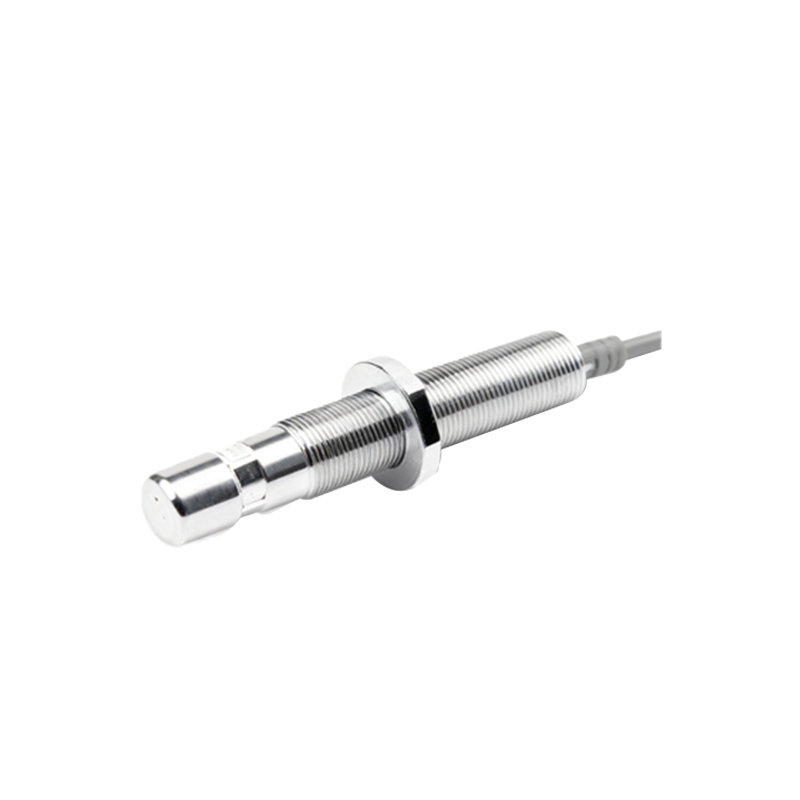
Reed Switch-based sensors are among the simplest types. A Reed Switch consists of two thin, ferromagnetic reeds sealed within a glass tube filled with inert gas. In the presence of a sufficient magnetic field from either the sensor's internal magnet or an external magnet on the target, the reeds become magnetized, attract each other, and make contact, closing an electrical circuit. When the target moves away, the magnetic force weakens, and the reeds spring apart, opening the circuit. These are passive devices, requiring no external power to operate the switching element itself, though they are often packaged with signal conditioning electronics.
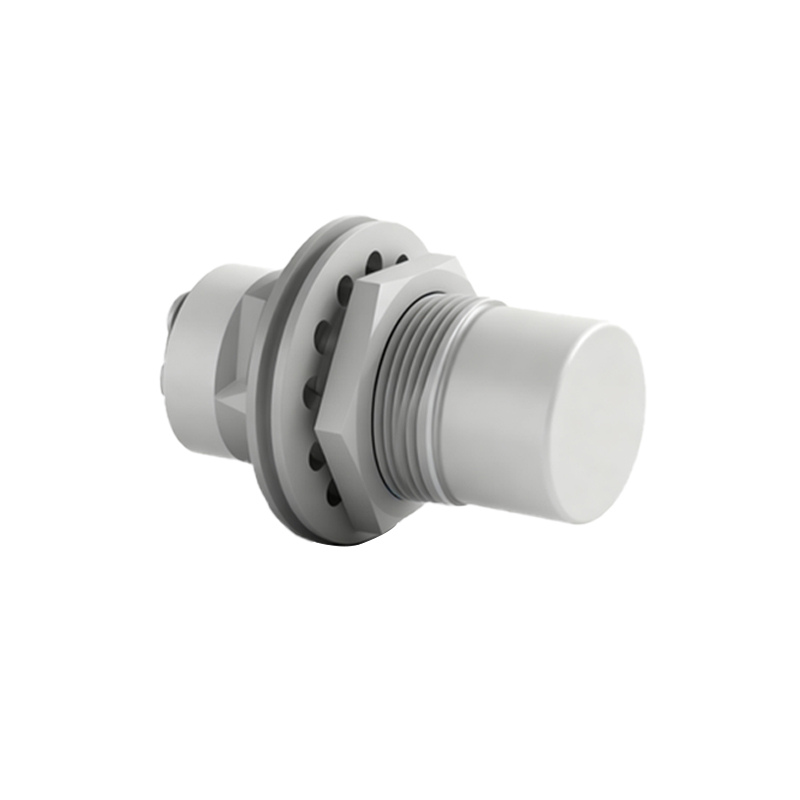
Hall Effect sensors represent a more advanced and versatile technology. They operate on the Hall Effect principle, discovered by Edwin Hall in 1879. A thin semiconductor plate (the Hall element) carries a constant bias current. When exposed to a perpendicular magnetic field, the Lorentz force deflects the charge carriers, creating a measurable voltage difference (the Hall voltage) across the plate. In a proximity sensor, the internal magnet provides a baseline field. A ferromagnetic target approaching the sensor concentrates and strengthens this magnetic flux through the Hall element. The resulting change in the Hall voltage is detected by integrated circuitry, which processes the signal and triggers a clean, digital output switch (e.g., PNP or NPN transistor). Hall Effect sensors can detect both the presence and, in some configurations, the strength or polarity of a magnetic field, enabling applications in speed sensing and position encoding.
Magneto-Resistive (MR) sensors utilize materials that change their electrical resistance in response to an applied magnetic field. Anisotropic Magneto-Resistive (AMR) sensors are particularly sensitive to the direction of the magnetic field rather than just its strength. In a proximity setup, the movement of a ferromagnetic target alters the direction of the magnetic flux lines relative to the sensor chip, causing a predictable change in resistance. This change is converted into a voltage shift by a Wheatstone bridge circuit, offering very high sensitivity and precision for detecting small displacements or weak fields.
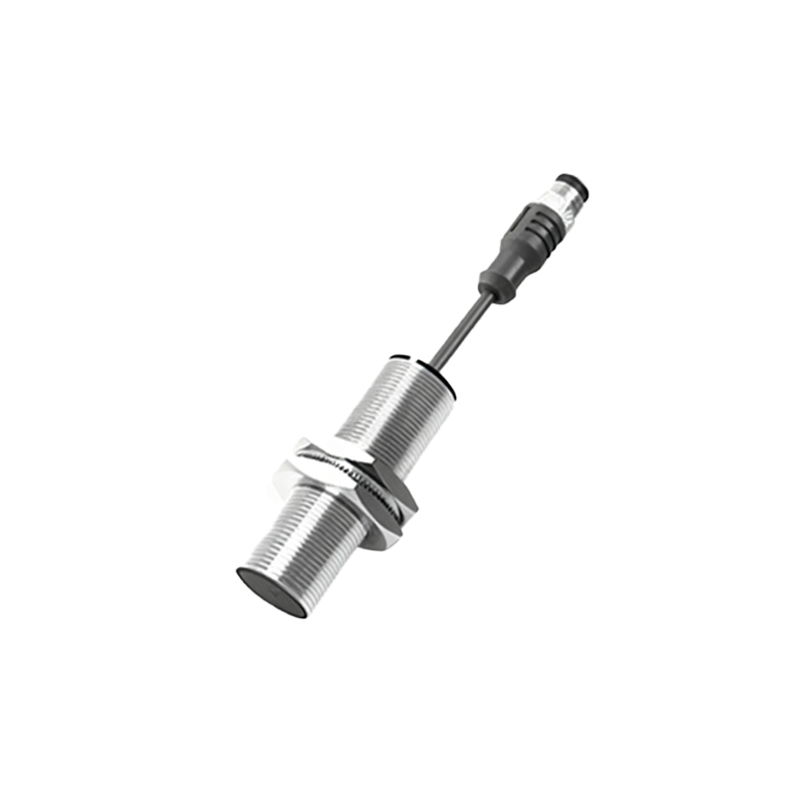
Key performance parameters for magnetic proximity sensors include sensing distance, hysteresis, and switching frequency. The nominal sensing distance is specified for a standard target material and size. Hysteresis is a built-in difference between the switch-on and switch-off points, which prevents output oscillation when the target is at the exact threshold. A higher switching frequency allows the sensor to detect rapidly moving targets.
The choice of sensor depends on the application requirements. Reed switches are cost-effective for simple presence detection in benign environments. Hall Effect sensors are robust, can operate at higher speeds, and are immune to contact bounce, making them ideal for automotive crankshaft/camshaft position sensing or industrial cylinder position feedback. MR sensors offer superior precision for demanding applications like rotary encoders or current sensing.
Installation considerations are crucial for reliable operation. The sensor must be mounted correctly with respect to the target's approach direction. Factors like target material, size, shape, and the presence of other magnetic materials in the vicinity can affect the effective sensing range. Most sensors are housed in rugged metallic or polymer casings with protection ratings (e.g., IP67) for harsh industrial environments.
In summary, magnetic proximity sensors provide a reliable, wear-free solution for object detection by converting changes in a magnetic field into an electrical signal. Their underlying physics, whether based on reed contact closure, Hall voltage generation, or magneto-resistance, enables a vast range of applications from simple limit switches to complex motion control systems, forming an invisible yet essential layer of feedback in automated processes.