Proximity sensors are indispensable components in modern industrial automation, providing non-contact detection of objects within a defined area. A critical parameter defining their performance and suitability for specific tasks is the sensing range, also known as the operating distance. This range is not a single, fixed value but a complex characteristic influenced by multiple factors. This article delves into the technical aspects of proximity sensor sensing ranges, exploring their definition, influencing variables, and practical implications for system design.
The nominal sensing range (Sn) is the rated operating distance specified by the manufacturer under defined standard conditions. This value is typically determined using a standard target, often a square of mild steel (Fe 360) with a side length equal to the sensor's face diameter or three times the rated sensing range, whichever is greater. It is crucial to understand that this is an ideal value. The effective sensing range in a real-world application can differ significantly.
Several key factors influence the actual sensing range. The first is the target material. Inductive proximity sensors, designed to detect metallic objects, exhibit varying sensitivity to different metals. For instance, the sensing range for stainless steel (austenitic) is typically reduced to about 60-80% of Sn, while for aluminum or copper, it can be as low as 30-50% of Sn. Capacitive sensors, used for non-metallic materials, also show range variations based on the target's dielectric constant. The size, shape, and orientation of the target are equally important. A target smaller than the standard test piece will reduce the effective range. Similarly, if only the edge of a large object approaches the sensor, the detectable distance will be less than if its full face approaches perpendicularly.
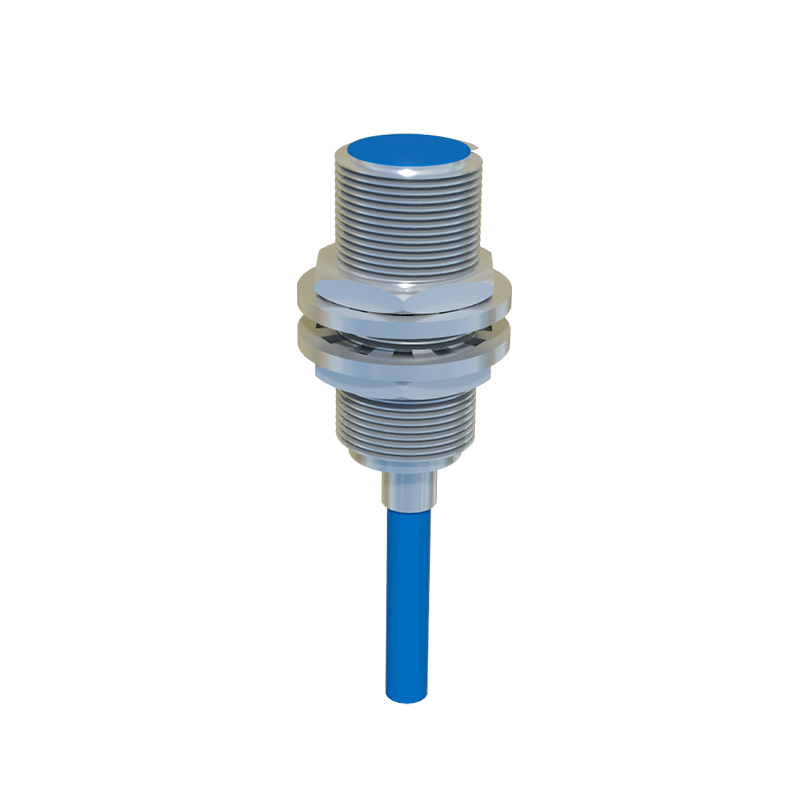
Environmental conditions pose another set of challenges. Temperature fluctuations can affect the electronic components and oscillation characteristics of the sensor, leading to range drift, typically specified as a percentage change per degree Celsius. The presence of foreign metals or other sensors in close proximity can cause electromagnetic interference or shielding effects, effectively reducing the usable range. For inductive sensors, mounting in a metallic flush (non-flush) style is designed to minimize this lateral interference, allowing installation flush with a metal bracket without affecting performance. Conversely, non-flush mount sensors offer a longer nominal range but are susceptible to interference from surrounding metals.
Electrical factors, such as supply voltage tolerance and load current, can also marginally influence the sensor's switching point stability. Furthermore, mechanical aspects like sensor housing material and the presence of protective covers or sensing face coatings (e.g., PTFE for chemical resistance) can attenuate the electromagnetic field, requiring derating of the nominal range.
From an application perspective, engineers must never design a system using 100% of the nominal sensing range. A vital concept is the utilization factor, often recommending operation within 70-80% of Sn to account for all the aforementioned variables, ensuring reliable operation despite material variances, temperature shifts, and mechanical tolerances. For example, if a process requires detecting a stainless steel part at 8mm, selecting a sensor with a nominal range of 10mm (Sn) or higher is prudent. Adjustable-range sensors offer flexibility but must be calibrated with the actual target under real operating conditions.
Regular maintenance and calibration checks are essential to monitor any long-term drift in sensing characteristics. Understanding the nuances of sensing range ensures not only the initial correct selection of a proximity sensor but also guarantees long-term reliability, preventing costly downtime due to false triggers or missed detections in automated production lines, robotic cells, and material handling systems. Always consult the manufacturer's detailed datasheets, which provide derating curves and correction factors for various materials and conditions, to make an informed engineering decision.