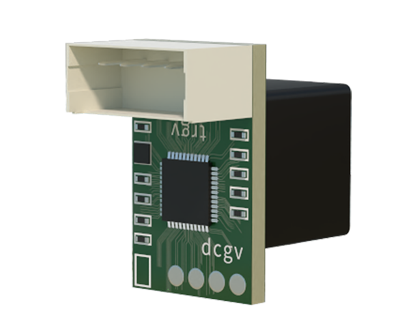
In the realm of industrial asset management, corrosion remains one of the most pervasive and costly challenges. Traditional methods for corrosion detection, such as ultrasonic thickness gauging, visual inspections, or coupon testing, often involve downtime, are point-specific, and can lag behind actual degradation. The advent of laser-based corrosion sensors represents a paradigm shift, offering continuous, non-contact, and highly accurate monitoring capabilities that are transforming predictive maintenance strategies across sectors like oil & gas, maritime, chemical processing, and power generation.
Laser corrosion sensors operate on sophisticated optical principles, primarily utilizing techniques like laser-induced breakdown spectroscopy (LIBS), laser ultrasonics, or profilometry via laser triangulation. A common and highly effective method involves directing a focused, low-power laser beam onto the target metallic surface. By analyzing the reflected or scattered light, the sensor can detect minute changes in surface topography, chemical composition, or the presence of corrosion products (e.g., iron oxides). Advanced algorithms process this optical data in real-time to quantify corrosion rates, measure pit depth, and identify the onset of corrosion long before it becomes structurally significant. Unlike contact methods, the laser does not degrade the surface or require direct coupling, making it ideal for harsh, inaccessible, or hazardous environments.
The technical advantages of these systems are substantial. They provide exceptional spatial resolution, capable of detecting early-stage pitting corrosion with micron-level accuracy. Their non-invasive nature allows for permanent installation on critical infrastructure—such as pipelines, pressure vessels, offshore platforms, and tank interiors—enabling 24/7 monitoring without operational interruption. Data is typically transmitted wirelessly to centralized control systems or cloud-based platforms, where it integrates with existing Distributed Control Systems (DCS) or Asset Performance Management (APM) software. This facilitates trend analysis, generates automated alerts when corrosion thresholds are exceeded, and supports data-driven decisions for maintenance scheduling, ultimately extending asset lifespan and preventing catastrophic failures.

A key application is in the upstream oil & gas industry, where sensors monitor subsea pipelines and wellheads for internal and external corrosion, significantly reducing the need for costly and risky manned inspections. In the maritime sector, they are deployed in ballast tanks and cargo holds of ships to combat the aggressive effects of saltwater and chemicals. Chemical plants utilize these sensors to safeguard reactors and storage tanks from corrosive process fluids. Furthermore, their ability to function in extreme temperatures, high pressures, and volatile atmospheres underscores their robustness.

Implementing a laser corrosion monitoring system requires careful consideration. Site selection is critical; sensors must be positioned at known corrosion hotspots or areas prone to condensation and chemical exposure. The initial investment, while higher than traditional methods, is justified by the long-term reduction in unplanned downtime, maintenance costs, and safety risks. Integration with a plant's digital twin or Industrial Internet of Things (IIoT) ecosystem amplifies its value, creating a闭环 (closed-loop) for corrosion management. As the technology matures, we are seeing the development of more compact, energy-efficient, and multi-parameter sensors that can simultaneously monitor corrosion, deposition, and temperature.
In conclusion, laser corrosion sensors are not merely incremental improvements but foundational tools for the modern, data-intensive industrial landscape. They move corrosion management from a reactive, calendar-based practice to a proactive, condition-based science. By delivering precise, real-time intelligence on material degradation, they empower engineers and asset managers to optimize operational integrity, ensure regulatory compliance, and achieve substantial financial savings through enhanced predictive maintenance programs. The future will likely see broader adoption, driven by advancements in laser diode technology, machine learning for pattern recognition in corrosion data, and the relentless industry push towards full operational digitalization.