In the realm of industrial automation, process control, and environmental monitoring, precise and reliable level measurement is paramount. Among the plethora of technologies available, the water level laser displacement sensor has emerged as a premier solution for non-contact, high-accuracy applications. This article delves into the operational principles, key advantages, diverse applications, and critical selection criteria for these sophisticated instruments.
Fundamental Operating Principle
At its core, a water level laser displacement sensor operates on the principle of optical triangulation or time-of-flight measurement, depending on the model and required range. In the more common triangulation method, the sensor emits a focused beam of laser light—typically from a visible red or Class 2 laser diode—onto the target liquid surface. The reflected light is then captured by a receiving lens at a known angle and focused onto a position-sensitive detector, such as a CCD or PSD array. The position of the light spot on this detector shifts proportionally to the distance to the target. An internal processor calculates this displacement with exceptional resolution, translating it into a precise level measurement. For very long ranges, time-of-flight (or phase-shift) lasers measure the time delay between the emitted and reflected pulse to determine distance.

Key Advantages and Technical Merits
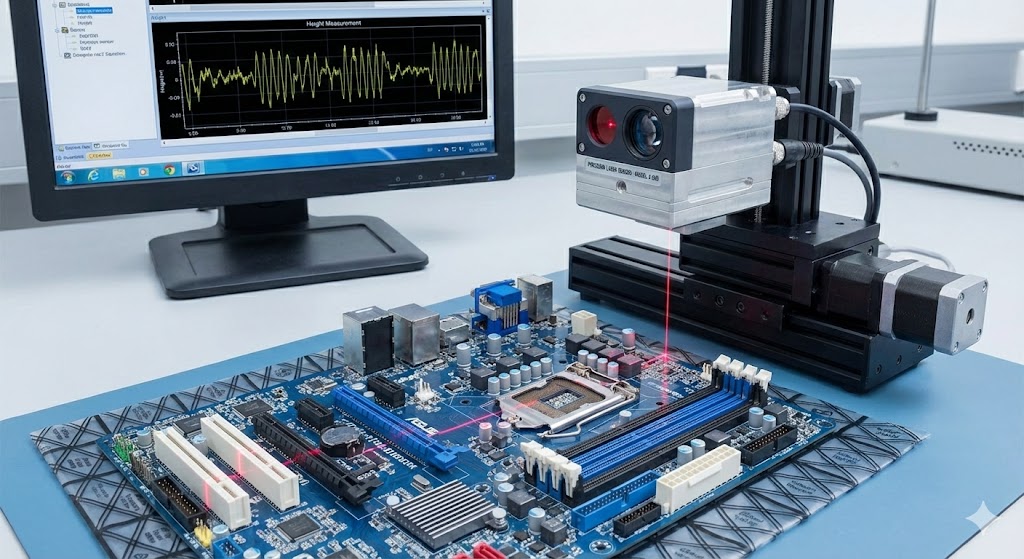
Laser sensors offer distinct benefits that make them ideal for challenging level measurement tasks:
* Non-Contact Measurement: The laser beam does not physically touch the liquid, eliminating issues of contamination, corrosion, or mechanical wear. This is crucial for sterile processes, aggressive chemicals, or highly turbulent surfaces.
* Extreme Precision and Resolution: Capable of micron-level resolution, these sensors provide exceptionally accurate readings, even for small level changes in tanks, sumps, or channels.
* Small Spot Size and Long Range: The highly collimated laser beam allows for measurement through narrow openings or onto small targets. They can effectively measure over distances from a few centimeters up to several hundred meters.
* Fast Response Time: With measurement rates often in the kilohertz range, they are perfect for dynamic processes, rapidly fluctuating levels, or high-speed production lines.
* Minimal Sensitivity to Material Properties: While performance can vary with surface reflectivity and angle, lasers are generally less affected by changes in liquid density, conductivity, or dielectric constant compared to capacitive or ultrasonic sensors. Special models are available for low-reflectivity surfaces like dark or absorbent liquids.
Primary Industrial Applications
The unique capabilities of laser displacement sensors make them suitable for a wide array of applications:
* Water and Wastewater Management: Monitoring levels in clarifiers, filtration basins, chemical tanks, and effluent channels. Their non-contact nature is ideal for corrosive or abrasive slurries.
* Chemical and Pharmaceutical Processing: Precise level control in reactors, mixing vessels, and storage tanks containing aggressive or sensitive fluids where hygiene is critical.
* Power Generation: Monitoring boiler drum water level, condenser hotwells, and feedwater tanks with high accuracy under varying pressure and temperature conditions.
* Hydrology and Environmental Monitoring: Measuring river, stream, or reservoir levels, often in remote locations with battery-powered, ruggedized sensor packages.
* Food and Beverage Production: Level control in storage silos, mixing vats, and bottling lines, benefiting from the clean, non-invasive measurement technique.
Critical Selection and Implementation Considerations
Choosing the right laser sensor requires careful evaluation of several parameters:
1. Measurement Range and Standoff Distance: Specify the minimum and maximum level to be measured. The sensor must be mounted within its specified standoff distance from the target.
2. Accuracy and Resolution: Define the required precision. Note that specified accuracy can be influenced by target surface conditions.
3. Laser Class and Safety: Most industrial sensors are Class 2 (safe for momentary viewing). Ensure proper installation and labeling to prevent accidental eye exposure.
4. Target Surface Characteristics: The color, reflectivity, and texture of the liquid surface significantly impact performance. Transparent liquids (like clear water) or steeply angled surfaces may require special sensors with advanced filtering or controlled laser power.
5. Environmental Conditions: Consider the ingress protection (IP rating) for dust and moisture, temperature limits for the sensor and electronics, and the presence of steam, foam, or vapor that could scatter the laser beam.
6. Output and Connectivity: Standard analog outputs (4-20mA, 0-10V) and digital interfaces (RS-485, Ethernet/IP, PROFIBUS) are common. Choose based on PLC or control system compatibility.
7. Mounting and Alignment: Secure, vibration-free mounting is essential. Many units feature integrated alignment aids (like through-lens sights) for precise setup.
In conclusion, water level laser displacement sensors represent a high-performance tier in level measurement technology. Their unparalleled accuracy, non-contact operation, and versatility solve complex measurement challenges across numerous industries. A thorough understanding of the application's specific demands—combined with careful attention to selection criteria regarding range, target properties, and environment—is essential for successful implementation and optimal system performance. As technology advances, we can expect further enhancements in measurement stability for difficult surfaces and increased integration with Industrial IoT platforms for predictive maintenance and data analytics.