Proximity sensors are indispensable components in modern industrial automation, serving as the primary interface for non-contact detection of objects. Their unique characteristics enable reliable, efficient, and maintenance-free operation in diverse and often harsh environments. Understanding these key features is crucial for selecting the right sensor for a specific application.
One of the most defining characteristics of proximity sensors is their non-contact operation. Unlike mechanical limit switches, they detect the presence or absence of a target without physical touch. This eliminates mechanical wear and tear, significantly extending the sensor's operational lifespan and reducing downtime for replacements. The absence of physical contact also allows for high-speed detection, as there is no bounce or delay associated with mechanical actuation. This makes them ideal for counting, positioning, and speed monitoring on fast-moving production lines.
Another critical feature is the sensing distance, often referred to as the "rated operating distance (Sn)." This is the nominal range at which a standard target will be reliably detected. It varies significantly between sensor types. Inductive sensors, which detect metallic objects, typically have shorter ranges (from 1mm to 60mm), while capacitive sensors (for both metallic and non-metallic materials) and ultrasonic sensors can offer much longer ranges. It's essential to note the importance of the "assured operating distance," which is a reduced, guaranteed distance (usually 0.81 x Sn) that accounts for factors like supply voltage tolerance and temperature fluctuations, ensuring fail-safe operation.
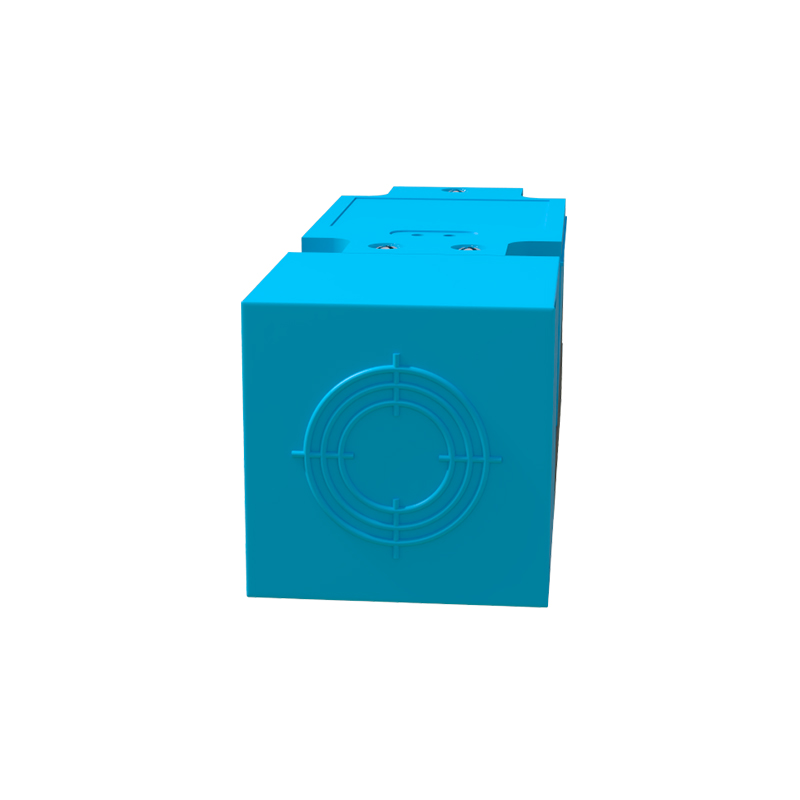
The construction and housing material of a proximity sensor contribute greatly to its environmental robustness. High-quality sensors feature housings made of stainless steel (V4A/AISI 316L), nickel-plated brass, or PBT/PTFE plastics, offering exceptional resistance to chemicals, oils, and coolants. Many models boast high Ingress Protection (IP) ratings, such as IP67 or IP69K, making them resistant to dust ingress and capable of withstanding high-pressure water jets. This ruggedness allows them to perform reliably in demanding settings like machining centers, food processing plants, and outdoor applications.
Output configuration is a fundamental operational characteristic. Proximity sensors primarily provide digital switching outputs. The two main types are NPN (sinking) and PNP (sourcing) transistor outputs, with PNP being more common in Europe and NPN in some other regions. Selecting the correct type is vital for compatibility with the controller's input module (PLC). Furthermore, sensors can be normally open (NO) or normally closed (NC), defining their switching logic in the absence of a target. Some advanced models also offer analog outputs (4-20mA or 0-10V) or IO-Link digital communication, providing not just a switch signal but also detailed diagnostic data and parameterization capabilities.
Frequency response, or switching frequency, is a key performance metric. It defines the maximum number of switching cycles per second the sensor can handle. High-speed sensors can achieve frequencies up to 10 kHz or more, which is essential for detecting small parts on high-speed conveyors or monitoring gear teeth. A related characteristic is the response time, which is the delay between the target entering the sensing field and the output signal change.
Other notable characteristics include hysteresis. This is a built-in difference between the switch-on point (when the target approaches) and the switch-off point (when the target recedes). Hysteresis prevents output chatter or oscillation when a target is positioned at the very edge of the sensing range, ensuring a stable, clean signal. Target material and size also significantly influence performance, especially for inductive sensors. Ferrous metals like steel are detected at the full rated distance, while non-ferrous metals like aluminum or copper have a reduced sensing factor. The target must generally be equal to or larger than the sensor's active face for reliable detection.
Finally, modern proximity sensors incorporate advanced diagnostic features. These include short-circuit and overload protection, polarity reversal protection, and LED status indicators (power on, output active). IO-Link enabled sensors take this further, allowing for remote monitoring of operating hours, temperature warnings, and detection of mounting misalignment or buildup on the sensor face, facilitating predictive maintenance.
In summary, the characteristics of proximity sensors—non-contact detection, defined sensing distances, robust construction, configurable outputs, high switching frequency, built-in hysteresis, and smart diagnostics—collectively provide the reliability, precision, and durability required for today's automated industrial systems. Proper consideration of these features ensures optimal performance, enhances system uptime, and contributes to overall operational efficiency.