In modern industrial material handling, the precision, safety, and efficiency of overhead crane operations are paramount. Among the suite of advanced technologies enabling this, laser displacement sensors have emerged as a critical component. This guide delves into the principles, applications, selection criteria, and benefits of these sensors within crane systems, adhering to professional engineering standards.
Fundamentally, a laser displacement sensor operates on the principle of optical triangulation or time-of-flight measurement. In the common triangulation method, a laser diode projects a focused beam onto a target surface—such as a lifted load, a hook block, or a structural component. The reflected light is captured by a receiving lens at a known angle and focused onto a position-sensitive detector, typically a CCD or CMOS array. Any change in the target's distance alters the position of the light spot on the detector. The sensor's internal processor calculates the precise displacement value based on this geometric relationship, outputting a high-resolution analog or digital signal. For long-range applications on large cranes, time-of-flight sensors, which measure the phase shift or direct flight time of a modulated laser pulse, are often employed due to their extended measurement ranges.
The integration of laser displacement sensors into overhead crane systems addresses several core operational challenges. One primary application is anti-sway control and load positioning. By continuously monitoring the horizontal displacement of the load relative to a reference point, the sensor provides real-time feedback to the crane's control system. This data enables the drive controllers to automatically compensate for pendulum motions induced by acceleration, deceleration, or external forces, significantly reducing load swing and enabling pinpoint placement. This is especially crucial in automated storage and retrieval systems (AS/RS) and environments with dense storage racks.
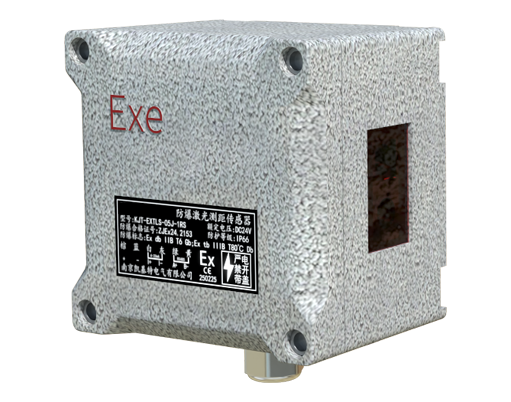
Another critical application is hook height and collision avoidance. A vertically oriented laser sensor can accurately measure the distance from the trolley to the hook or from the hook to the ground/load. This information is vital for preventing overwinding, ensuring the hook stops at the correct height, and avoiding collisions with obstacles or the crane bridge itself. Furthermore, these sensors are deployed for runway alignment monitoring, detecting any deviation of the crane bridge from its ideal travel path on the rails, and for monitoring the deflection of the crane girder under load, contributing to structural health monitoring.

Selecting the appropriate laser displacement sensor for a specific crane application requires careful consideration of multiple technical parameters. The key specification is the measuring range, which must encompass all possible distances between the sensor and its target during operation. Resolution and linearity define the sensor's accuracy; sub-millimeter resolution is typically required for precise positioning. The response time or sampling rate must be sufficiently high to track dynamic motions effectively. Environmental robustness is non-negotiable; sensors must have high Ingress Protection (IP) ratings (e.g., IP67) to withstand dust, moisture, and occasional washdowns. They must also resist vibrations inherent in crane operation and feature robust housing. The type of output (4-20mA analog, digital protocols like IO-Link, PROFINET, or EtherNet/IP) must be compatible with the existing crane control architecture. For targets with poor reflectivity or in bright ambient light, selecting a sensor with a high-power laser class (within safety limits, typically Class 2) and advanced filtering is essential.
The benefits of deploying laser displacement sensors are substantial. They dramatically enhance operational safety by automating critical distance monitoring and preventing accidents. Precision positioning reduces product damage, minimizes cycle times, and increases throughput. The data provided facilitates predictive maintenance, alerting operators to abnormal trends in alignment or deflection before they lead to failure. Ultimately, this translates into reduced downtime, lower operational costs, and a stronger return on investment.
In conclusion, laser displacement sensors are transformative devices for modern overhead crane systems. By providing non-contact, high-precision, and reliable distance measurement, they form the sensory backbone for automation, safety, and efficiency initiatives. As crane technology evolves towards greater autonomy and connectivity, the role of these sophisticated sensors will only become more central, driving the future of intelligent material handling.