In the realm of industrial automation, precision measurement is paramount. Among the various tools enabling this precision, analog displacement sensors stand out as fundamental components. Unlike their digital counterparts that provide discrete numerical outputs, analog displacement sensors generate a continuous electrical signal—typically a voltage or current—that is directly proportional to the physical displacement being measured. This continuous output allows for real-time, high-resolution monitoring of position, distance, or movement, making them indispensable in applications requiring smooth control and fine-grained feedback.
The core operating principle of most analog displacement sensors involves converting a mechanical change into a proportional electrical signal. Common technologies employed include potentiometric, inductive, capacitive, and magnetostrictive methods. Potentiometric sensors, often the most straightforward, use a wiper that moves along a resistive element. The change in resistance corresponds linearly to displacement, resulting in a varying output voltage. Inductive sensors, such as Linear Variable Differential Transformers (LVDTs), operate on electromagnetic induction. A movable ferromagnetic core alters the coupling between primary and secondary coils, generating an AC output voltage whose amplitude and phase indicate both the magnitude and direction of displacement. Capacitive sensors measure changes in capacitance between a fixed plate and a plate attached to the moving target. Magnetostrictive sensors utilize the interaction between a magnetic field and a strain pulse in a waveguide to determine the position of a permanent magnet.
Each type offers distinct advantages. Potentiometric sensors are cost-effective and simple but may suffer from wear due to mechanical contact. LVDTs are renowned for their robustness, infinite resolution, and long operational life, as there is no physical contact between the core and the coil structure. Capacitive sensors provide exceptional resolution for very small displacements and are non-contact. Magnetostrictive sensors are ideal for long-stroke measurements in harsh environments.
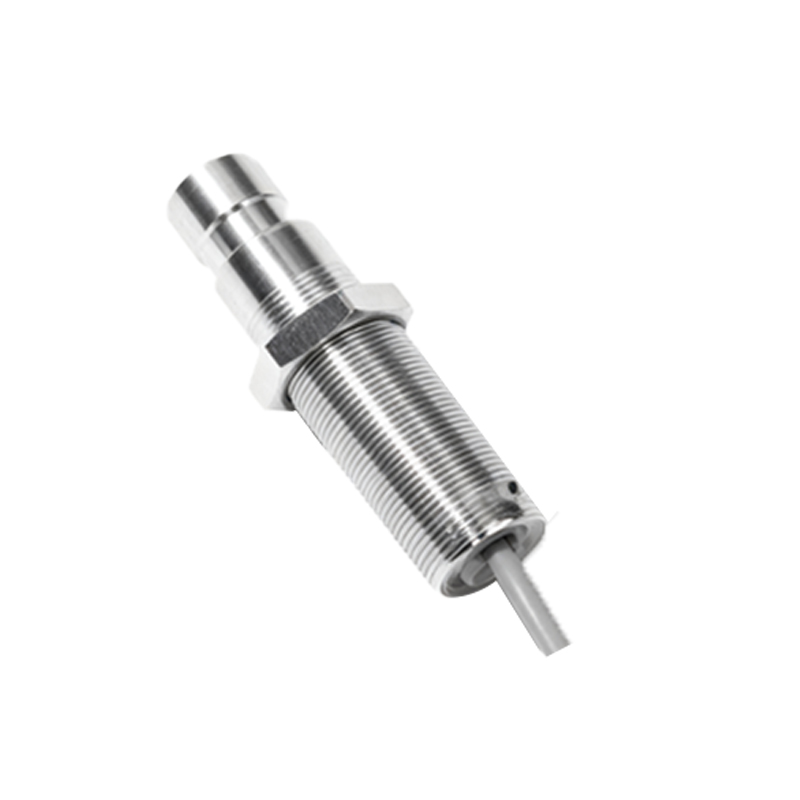
The selection of an appropriate analog displacement sensor depends heavily on the application's specific requirements. Key parameters include measurement range, required resolution, linearity, environmental conditions (temperature, pressure, contaminants), and necessary response frequency. For instance, in a hydraulic cylinder controlling a robotic arm, a magnetostrictive sensor might be chosen for its ability to provide precise, non-contact position feedback under high pressure and in the presence of hydraulic fluid. In contrast, a high-precision machine tool spindle might utilize a capacitive sensor to detect micron-level runout or thermal expansion.
Analog output signals, usually 0-10V or 4-20mA, offer significant integration benefits. The 4-20mA current loop standard is particularly valued in industrial settings for its inherent noise immunity and ability to power the sensor over the same two wires used for signal transmission, simplifying wiring over long distances. This analog signal can be directly fed into programmable logic controllers (PLCs), analog input modules, or servo drives for immediate processing in control loops. This facilitates closed-loop control systems where the measured position is continuously compared to a setpoint, and corrective actions are applied in real time to maintain accuracy—a critical function in CNC machining, press automation, and injection molding.
Despite the growing prevalence of digital communication protocols, analog displacement sensors remain highly relevant. Their simplicity, fast response without serial communication delays, and ease of troubleshooting with a basic multimeter ensure their continued use. They form the sensory backbone in countless sectors: automotive testing (suspension travel), aerospace (actuator position), semiconductor manufacturing (stage alignment), and energy (valve control). Understanding their operating principles, strengths, and ideal use cases is essential for engineers and technicians designing reliable and precise measurement and control systems. The continuous analog signal, a faithful electrical representation of physical movement, continues to be a vital language spoken between machines and their controllers.