In modern industrial automation and precision measurement systems, laser sensors have become indispensable components due to their high accuracy, non-contact operation, and rapid response times. However, their performance can be significantly compromised by various sources of interference prevalent in industrial environments. Ensuring robust immunity to such disturbances is critical for maintaining system reliability, data integrity, and operational safety. This article delves into the common interference challenges faced by laser sensors and outlines effective strategies to mitigate their impact.
Common sources of interference affecting laser sensors include ambient light, electromagnetic interference (EMI), mechanical vibrations, and environmental factors such as dust, smoke, or temperature fluctuations. Ambient light, especially from high-intensity sources like sunlight or industrial lighting, can saturate the sensor's photodetector, leading to erroneous readings or signal loss. Electromagnetic interference, generated by nearby motors, welding equipment, or power lines, can induce noise in the sensor's electronic circuits, distorting the output signal. Mechanical vibrations, often present in machinery-heavy settings, may cause misalignment or modulation of the laser beam, reducing measurement stability. Additionally, particulate matter in the air can scatter or absorb the laser light, while extreme temperatures can affect the sensor's components and wavelength stability.
To combat ambient light interference, several technical approaches can be employed. Optical filtering is a primary method, where bandpass filters are integrated into the sensor design to allow only the specific wavelength of the laser light to reach the detector, effectively blocking out other light sources. Modulated laser signals represent another powerful technique. Instead of emitting a continuous beam, the laser is pulsed or modulated at a specific frequency. The receiver circuit is then tuned to detect only this modulation frequency, ignoring steady or differently varying ambient light. This synchronous detection greatly enhances signal-to-noise ratio. Enclosures or shrouds can also be physically installed around the sensor and target area to block stray light, though this must be balanced with accessibility requirements.
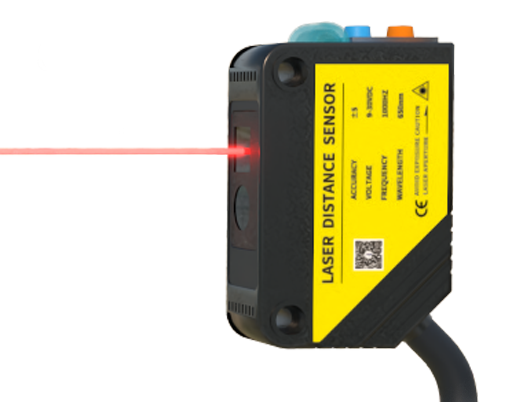
Addressing electromagnetic interference requires a focus on both hardware design and installation practices. Proper shielding of the sensor housing and cabling using conductive materials like steel or aluminum can contain and ground EMI. Ferrite cores or beads installed on signal and power cables near the sensor connectors can suppress high-frequency noise. Crucially, implementing a robust grounding scheme is essential. A single-point, low-impedance ground connection for the sensor, its associated electronics, and the machinery frame helps prevent ground loops, which are common sources of noise. Furthermore, separating sensor signal cables from high-power AC lines by a sufficient distance and routing them in separate conduits minimizes inductive coupling.
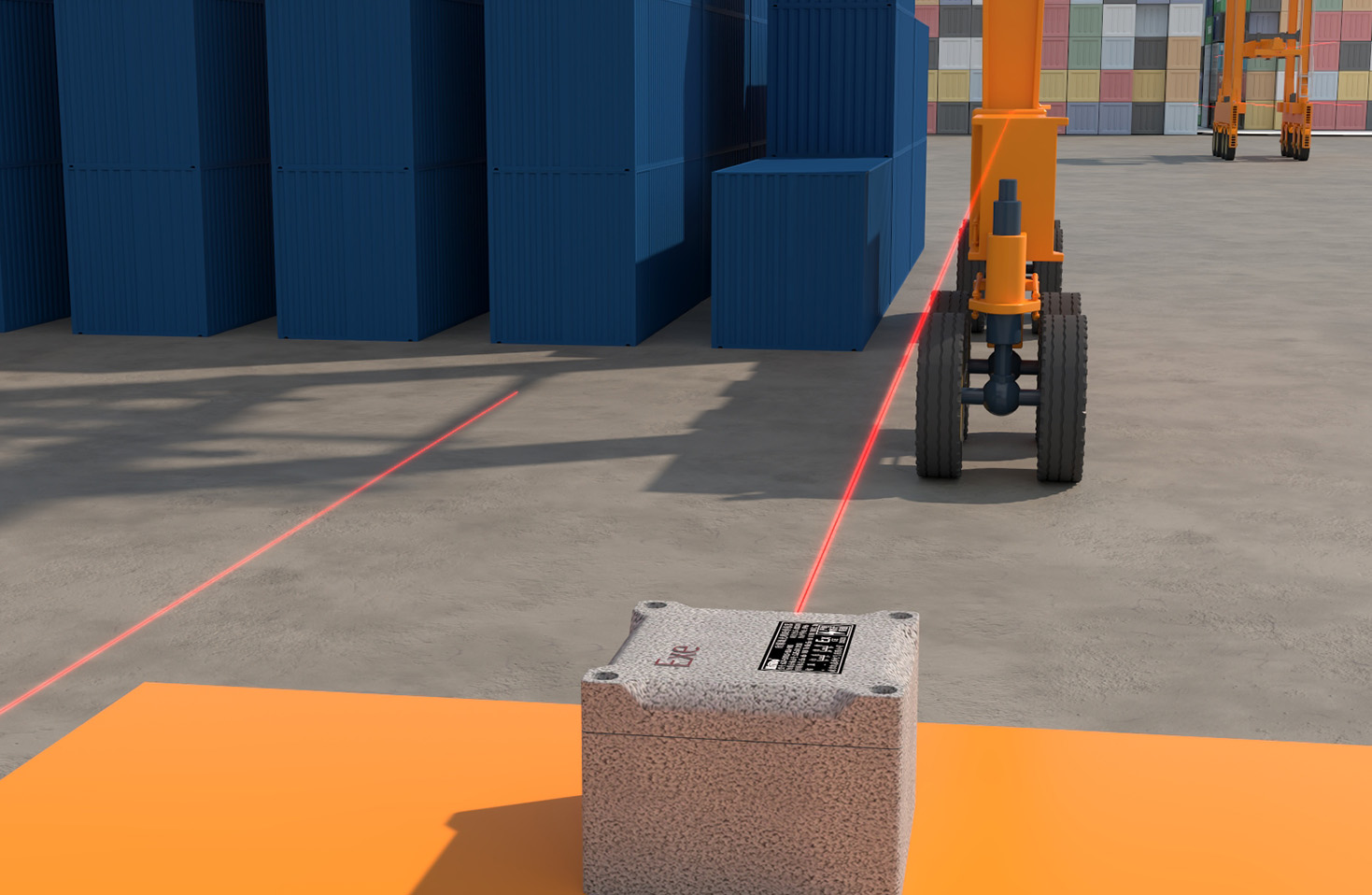
Mechanical vibration isolation is vital for applications requiring micron-level precision. Mounting the sensor on vibration-damping pads or using isolated mechanical brackets can decouple it from machine vibrations. For highly dynamic environments, sensors with built-in mechanical stabilization or advanced digital signal processing (DSP) algorithms can compensate for minor beam deviations. The choice of mounting hardware—using rigid, stable materials—also contributes to long-term alignment stability.
Environmental challenges like dust and temperature require proactive measures. For airborne particulates, sensors with higher output power can sometimes "burn through" minor obstructions, but a more reliable solution is using sensors with a redundant design or those that employ triangulation or time-of-flight principles less susceptible to light scattering. Regular maintenance and cleaning of sensor lenses are simple yet effective practices. Temperature compensation is often built into high-quality laser sensors, where internal circuitry or software algorithms adjust readings based on input from an onboard temperature sensor. Selecting sensors with a wide specified operating temperature range that exceeds the expected environmental conditions is a fundamental step.
Beyond these specific countermeasures, system-level design plays a pivotal role. Implementing error-checking and data validation protocols in the supervisory control system can help identify and discard corrupted measurements. Redundancy, using multiple sensors to measure the same parameter, provides a vote-based reliable output. Finally, adhering to the manufacturer's installation guidelines—regarding cable lengths, power supply specifications, and environmental ratings—cannot be overstated. A sensor perfectly designed for immunity can still underperform if installed incorrectly.

In conclusion, achieving high interference immunity for laser sensors is not reliant on a single solution but on a holistic, layered approach. It combines careful sensor selection based on environmental specifications, intelligent hardware design incorporating filtering and shielding, meticulous installation following best practices for grounding and cable management, and supportive system-level protocols. By systematically addressing each potential source of interference, engineers can ensure that laser sensors deliver their full potential of precision and reliability, even in the most challenging industrial landscapes. Continuous advancements in solid-state laser technology, DSP, and packaging will further push the boundaries of sensor robustness in the years to come.