In the realm of industrial automation, proximity sensors are indispensable components for non-contact detection of objects. Among the myriad of form factors available, M8 and M12 threaded cylindrical sensors are two of the most prevalent and often compared standards. This article delves into the technical distinctions between M8 and M12 proximity sensors, providing engineers and system integrators with the insights needed for optimal selection.
The most immediate and defining difference lies in their physical dimensions. As the nomenclature suggests, M8 sensors feature an 8mm diameter threaded barrel, while M12 sensors have a 12mm diameter. This size variance is not merely cosmetic; it fundamentally influences the sensor's capabilities and installation constraints. The compact M8 design is advantageous in space-constrained applications, such as within compact machinery, robotic grippers, or on densely populated PCB handling equipment. Its smaller footprint allows for installation where larger sensors simply cannot fit. Conversely, the more robust M12 housing offers greater mechanical strength and is typically better suited for harsh industrial environments where vibration or potential physical impact is a concern.
This physical disparity directly correlates with performance specifications, most notably sensing range. Generally, an M12 proximity sensor will offer a longer nominal sensing distance compared to an M8 sensor of the same technology (inductive, capacitive, etc.) and performance class. For instance, a standard shielded inductive M8 sensor might have a sensing range of 1.5 to 2 mm, whereas a comparable M12 sensor could achieve 4 to 5 mm. The larger housing of the M12 allows for a larger coil or sensing element, which translates to increased detection capability. Engineers must carefully evaluate the required stand-off distance in their application to ensure reliable object detection without physical contact.
Electrical characteristics and connection methods also differ. Both types commonly use quick-disconnect cabling systems, but the connector size is, of course, matched to the sensor body. The M8 connector typically accommodates 3 or 4 pins, which is sufficient for basic switching functions (PNP/NPN). The M12 connector, with its larger form factor, is more versatile. It is standardized with 4, 5, 6, 8, or even 12 pins in various coding types (A, B, C, D, etc.). This makes the M12 the de facto standard for sensors requiring additional functionality, such as analog output (IO-Link), push-pull outputs, or specific network protocols. The M12's superior pin count supports more complex communication and power delivery schemes, future-proofing systems for Industry 4.0 connectivity.
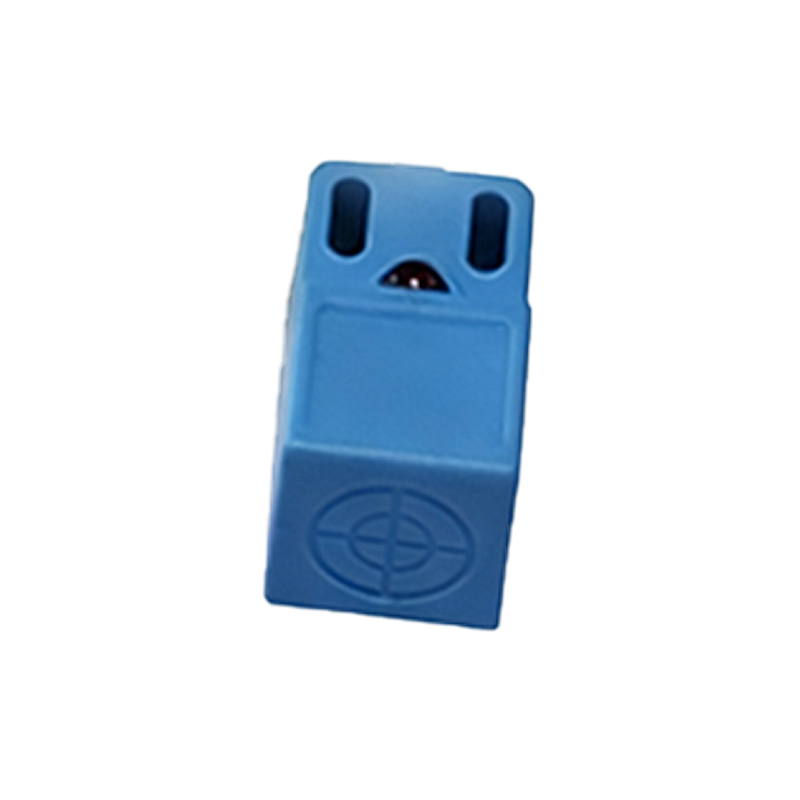
From a durability perspective, the larger M12 sensor often has an edge. The bigger housing can more easily achieve higher Ingress Protection (IP) ratings, such as IP67 or IP69K, which are critical for washdown environments in food & beverage or pharmaceutical industries. The internal components have more space, potentially allowing for better potting or damping against shock and vibration. While high-quality M8 sensors can certainly meet rigorous IP standards, the M12's size inherently provides a more robust platform for extreme conditions.
Cost and availability are practical considerations. M8 sensors are generally less expensive than their M12 counterparts, both for the sensor itself and its associated cable. Their widespread use in compact automation keeps pricing competitive. However, the M12 ecosystem is vastly larger. The M12 connector is an industrial staple, leading to a broader selection of sensors, cables, junction boxes, and receptacles from virtually every manufacturer. This universality can simplify procurement and maintenance in large facilities.
In summary, the choice between M8 and M12 is not about superiority but suitability. Specify M8 proximity sensors for applications prioritizing minimal space, lower cost, and where shorter sensing ranges are acceptable. They are ideal for internal machine sensing and light-duty roles. Opt for M12 sensors when you require longer sensing distances, enhanced mechanical robustness, higher IP ratings, advanced functionality like IO-Link, or simply need to adhere to a plant-wide standard for connectivity. A thorough assessment of the mechanical, electrical, and environmental requirements of your specific application will always point toward the correct threaded solution.