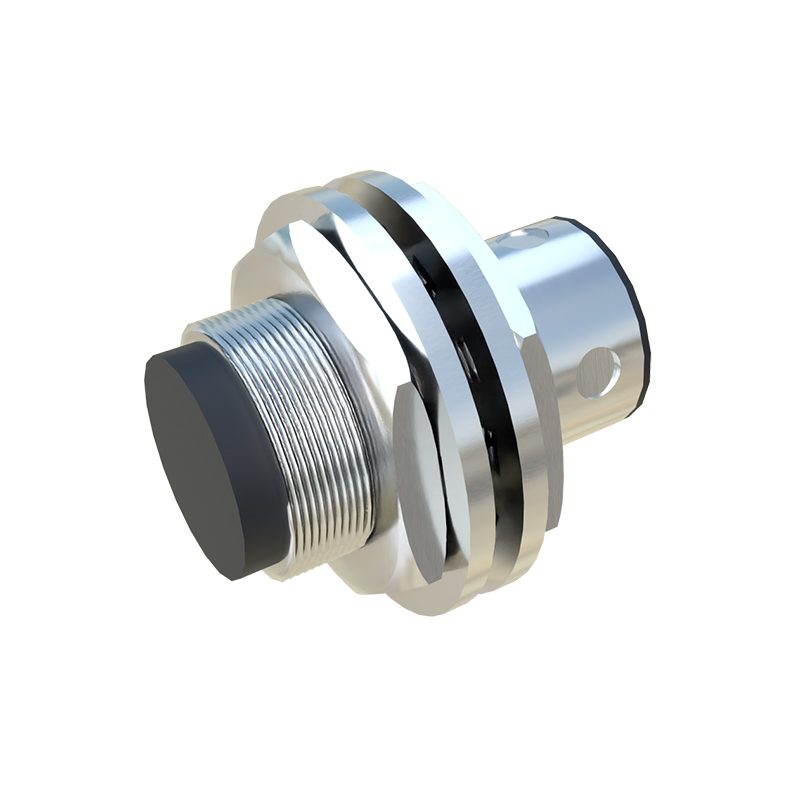
Oscillating proximity sensors, often referred to as inductive or capacitive proximity switches depending on their detection principle, are fundamental components in industrial automation for non-contact object detection. Their operation hinges on the principle of electromagnetic or electrostatic field oscillation and the disturbance caused by a target object. This article delves into the core working principles, distinguishing between the two primary types, and explores their key characteristics and typical applications.
At the heart of an inductive oscillating proximity sensor is a coil that forms part of a tuned LC (Inductor-Capacitor) oscillator circuit. This circuit is designed to generate a high-frequency electromagnetic field that radiates from the active face of the sensor. When no conductive (typically metallic) target is within this oscillating field, the circuit oscillates at its designed, stable frequency. The amplitude of this oscillation is monitored by a subsequent evaluation circuit. As a conductive target approaches the sensor's active face, eddy currents are induced on the surface of the target. These eddy currents draw energy from the oscillating circuit, causing a measurable decrease in the amplitude of the oscillation. The evaluation circuit detects this amplitude attenuation and triggers a switching action—either opening or closing an output circuit—when the amplitude drop exceeds a predefined threshold. This switching point is known as the nominal sensing distance (Sn). It's crucial to note that the sensing distance can be influenced by the target material's conductivity and permeability; for instance, steel is detected at a greater distance than aluminum or copper for a given sensor.
Capacitive oscillating proximity sensors operate on a similar oscillation principle but respond to a different physical property. Instead of a coil, the active element forms one plate of a capacitor, with the earth ground or a separate reference electrode acting as the other plate. The sensor's internal oscillator circuit generates an electrostatic field. The capacitance of this system changes when any material with a dielectric constant different from air (εr > 1) enters the field. This includes not only metals but also liquids, plastics, wood, and granular materials. As the target approaches, the increased capacitance alters the oscillation conditions. Similar to the inductive type, an evaluation circuit monitors these changes—often in frequency or amplitude—and triggers an output switch when the change surpasses a set level. Many capacitive sensors feature a sensitivity adjustment potentiometer to compensate for different material types or to ignore certain background materials like a container wall.
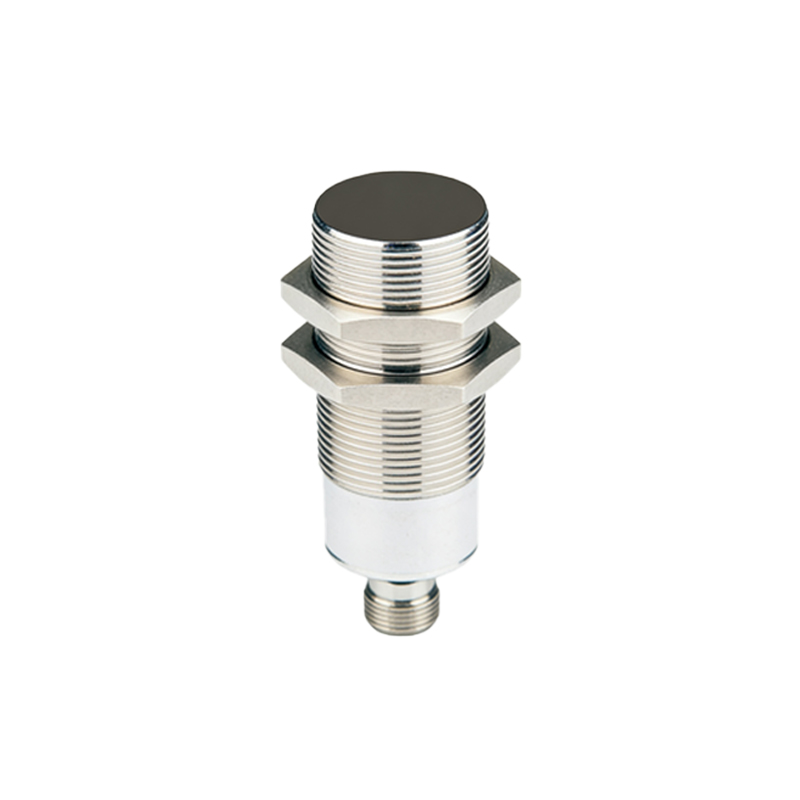
Several defining characteristics are common to both sensor families. They are inherently self-contained, solid-state devices with no moving parts, leading to high reliability and long operational life. The output is typically a switched DC signal from an NPN or PNP transistor, or sometimes a relay contact. A key parameter is the hysteresis, which is the difference between the switch-on point as the target approaches and the switch-off point as it recedes. This hysteresis prevents output chatter when a target is positioned right at the sensing limit. Another critical specification is the repeat accuracy, defining how consistently the sensor switches at the exact same distance under identical conditions.
The choice between inductive and capacitive oscillating sensors is application-driven. Inductive sensors are the workhorses of metal detection in machinery. Common applications include position sensing of machine tool parts, end-of-travel limit detection, counting metal objects on conveyors, and verifying the presence of parts in fixtures or assemblies. Their insensitivity to non-metals makes them robust in dirty, oily environments.
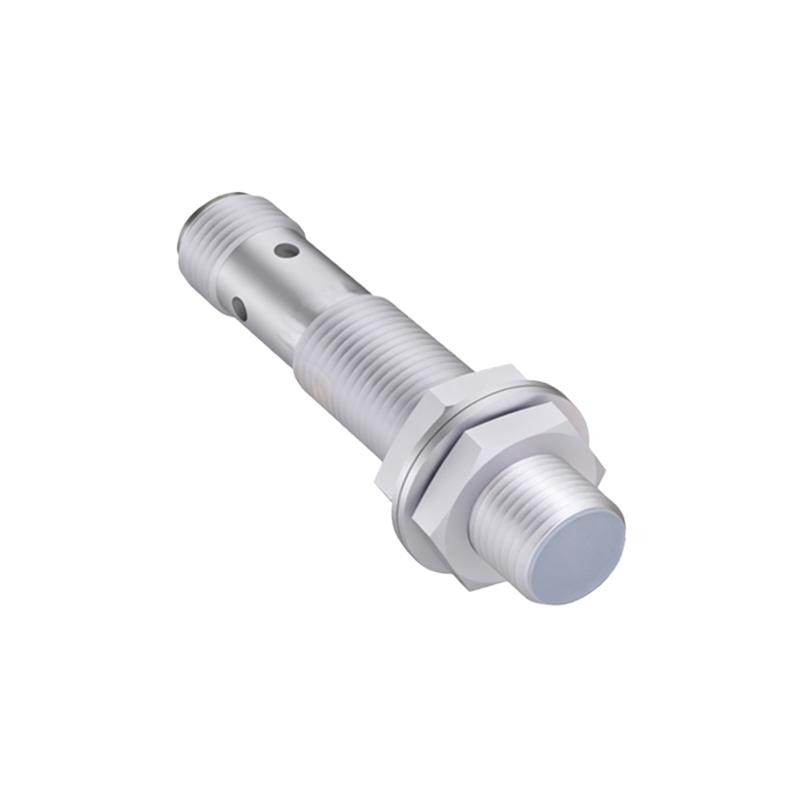
Capacitive sensors, with their material-agnostic detection capability, find use in more diverse scenarios. They are employed for level detection of liquids, powders, or granules in tanks and hoppers. They can detect the presence of plastic bottles or glass containers on production lines, sense the fill level inside a non-metallic pipe, or even function as touch-sensitive control interfaces. A frequent use is as a non-contact liquid level switch, where the sensor is mounted externally on a plastic or glass tank wall.
In summary, oscillating proximity sensors provide a robust, non-contact method for object detection by monitoring disturbances in an generated oscillating field. Inductive types excel in metallic target applications due to eddy current effects, while capacitive types offer versatility by responding to changes in capacitance caused by nearly any material. Understanding their underlying principles—the LC oscillator circuit's amplitude shift for inductive sensors and the variable capacitance effect for capacitive sensors—is essential for selecting the right sensor to enhance reliability and efficiency in automated systems, from simple presence checking to complex process control.