Laser displacement sensors are non-contact measurement devices that utilize laser triangulation or time-of-flight principles to determine the precise distance to a target object. By emitting a focused laser beam onto the target surface and analyzing the reflected light, these sensors provide high-accuracy, high-resolution measurements critical for quality control, automation, and research. The core technology often involves a position-sensitive detector (PSD) or a CMOS/CCD array. When the reflected beam's position shifts due to changes in target distance, the sensor's internal processor calculates the displacement with micron-level precision. This capability makes them indispensable in environments where physical contact is impractical or could damage the target.
The advantages of laser displacement sensors are numerous. They offer exceptional speed, enabling real-time monitoring in dynamic processes such as robotic assembly lines or vibrating machinery. Their non-contact nature eliminates wear and tear, ensuring long-term stability and reducing maintenance costs. Furthermore, they can measure a wide variety of materials, including metals, plastics, glass, and even liquids, provided the surface reflects sufficient laser light. Modern sensors incorporate advanced features like background suppression, which filters out ambient light interference, and multi-peak detection, which allows measurement on translucent or uneven surfaces.
In industrial applications, these sensors are pivotal. On production lines, they perform critical tasks like thickness gauging of rolled metals, warp detection of circuit boards, and coplanarity checks of electronic components. In robotics, they provide essential feedback for precise positioning and path correction. Automotive manufacturers rely on them for weld seam inspection and panel gap measurement. Beyond manufacturing, they are used in structural health monitoring of bridges and buildings, as well as in scientific research for material deformation studies.
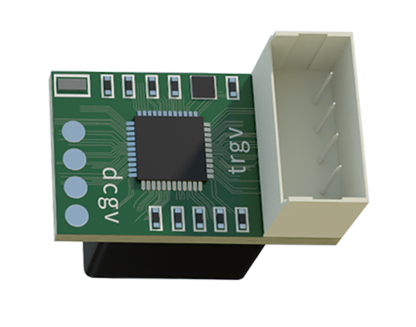
Selecting the appropriate laser displacement sensor requires careful consideration of several key parameters. Measurement range, stand-off distance, and spot size must align with the target's size and accessibility. Resolution and linearity define the sensor's accuracy and must meet the application's tolerance requirements. The sampling speed must be high enough to capture fast-moving targets without aliasing. Environmental factors are equally crucial; sensors must be rated for operational temperatures, resistant to dust and moisture (often indicated by IP ratings), and capable of withstanding vibrations present in industrial settings. Communication interfaces, such as analog voltage/output, Ethernet, or fieldbus protocols, must integrate seamlessly with the existing control system.
Despite their robustness, laser displacement sensors have limitations. Highly reflective or specular surfaces can cause saturation or erroneous readings, often requiring special filters or diffusers. Perfectly absorbing black surfaces may return insufficient signal. In such cases, confocal chromatic or other optical sensor types might be preferable. Regular calibration against known standards is necessary to maintain accuracy over time.
The future of laser displacement sensing is geared towards smarter, more integrated solutions. The integration of embedded intelligence allows for in-sensor data processing and decision-making, reducing the load on central controllers. Miniaturization continues, enabling installation in increasingly confined spaces. Furthermore, the combination of multiple sensor heads with sophisticated software is paving the way for advanced 3D profiling and surface contour mapping, expanding their utility in reverse engineering and complex inspection routines. As Industry 4.0 advances, these sensors will become even more networked, providing vital data for predictive maintenance and overall equipment effectiveness (OEE) calculations, solidifying their role as a cornerstone of modern precision measurement and automation.