In the world of automation and smart devices, the ability to detect the presence or absence of an object without physical contact is fundamental. Among the various technologies enabling this capability, optical proximity sensors stand out for their precision, versatility, and reliability. These sensors are ubiquitous, found in everything from consumer smartphones to complex industrial assembly lines. But what exactly are they, and how do they operate?
At its core, an optical proximity sensor is a device that uses light to detect the presence, absence, or distance of a target object. The basic principle involves emitting a beam of light—typically infrared (IR) light, which is invisible to the human eye—and then measuring the properties of the light that returns. The system primarily consists of two key components: an emitter (usually an IR LED) and a receiver (a photodiode or phototransistor). The configuration of these components defines the two main operating modes: through-beam and reflective.
In the through-beam, or opposed-mode, setup, the emitter and receiver are placed opposite each other. The sensor detects an object when it interrupts the light beam traveling from the emitter to the receiver. This method offers the longest sensing range and highest accuracy, as it is less susceptible to the color or reflectivity of the target. It is commonly used in safety systems, such as garage door sensors, and in industrial counting or registration applications.
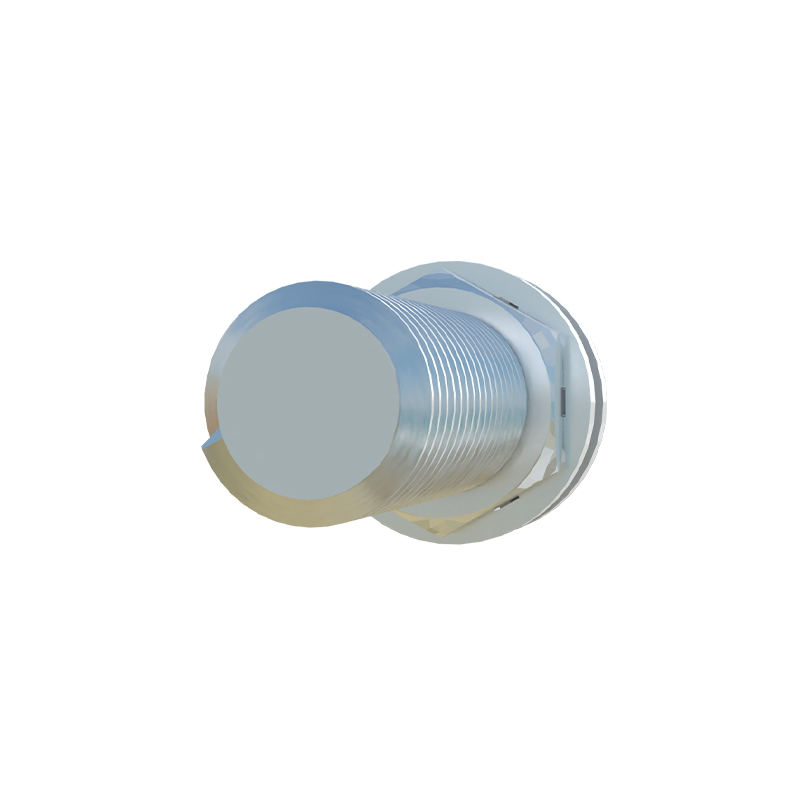
The reflective mode is more common in compact devices. Here, the emitter and receiver are housed in the same unit. The emitted light travels out, hits a target object, and reflects back to the receiver. This mode can be further divided into diffuse-reflective and retro-reflective types. Diffuse-reflective sensors, the most widespread type, detect light reflected directly off the target object. Their effective range is shorter and can be influenced by the object's color and surface texture. A classic example is the sensor that turns off a smartphone's screen during a phone call. Retro-reflective sensors use a separate reflector; the emitted light beam travels to the reflector and bounces back to the receiver. An object is detected when it blocks this beam. This type offers a longer range than diffuse sensors and is useful in packaging and material handling.
A more advanced reflective technique is the background suppression method. These sensors can differentiate between the target object and its background based on distance, not just reflectivity. They use triangulation principles; the receiver is positioned at an angle so that light reflected from objects within a specific "window" of distance is focused onto it. Light from objects outside this window misses the receiver. This makes them ideal for detecting objects against similarly colored or highly reflective backgrounds.
The heart of the sensor's intelligence is its electronic circuitry. The receiver converts the incoming light signal into a tiny electrical current. This signal is extremely weak and must be amplified. It then passes through a comparator circuit, which compares it to a predefined threshold value. If the signal strength exceeds the threshold (indicating sufficient reflected light or, in through-beam, a broken beam), the sensor's output switch is triggered, sending a digital signal (ON/OFF) to the connected controller, such as a PLC or microcontroller.
The choice of light source is critical. Infrared light is predominant because it minimizes interference from ambient visible light. Modern sensors often use modulated IR pulses. The emitter sends a pulsed signal at a specific frequency, and the receiver's circuit is tuned to recognize only that frequency. This sophisticated technique, known as modulated or synchronous detection, makes the sensor highly immune to ambient light interference from sources like sunlight or factory lighting, ensuring stable operation in challenging environments.
The applications of optical proximity sensors are vast and cross multiple industries. In consumer electronics, they manage display power by turning screens off when a phone is held to the ear. In automotive systems, they are used in rain-sensing wipers, automatic headlight control, and obstacle detection for parking aids. Industrial automation relies on them for precise object detection on conveyor belts, robotic positioning, bottle cap inspection, and part counting. They also play a role in security systems for intrusion detection and in home appliances like automatic soap dispensers and paper towel dispensers.
When selecting an optical proximity sensor, several factors must be considered. The sensing range, or the maximum distance at which it can reliably detect a standard target, is paramount. The size and material of the target object, along with its color and surface finish (shiny, matte, transparent), significantly affect performance, especially for diffuse sensors. The required response time—how quickly the sensor can detect a change and trigger its output—is crucial for high-speed applications. Environmental conditions like dust, fog, temperature extremes, and intense ambient light must also be accounted for, as they can scatter or overpower the sensor's light beam.
In summary, optical proximity sensors are a mature yet continually evolving technology. Their non-contact nature, fast response