In the world of industrial automation and machinery, the ability to detect the presence or absence of an object without physical contact is a fundamental requirement. Among the various technologies that enable this, inductive proximity sensors stand out for their robustness, reliability, and precision in metallic environments. These non-contact electronic devices are ubiquitous on factory floors, silently ensuring processes run smoothly, from assembly lines to robotic arms.
At its core, an inductive proximity sensor operates on the principle of electromagnetic induction. The sensor generates an oscillating electromagnetic field from its active face, typically using a coil wound around a ferrite core. When a metallic object enters this field, eddy currents are induced on the surface of the target. These eddy currents draw energy from the sensor's oscillator circuit, causing a change in its amplitude. The sensor's internal circuitry detects this energy loss and triggers a switching signal—either turning on or off—to indicate the object's presence. This entire process happens in microseconds, allowing for high-speed detection.
The design of these sensors offers significant advantages. Firstly, they are exceptionally durable. With no moving parts and sensing faces often made of robust materials like PTFE or nickel-plated brass, they are resistant to wear, dirt, oil, and coolants. This makes them ideal for harsh industrial environments where optical sensors might fail due to contamination. Secondly, they are purely binary devices; they provide a clear "on" or "off" signal, simplifying integration into control systems like PLCs (Programmable Logic Controllers). Their repeatability, meaning the consistency of the switching point, is extremely high, which is critical for precision manufacturing.
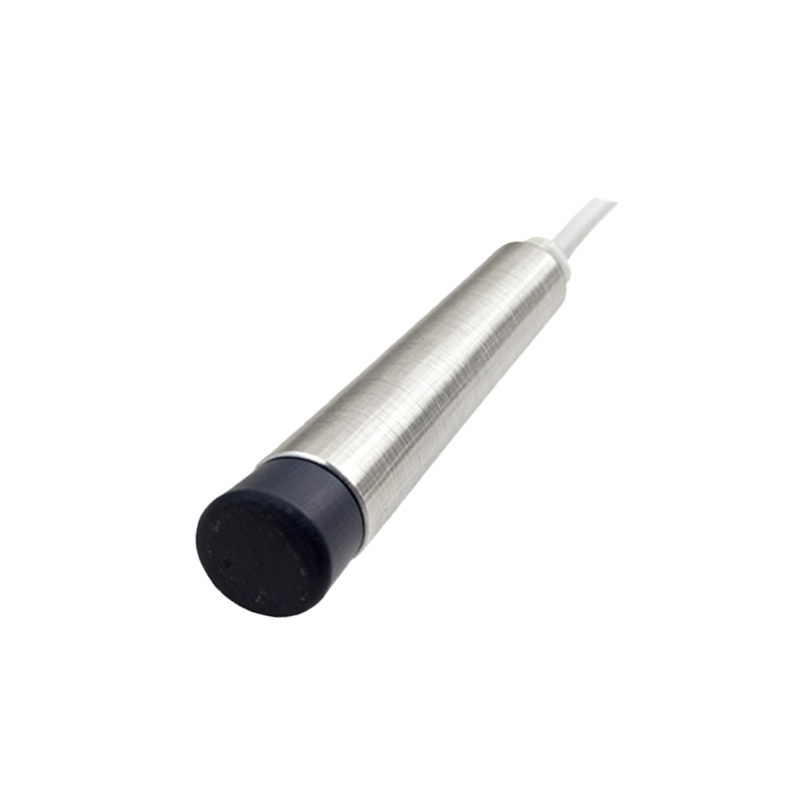
A key specification for any inductive sensor is its nominal sensing distance, denoted as 'Sn'. This is the theoretical operating distance under standardized conditions. However, practical sensing range is influenced by the target material. Standard sensors are calibrated for mild steel. For other metals, a correction factor must be applied. For instance, stainless steel might reduce the effective range to about 80-90% of Sn, while aluminum or copper could reduce it to 30-50%. The shape and size of the target also matter; the ideal target is a square of mild steel with sides equal to the sensor's diameter or thrice the Sn, whichever is greater.
Inductive sensors come in various form factors to suit different mounting and detection needs. The most common are cylindrical barrel sensors in M8, M12, M18, and M30 threaded housings. Rectangular or block-style sensors are used where space is constrained. Furthermore, they are classified by their output type and wiring. Three-wire DC sensors (PNP or NPN) are the industry standard, providing a switched voltage signal. Two-wire AC/DC sensors simplify wiring but have stricter current requirements. Analog output sensors provide a continuous signal proportional to the distance, useful for measuring position or thickness.
The applications are vast and varied. They are used for simple tasks like counting metal parts on a conveyor, detecting the end position of a cylinder, or confirming a robot has picked up a component. In machine tools, they ensure a workpiece is correctly clamped before machining begins. They provide jam detection in packaging machinery by monitoring the position of metal cams. Advanced versions with increased switching frequency are essential in high-speed sorting systems.
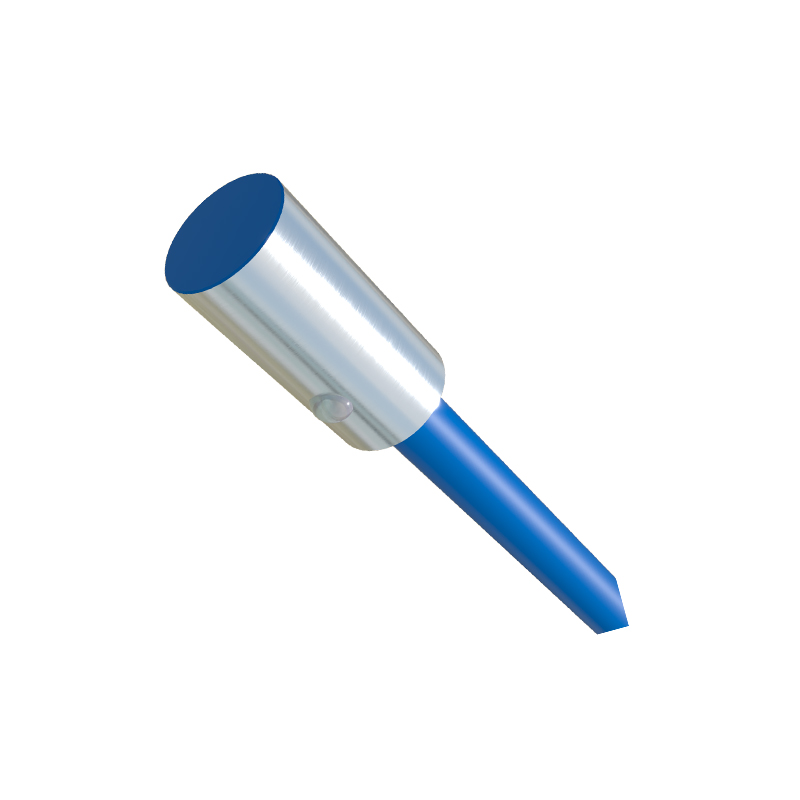
Selecting the right inductive sensor requires careful consideration. Beyond the physical size and sensing distance, engineers must evaluate the operating voltage (e.g., 10-30V DC), output current capacity, switching frequency (for high-speed applications), and environmental ratings like IP67 or IP69K for protection against dust and water ingress. The housing material is also critical; stainless steel sensors are necessary for washdown areas in food and beverage or pharmaceutical plants.
In conclusion, inductive proximity sensors are a cornerstone of modern industrial sensing. Their simple yet effective operating principle, combined with rugged construction and versatile designs, makes them an indispensable tool for engineers designing automated systems. By understanding their characteristics, limitations, and correct application parameters, one can reliably solve a multitude of position and presence detection challenges in any environment involving metallic objects.