In the rapidly evolving landscape of industrial automation and robotics, the demand for precise, reliable, and intelligent sensing technology has never been greater. Among the key players driving this innovation is Slamtec, a company that has carved a significant niche in the development of laser-based sensors and solutions. For electrical engineers and system integrators, understanding the capabilities and applications of Slamtec laser sensors is crucial for designing next-generation automated systems.
At its core, Slamtec specializes in Light Detection and Ranging (LiDAR) technology. Unlike simple proximity sensors, Slamtec's laser sensors emit pulsed light waves and measure the time it takes for the reflection to return. This Time-of-Flight (ToF) principle allows for the creation of highly accurate two-dimensional or three-dimensional maps of the surrounding environment. The primary components include a laser emitter, a rotating or solid-state scanning mechanism, and a sensitive photodetector. The resulting point cloud data provides a detailed spatial representation, which is indispensable for applications requiring navigation, obstacle avoidance, and environmental modeling.
One of the standout series from Slamtec is the RPLiDAR family. These sensors are renowned for their cost-effectiveness and robust performance in indoor environments. Models like the RPLiDAR A1 and A2 offer a 360-degree scanning field with a range of several meters and millimeter-level accuracy. For electrical engineers, integrating these sensors involves careful consideration of interface protocols, typically UART or USB, and power requirements, which are often a low-voltage DC supply. The data output is a continuous stream of distance and angle pairs, which must be processed by an onboard microcontroller or a connected computer running Simultaneous Localization and Mapping (SLAM) algorithms. This integration is a classic example of marrying sensor hardware with sophisticated software to create an intelligent perception system.
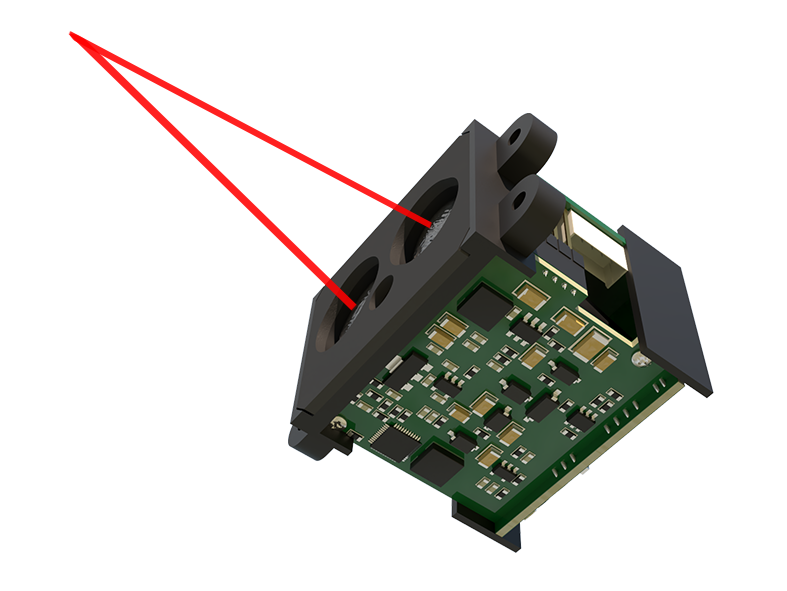
For more demanding industrial applications, Slamtec offers the Slamtec Mapper series. These are higher-performance LiDAR units designed for creating precise maps of larger areas, such as warehouses, factories, or even outdoor spaces. They feature longer range, higher data density, and often integrated inertial measurement units (IMUs) for enhanced accuracy when the sensor is in motion. The electrical design considerations here escalate, involving noise isolation for sensitive signal lines, stable power conditioning to prevent voltage spikes that could damage the laser diode, and robust communication interfaces like Ethernet for high-speed data transfer. Thermal management also becomes a factor, as continuous operation in industrial settings can generate heat that affects laser wavelength and sensor calibration.

The real-world applications of Slamtec laser sensors are vast and transformative. In autonomous mobile robots (AMRs) and automated guided vehicles (AGVs), these sensors are the "eyes" of the system. They enable the robot to build a map of a facility, localize itself within that map in real-time, and dynamically plan collision-free paths. This is a fundamental shift from traditional line-following AGVs, offering unparalleled flexibility. In smart logistics, Slamtec sensors are used for volume measurement of packages on conveyor belts, pallet detection, and automated inventory management. Furthermore, in service robotics, from floor cleaning robots to hospitality assistants, the reliability of Slamtec's LiDAR ensures safe and efficient human-robot interaction.
From an electrical engineering perspective, working with Slamtec sensors presents both challenges and learning opportunities. Signal integrity is paramount. The low-voltage analog signals from the photodetector are susceptible to electromagnetic interference (EMI) from motor drives, power converters, and other industrial equipment. Proper PCB layout techniques—such as grounding schemes, shielding, and the use of differential signaling where applicable—are essential. Power supply design must be clean and regulated; a switching power supply with excessive ripple can introduce noise into the sensor's measurements. Additionally, firmware development for the host processor involves implementing efficient data parsing routines and potentially offloading complex SLAM calculations to more powerful coprocessors.
Looking ahead, the trajectory for Slamtec and laser sensing technology points toward greater integration, miniaturization, and intelligence. The advent of solid-state LiDAR, which eliminates moving parts, promises even higher reliability and smaller form factors. There is also a growing trend toward sensor fusion, where data from Slamtec LiDAR is combined with inputs from cameras, ultrasonic sensors, and odometry wheels to create a redundant, multi-modal perception system that is resilient to failure in any single component. For the forward-thinking electrical engineer, this means designing systems with modularity and computational headroom in mind.
In conclusion, Slamtec laser sensors represent a critical enabling technology in modern electrical and automation projects. Their ability to provide precise, real-time environmental data bridges the gap between mechanical systems and digital control. Successfully implementing these devices requires a holistic understanding of analog and digital circuit design, signal processing, and embedded systems software. As industries continue to push toward greater autonomy and efficiency, the role of sophisticated laser sensors like those from Slamtec will only become more central, making them an essential area of expertise for any engineer working at the forefront of technology.