In the rapidly evolving landscape of industrial automation, robotics, and smart systems, proximity and distance sensors form the critical sensory layer. Selecting the right sensor technology is paramount for ensuring precision, reliability, and efficiency. As a seasoned electrical engineer, I have compiled this 2024 ranking based on a comprehensive evaluation of technical performance, market adoption, application versatility, and cost-effectiveness. This guide aims to cut through the marketing noise and provide a clear, technically grounded overview for fellow engineers and procurement specialists.
1. LiDAR (Light Detection and Ranging)
LiDAR remains the undisputed leader for high-precision, long-range, and 3D mapping applications. Modern solid-state LiDAR units have dramatically reduced size and cost, fueling their adoption beyond autonomous vehicles into AGVs, drones, and industrial metrology. Their ability to generate precise point clouds makes them ideal for complex environment modeling. However, performance can degrade in adverse weather conditions like heavy fog or rain.
2. Time-of-Flight (ToF) Sensors
ToF sensors have seen massive improvements in integration and accuracy. By measuring the round-trip time of a light signal, they provide excellent medium-range distance data. Their compact size and fast response time make them perfect for robotics, gesture recognition, and object detection in logistics. Modern multi-zone ToF sensors can even provide simple presence/absence data across different fields.

3. Ultrasonic Sensors
A timeless workhorse, ultrasonic sensors offer exceptional reliability in challenging environments. They are largely unaffected by target color, transparency, or ambient light, making them ideal for detecting liquids, transparent objects, or in dusty conditions. Common applications include tank level sensing, parking assistance, and collision avoidance. Their main limitations are slower response times and a relatively large minimum sensing distance.
4. Inductive Proximity Sensors
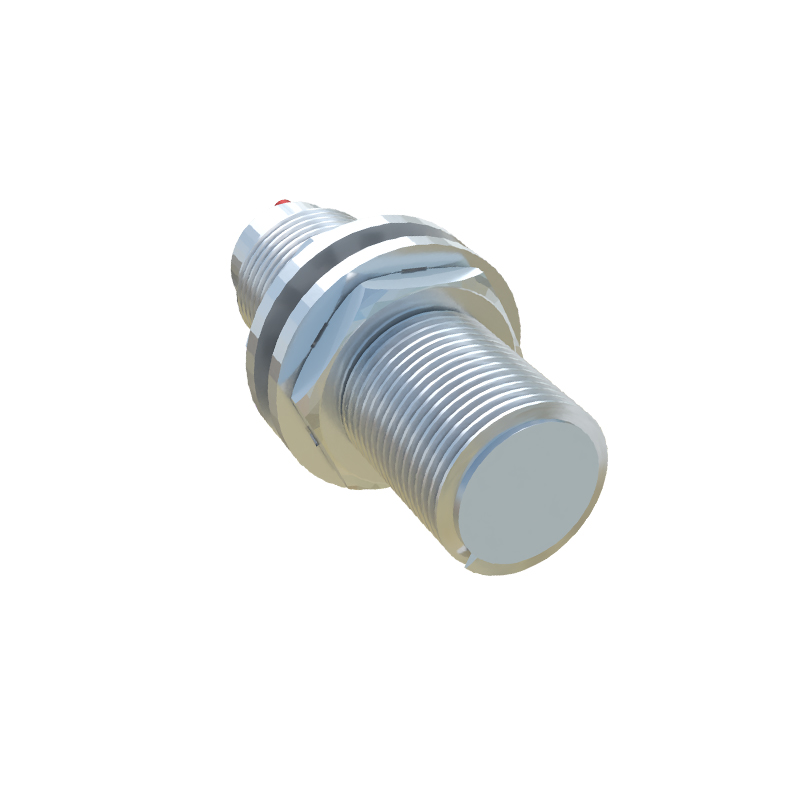
For the robust detection of metallic objects in harsh industrial settings, inductive sensors are the go-to choice. They generate an electromagnetic field and detect eddy current losses in a target. Extremely durable, resistant to dirt and moisture (high IP ratings), and capable of high switching frequencies, they are foundational in factory automation for position sensing, counting, and limit switching.
5. Capacitive Proximity Sensors
Capacitive sensors can detect nearly any material—metals, plastics, liquids, powders, and even biological substances. They sense changes in capacitance caused by the presence of a dielectric or conductive object. This versatility makes them indispensable for level control of non-metallic materials, touch interfaces, and detecting filled vs. empty containers. Sensitivity to environmental factors like humidity requires careful installation.
6. Photoelectric Sensors
Offering the longest sensing ranges among non-LiDAR options, photoelectric sensors use a light beam (usually infrared, visible red, or laser). They come in through-beam, retro-reflective, and diffuse (proximity) modes. Laser versions provide highly accurate distance or position measurement. They excel in packaging, material handling, and assembly line applications, though their performance can be compromised by highly reflective or absorbent surfaces.
7. Laser Triangulation Sensors
For micron-level accuracy at short ranges, laser triangulation is unmatched. It projects a laser spot onto a target, and a receiver lens images the spot onto a position-sensitive detector. Any change in the target's distance shifts the spot's position. This technology is critical in precision manufacturing for thickness gauging, profile measurement, and surface inspection.
8. Radar Sensors (mmWave)
Millimeter-wave radar sensors are gaining significant traction for their unparalleled performance in poor visibility conditions. They penetrate dust, fog, and plastic enclosures. Modern 60GHz and 77GHz chipsets are compact and affordable, enabling applications in industrial level measurement, traffic monitoring, and vital sign detection. Their complexity in signal processing is a consideration.
9. Magnetic Proximity Sensors (Hall Effect & Reed Switches)
These sensors detect the presence of a magnetic field, typically from a permanent magnet. Hall-effect sensors are solid-state, allowing for very high switching frequencies and long life. Reed switches are simpler and lower cost. Both are used for detecting cylinder piston position, rotary encoding, and in safety applications where non-contact sensing is needed in sealed environments.
10. Vision Systems (Stereo Vision)
While not a single "sensor," stereo vision systems use two or more cameras to calculate distance through disparity, mimicking human binocular vision. Advances in processing power and algorithms have made them more accessible. They provide rich contextual data beyond simple distance, useful for complex pick-and-place, inspection, and navigation tasks. Setup and calibration are more involved than with single-point sensors.
Selection Criteria Summary:
When choosing a sensor, engineers must balance key parameters: Required Range, Accuracy/Resolution, Response Time, Environmental Robustness (IP rating