In the realm of industrial automation, robotics, construction, and logistics, the ability to measure distance with high accuracy, speed, and reliability is paramount. Laser distance sensors have emerged as a cornerstone technology, enabling precise non-contact measurement across a vast array of applications. This guide delves into the operating principles, key specifications, and diverse use cases of these sophisticated instruments, providing a foundational understanding for engineers and technical decision-makers.
At its core, a laser distance sensor operates on the principle of time-of-flight (ToF) or phase-shift measurement. In the ToF method, the sensor emits a short pulse of laser light towards a target. The light reflects off the target's surface and returns to a receiver within the sensor. An internal high-speed clock measures the elapsed time between emission and reception. Since the speed of light is a known constant, the distance can be calculated with the formula: Distance = (Speed of Light × Time of Flight) / 2. Phase-shift sensors, on the other hand, emit a continuous wave of modulated laser light. The phase difference between the emitted and reflected wave is measured, and this phase shift is directly proportional to the distance traveled. ToF sensors are typically excellent for long-range measurements, while phase-shift sensors offer higher precision at shorter ranges.

Selecting the appropriate laser sensor requires careful consideration of several critical specifications. Measuring Range defines the minimum and maximum distances over which the sensor can operate reliably, from a few centimeters to several hundred meters. Accuracy and Repeatability are often confused but distinct. Accuracy refers to how close the measured value is to the true distance, while repeatability indicates the sensor's consistency in returning the same value for a static target under identical conditions. High-end industrial sensors can achieve sub-millimeter accuracy. Response Time or measurement frequency, measured in Hertz (Hz), determines how quickly the sensor can take and output readings. This is crucial for high-speed production lines or dynamic robotic guidance. Laser Class (typically Class 1 or Class 2) is a vital safety designation, with Class 1 being inherently safe under all conditions of normal use. Finally, environmental factors like Ambient Light Immunity, Operating Temperature, and Ingress Protection (IP) Rating are essential for ensuring stable performance in harsh industrial settings with dust, moisture, or extreme temperatures.
The applications for laser distance sensors are remarkably broad. In factory automation, they are indispensable for precise positioning of robotic arms, controlling fill levels in tanks or silos, detecting the presence or absence of objects on conveyor belts, and measuring the dimensions of products for quality control. The construction industry utilizes long-range laser distance meters (or "laser rangefinders") for surveying, leveling, and calculating areas and volumes with remarkable speed, replacing traditional tape measures. Autonomous Mobile Robots (AMRs) and Automated Guided Vehicles (AGVs) rely on laser sensors, often in the form of 2D LiDAR, for navigation, obstacle avoidance, and mapping their surroundings. In logistics, they are used for palletizing, warehouse inventory management via dimensioning systems, and dock guidance for trucks.
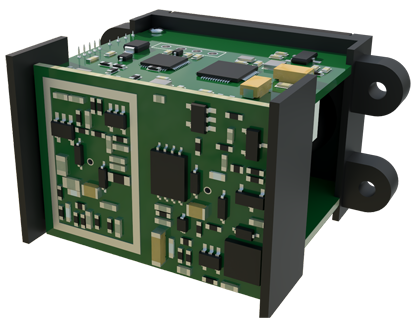
Modern advancements continue to push the boundaries of laser sensing technology. The integration of Industrial Internet of Things (IIoT) capabilities allows sensors to communicate data directly to cloud platforms for predictive maintenance and process optimization. Multi-echo technology enables a sensor to receive multiple return signals from a single pulse, allowing it to "see through" optical interference like dust, steam, or a wire mesh, and reliably detect the true target behind it. Furthermore, miniaturization and cost reduction are making high-precision laser sensing accessible to a wider range of applications, from consumer electronics to advanced driver-assistance systems (ADAS).
In conclusion, laser distance sensors represent a mature yet rapidly evolving technology that provides a critical layer of spatial intelligence to automated systems. Their non-contact nature, combined with high precision, speed, and robustness, makes them an irreplaceable tool for engineers seeking to enhance efficiency, quality, and safety. A thorough understanding of their operating principles and specifications is the first step toward successfully integrating these powerful devices into any measurement or control system, driving innovation and operational excellence across countless industries.