Capacitive proximity sensor 160 represents a sophisticated class of non-contact detection devices widely employed in modern industrial automation. Operating on the fundamental principle of capacitance change, these sensors detect the presence or absence of both conductive and non-conductive materials, including liquids, powders, plastics, and wood, making them exceptionally versatile across diverse production environments. Unlike inductive sensors that only detect metals, capacitive sensors function by generating an electrostatic field. When any material enters this detection field, it alters the dielectric constant, thereby changing the capacitance of the oscillator circuit. The sensor's internal circuitry monitors this change and triggers a solid-state output switch when a preset threshold is reached.
The "160" series typically denotes a specific housing size or form factor, often conforming to international standards like IEC 60947-5-2. A standard capacitive sensor 160 features a cylindrical metallic or polymer housing with an 18mm or 30mm diameter, offering robust protection ratings of IP67 or higher for resistance against dust, coolants, and temporary immersion. Key performance parameters include a sensing range adjustable via a potentiometer, which can vary from a few millimeters up to 25mm depending on the target material's dielectric properties. The output configuration is commonly either PNP (sourcing) or NPN (sinking), with options for normally open (NO) or normally closed (NC) switching logic, compatible with PLCs and control systems.
Application engineering for the capacitive sensor 160 requires careful consideration of the installation environment. A primary advantage is its ability to sense through non-metallic container walls, enabling level detection of liquids or granular materials without direct contact. For instance, in packaging lines, it reliably detects plastic bottles or cardboard boxes on conveyor belts. In wood processing, it senses lumber regardless of wood type or moisture content. However, challenges such as false triggering can occur due to environmental factors like humidity, temperature fluctuations, or conductive dust accumulation on the sensor face. Effective mitigation strategies involve proper shielding adjustment, maintaining a sufficient installation distance from grounded metal backplanes, and utilizing sensors with temperature compensation circuits.
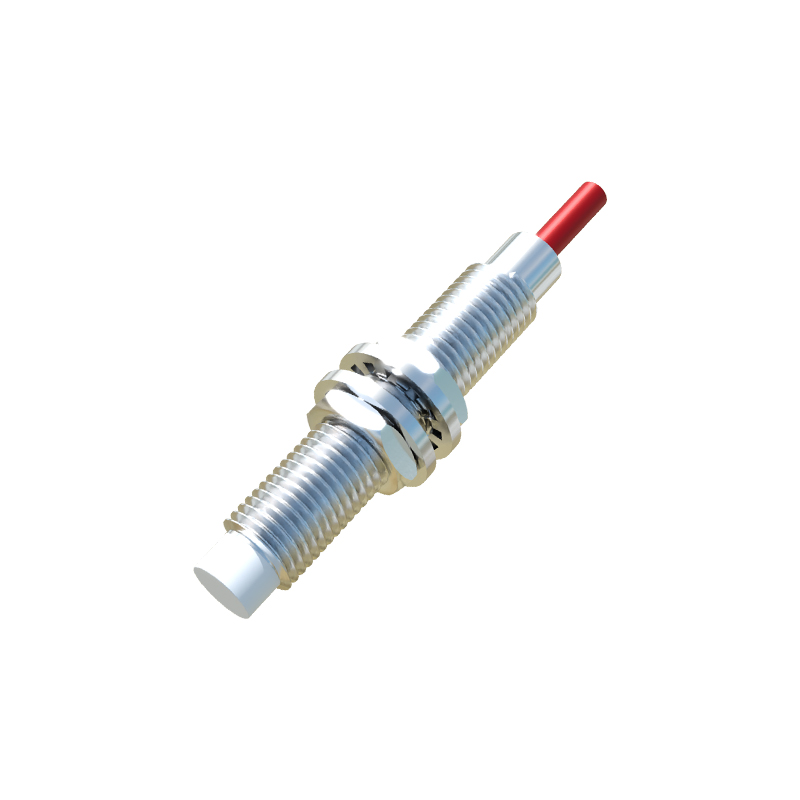
When integrating the sensor 160 into a control system, electrical compatibility is paramount. Most models operate on a wide DC voltage range (10-30V DC) or standard AC voltages. The load current must not exceed the sensor's specified rating, typically around 200mA. For wiring, a standard three-wire configuration is used: brown for positive supply, blue for negative/common, and black for the switched output signal. Advanced versions may include IO-Link communication for digital parameterization and diagnostics, enabling real-time monitoring of switching distance and signal strength for predictive maintenance.
Calibration and tuning are straightforward but critical. The sensitivity potentiometer allows fine-tuning of the detection threshold. The procedure involves placing the target object at the desired sensing distance and adjusting the potentiometer until the output LED indicator toggles reliably. For applications involving material level control, a two-point calibration—setting thresholds for empty and full states—is recommended. Regular functional checks should be part of preventive maintenance schedules to ensure long-term reliability, especially in harsh conditions involving chemical exposure or extreme temperatures.
In summary, the capacitive proximity sensor 160 is an indispensable tool for solving complex detection tasks where other sensor types fall short. Its ability to interface with a vast array of materials, coupled with rugged construction and flexible electrical interfaces, ensures optimal performance in automated assembly, food and beverage processing, pharmaceutical manufacturing, and bulk material handling. Selecting the correct model variant—shielded or unshielded, flush or non-flush mounting—based on the specific application requirements is the final step to unlocking its full potential for enhancing operational efficiency and system intelligence.