In the realm of industrial assembly and precision fastening, the handheld electric screwdriver remains an indispensable tool. Its evolution from a simple motorized device to a sophisticated, sensor-integrated system is largely driven by the need for control, safety, and data traceability. At the heart of this evolution lies a critical component: the proximity switch sensor. This article provides a technical examination of proximity sensors within handheld screwdrivers, detailing their operation, types, integration, and pivotal role in modern manufacturing processes.
Fundamentally, a proximity switch sensor in a handheld screwdriver is a non-contact device that detects the presence or absence of a target—typically the screw head or the workpiece itself. Its primary function is to initiate, control, or halt the driving cycle based on the tool's positional relationship to the fastener. Unlike mechanical limit switches, proximity sensors offer wear-free operation, high switching frequency, and resistance to contaminants like dust or coolant, which are common in industrial environments.
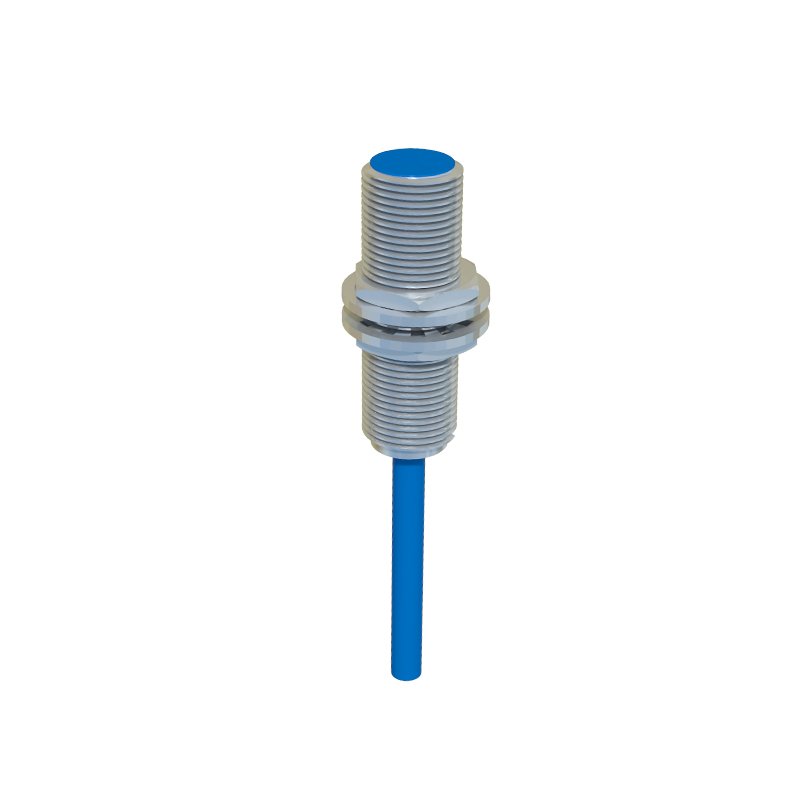
Several sensor technologies are employed, each with distinct advantages. Inductive proximity sensors are most prevalent. They generate an electromagnetic field and detect eddy current losses induced in metallic targets (screws, nuts). When a screw head enters the sensor's active range, it triggers the switch. These sensors are robust, cost-effective, and ideal for detecting ferrous and non-ferrous metals, making them perfect for standard screw-driving applications. Capacitive proximity sensors, on the other hand, can detect both metallic and non-metallic materials (e.g., plastic screws, or the material of the workpiece). They sense changes in capacitance caused by the presence of any dielectric or conductive material. This versatility is useful in specialized assembly tasks.
The integration of these sensors transforms a basic tool into an intelligent device. The sensor is typically mounted near the driver bit or within the nosepiece. Its output is fed into the screwdriver's control unit, which is often a microcontroller. This enables a cascade of critical functions. Firstly, it provides precise start/stop control. The driving cycle only commences when the sensor confirms the bit is properly seated in the screw head and/or the tool is pressed against the workpiece, preventing accidental activation (a key safety feature). Secondly, it enables depth sensing. By monitoring the position of the screw head relative to the sensor during the drive, the system can determine when the screw has reached its preset torque or depth, signaling the motor to stop. This is crucial for achieving consistent clamp load and preventing damage from over-torquing or cross-threading.
Furthermore, in advanced pulsed-tool or servo-driven screwdrivers, the proximity sensor works in concert with encoders and torque transducers. This synergy allows for complex tightening strategies like angle-controlled tightening or yield point control. The sensor data contributes to a complete digital record of each fastening operation—including sequence verification (ensuring the correct screw is driven in the correct location) and error proofing. If a sensor fails to detect a screw presence within a programmed sequence, the tool can halt and alert the operator, preventing incomplete assemblies.
From an engineering perspective, selection criteria are paramount. Key parameters include sensing range (typically short, 1-5mm for precision work), response time (must be faster than the operational cycle), housing size (must fit the compact tool design), and environmental ratings (IP67 or higher for durability). Electrical interfacing, usually PNP or NPN output compatible with the tool's PLC or controller, must also be considered.
In conclusion, the proximity switch sensor is far more than a simple switch in a handheld screwdriver. It is a fundamental enabler of automation, quality control, and operator safety in electrical and mechanical assembly. As Industry 4.0 drives demand for smarter, connected tools, the role of these sensors will only expand, facilitating real-time data acquisition and predictive maintenance. For engineers designing or specifying assembly systems, a thorough understanding of proximity sensor technology is essential for optimizing fastening processes, ensuring product quality, and enhancing overall production line efficiency.