The question "Are new proximity sensors easy to develop?" is a common one in the industrial automation and electronics design communities. The answer, as with most engineering challenges, is nuanced: it depends on the specific technology, performance targets, and integration requirements. The landscape of proximity sensing has evolved dramatically, moving beyond traditional inductive and capacitive models to include ultrasonic, photoelectric (including time-of-flight or ToF), and even novel sensing principles. While the availability of advanced integrated circuits (ICs) and development kits has lowered the barrier to entry, creating a robust, reliable, and commercially viable new proximity sensor remains a significant undertaking.
From a foundational perspective, the core sensing principle must be selected based on the application. Inductive sensors, detecting metallic objects, are well-understood but designing for extreme temperature ranges, specific sensing distances, or immunity to electromagnetic interference (EMI) requires deep expertise in coil design and oscillator circuits. Similarly, capacitive sensors for non-metallic targets are sensitive to environmental humidity and contaminants, demanding sophisticated compensation algorithms. Newer technologies like ToF sensors offer precise distance measurement but involve complex optical alignment, lens design, and signal processing to handle varying surface reflectivities and ambient light conditions. The "easy" part often ends at the evaluation board stage; translating a prototype into a hardened product is where complexity multiplies.
The integration of microcontrollers (MCUs) and dedicated sensor ICs has undoubtedly simplified the electronic design. Many semiconductor manufacturers provide complete signal chains with digital outputs, built-in self-test, and communication protocols like IO-Link. This modularity allows engineers to focus more on application logic and less on analog circuit minutiae. However, this shifts the challenge to firmware and software development. Writing efficient code for calibration, temperature drift compensation, noise filtering, and diagnostic reporting requires a solid understanding of both the sensor physics and embedded systems programming. The software, not just the hardware, often determines the sensor's performance and reliability.
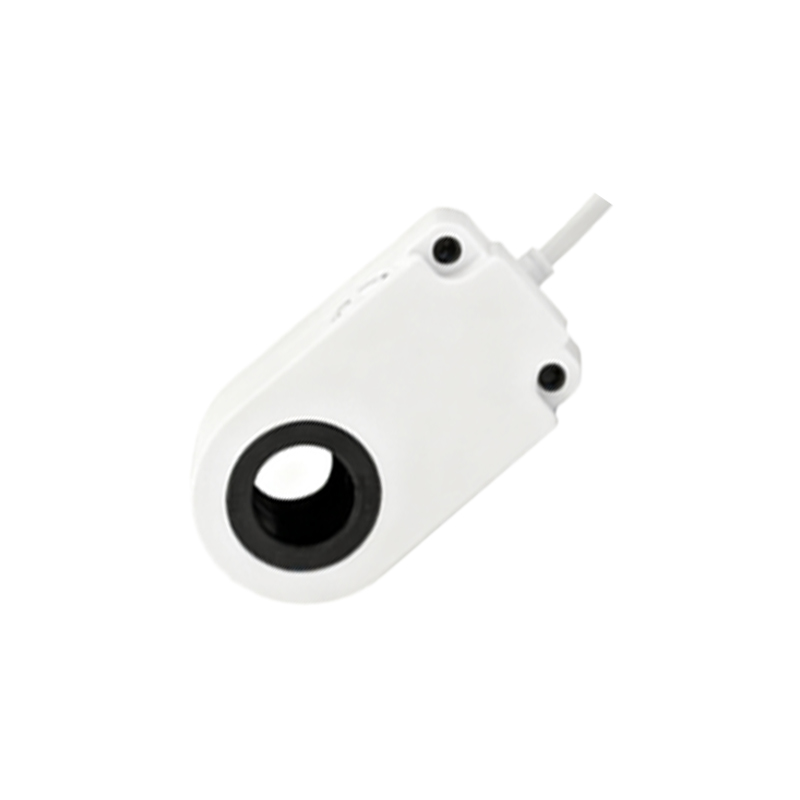
Another critical hurdle is meeting industry standards and certifications. A proximity sensor destined for factory automation must comply with standards like IEC 60947-5-2, ensuring electrical safety, noise immunity, and environmental robustness (IP ratings). Achieving these certifications involves rigorous testing for electrical surge immunity, electrostatic discharge (ESD), and operational lifespan. This compliance phase is non-trivial and requires dedicated resources and testing equipment, adding time and cost to the development cycle. It's a phase where many DIY or hastily developed products fail.
Furthermore, the mechanical design and packaging present their own set of challenges. The sensor housing must protect delicate electronics from shock, vibration, chemicals, and extreme temperatures while allowing the sensing field to function correctly. For example, the material and thickness of the face of an inductive sensor directly affect its sensing range. Designing a compact, rugged, and manufacturable enclosure is a specialized task that blends electrical and mechanical engineering.
Finally, consider the ecosystem. A modern "smart" sensor is often part of a larger Industrial Internet of Things (IIoT) network. Adding features like predictive maintenance data, parameter configurability, and network connectivity adds layers of complexity in communication stack implementation, cybersecurity considerations, and power management for wireless versions.
In conclusion, developing a new proximity sensor is more accessible than ever due to advanced components and reference designs. A basic functional prototype can be assembled relatively quickly by a competent engineer. However, the journey from a working prototype to a polished, reliable, certified, and market-ready product is far from easy. It demands a multidisciplinary approach encompassing physics, analog/digital circuit design, embedded software, mechanical engineering, and compliance testing. For a company with established expertise, developing a new variant may be a structured process. For newcomers, the path is steep, filled with hidden challenges that extend well beyond the initial sensing concept. The true difficulty lies not in making a device that senses, but in creating one that senses correctly, consistently, and safely for years in harsh industrial environments.