In industrial automation and machinery design, proximity sensors are pivotal components for detecting the presence or absence of objects without physical contact. A common query among engineers and designers is whether these sensors can be effectively embedded within ferrous materials, such as steel or iron. This article delves into the technical feasibility, challenges, and best practices for embedding proximity sensors in ferrous substrates, addressing key considerations for reliable operation.
Proximity sensors, particularly inductive types, operate by generating an electromagnetic field. When a metallic object enters this field, it induces eddy currents, causing a change in the sensor's oscillation amplitude. This change is detected and converted into an output signal. Ferrous materials, like iron and steel, are magnetic and conductive, which can influence the sensor's electromagnetic field. Embedding a sensor directly into such materials poses unique challenges. The primary issue is the shielding effect: ferrous materials can attenuate or distort the electromagnetic field, reducing the sensor's effective sensing range and potentially causing false triggers or missed detections. For instance, if a sensor is fully encased in steel, its field may be largely contained within the material, limiting its ability to detect external targets.
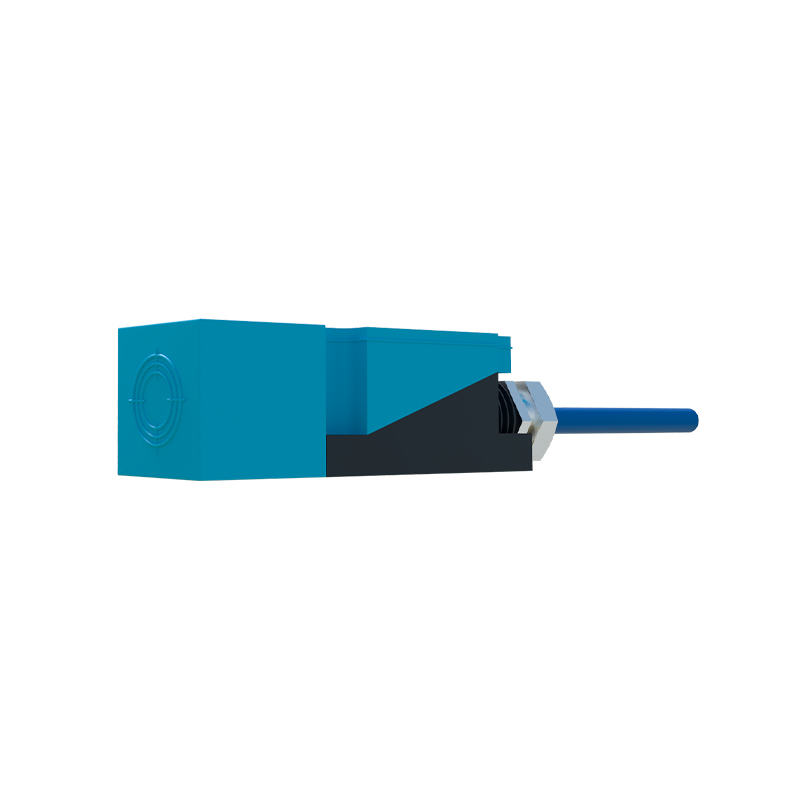
However, embedding is not impossible. With careful design and selection, proximity sensors can be integrated into ferrous structures. Key factors include sensor type, embedding depth, and material thickness. Inductive proximity sensors are typically used for metal detection, but for ferrous embedding, specialized models with extended sensing ranges or shielded designs may be necessary. Shielded sensors have a metal ring around the sensing face, which focuses the field forward, minimizing lateral interference from surrounding ferrous material. This makes them more suitable for flush mounting in metal enclosures. In contrast, unshielded sensors have a wider field and are less ideal for embedding, as they are more susceptible to interference.
The embedding depth and ferrous material thickness are critical. As a rule, the sensor should be positioned so that its sensing face is as close to the surface as possible. If the ferrous layer is too thick, it can significantly dampen the field. Manufacturers often provide derating curves or guidelines: for example, a sensor with a nominal range of 10mm might have its effective range reduced to 5mm when embedded in 5mm thick steel. Engineers must consult datasheets to adjust for these losses. Additionally, the sensor housing should be non-ferrous (e.g., brass or stainless steel) to prevent further interference. Some sensors are specifically designed for embedding in metal, featuring robust housings and optimized field patterns.
Applications for embedded proximity sensors in ferrous materials are found in harsh environments where protection is needed. Examples include heavy machinery, automotive assembly lines, or marine equipment, where sensors are recessed into steel frames to avoid physical damage from impacts or debris. In such cases, embedding enhances durability but requires precise calibration. Testing in situ is essential to ensure performance, as factors like temperature variations and material impurities can affect sensitivity.
To summarize, embedding proximity sensors in ferrous materials is feasible with the right approach. Select shielded inductive sensors, minimize embedding depth, use non-ferrous housings, and account for range reduction. Always refer to manufacturer specifications and conduct real-world testing. This integration can lead to robust, space-saving designs in industrial settings, though it demands a thorough understanding of electromagnetic principles. As technology advances, sensors with enhanced penetration capabilities may simplify this process, but for now, careful engineering remains key to success.