In the dynamic landscape of industrial automation, proximity sensors stand as fundamental, yet sophisticated, components. These non-contact devices are the silent sentinels of modern manufacturing, enabling precise detection, positioning, and control without physical interaction. As an electrical engineer with extensive field experience, I aim to provide a detailed exploration of these critical sensors, focusing on their operational principles, key types, selection criteria, and practical application insights.
At its core, a proximity sensor detects the presence or absence of an object within its sensing range. It achieves this by emitting an electromagnetic field or a beam of electromagnetic radiation and looking for changes in the field or return signal. The primary advantage is the elimination of mechanical wear and tear associated with limit switches, leading to enhanced reliability, faster response times, and suitability for harsh environments.
The industrial realm is dominated by several key types of proximity sensors, each with distinct operating principles and ideal use cases.

Inductive Proximity Sensors are the workhorses for metal detection. They generate an oscillating electromagnetic field. When a metallic target enters this field, eddy currents are induced in the target, causing a change in the oscillation amplitude. This change is detected by the sensor's circuitry, triggering an output switch. They are exceptionally robust, immune to environmental contaminants like dust, oil, and coolant, and are ideal for detecting ferrous and non-ferrous metals in applications such as part positioning on conveyors, robotic end-effector sensing, and machine tool control. Key specifications include sensing distance (typically a few millimeters to 60mm), target material (steel, aluminum, brass), and output type (PNP/NPN, NO/NC).
Capacitive Proximity Sensors operate on the principle of capacitance change. The sensor and the target act as two plates of a capacitor. As a target approaches the sensor's face, the dielectric constant of the space between them changes, altering the capacitance. This change is measured to trigger an output. Their significant advantage is the ability to detect nearly any material—metals, plastics, glass, wood, liquids, and granular substances. This makes them perfect for level detection in silos or tanks, detecting filled bottles on a line, or sensing non-metallic objects. Engineers must carefully consider the dielectric constant of the target material and potential interference from surrounding objects during installation.
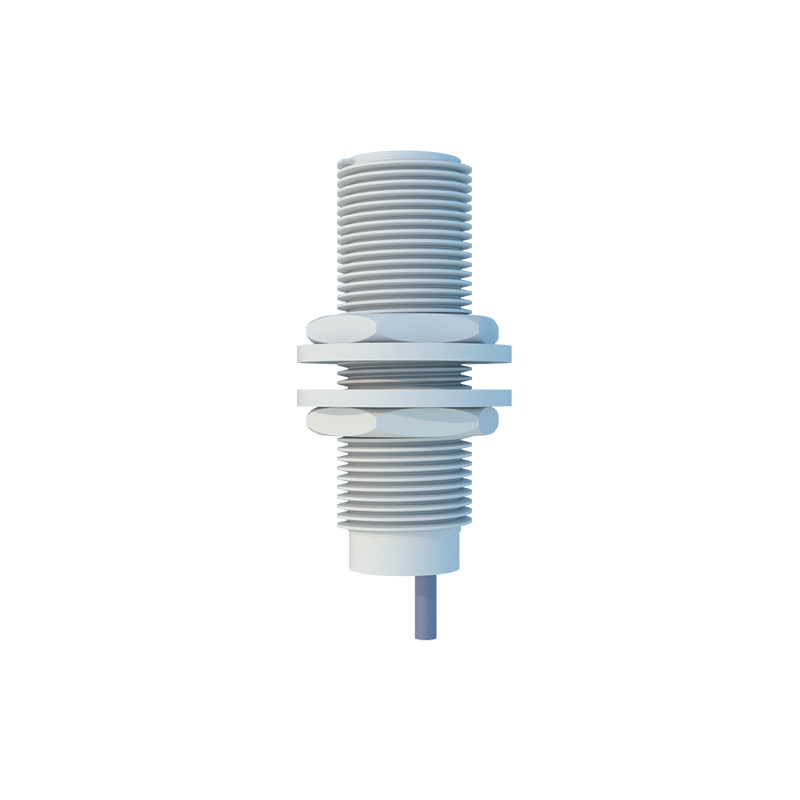
Ultrasonic Proximity Sensors utilize sound waves beyond the human hearing range. They emit high-frequency ultrasonic pulses and measure the time for the echo to return from a target. By calculating this time-of-flight, they can determine both presence and distance. These sensors excel in applications requiring longer ranges (up to several meters) and are unaffected by color, transparency, or material (except sound-absorbing materials). Common uses include bulk material level sensing, loop control in web handling, and pallet detection in warehouses. Environmental factors like temperature, air turbulence, and angled surfaces can affect accuracy and must be accounted for.
Photoelectric Sensors, while sometimes categorized separately, function as proximity devices in their diffuse (reflective) mode. They consist of an emitter (usually an LED) and a receiver. In the diffuse mode, the sensor detects light reflected directly from the target. They offer very long sensing ranges and can detect objects of almost any material, but are more susceptible to environmental conditions like dirt, fog, or highly reflective backgrounds. Contrast and background suppression models help mitigate these issues.
Selecting the right proximity sensor is a critical engineering decision. Beyond the obvious choice of sensing principle, several factors demand careful analysis. The Sensing Distance must have a suitable safety margin (typically 70-80% of the rated nominal range) to account for mechanical tolerances and temperature drift. The Target Material and Size directly influence the effective sensing distance; a smaller target or a material with lower conductivity/permittivity reduces the usable range. Environmental Conditions are paramount: Will the sensor face extreme temperatures, washdowns with high-pressure chemicals, welding spatter, or strong electromagnetic interference? IP (Ingress Protection) and NEMA ratings guide the selection of the housing. Output Configuration must match the PLC or control system input card (e.g., 3-wire DC PNP sourcing vs. NPN sinking). Response Frequency determines how fast the sensor can detect objects passing by, crucial for high-speed production lines. Finally, physical factors like Housing Style (barrel, rectangular, ring), Connection Type (pre-wired cable, quick-disconnect), and Mounting Considerations (flush or non-flush for inductive sensors) are essential for seamless integration.
From a practical standpoint, proper installation and commissioning are as important as the selection itself. Ensuring stable power supply with adequate filtering, maintaining the correct mounting distance and orientation, and avoiding sensor-to-sensor interference (especially with inductive types mounted side-by-side)