In the intricate world of industrial automation and machinery, the detection of metallic objects is a fundamental requirement. Among the myriad of sensing solutions available, micro proximity switches, specifically designed for metal sensing, have carved out a critical niche. These compact, robust, and highly reliable devices are the unsung heroes in countless applications, from precision assembly lines to complex robotic systems. This article delves into the technology, applications, and selection criteria for these indispensable components.
At their core, micro inductive proximity switches operate on the principle of electromagnetic induction. The sensor generates a high-frequency oscillating electromagnetic field from its active face. When a metallic object enters this field, eddy currents are induced on the surface of the metal. This causes a change in the oscillation amplitude within the sensor's coil, which is detected by the internal circuitry. This detection triggers a solid-state switching signal, typically through a PNP or NPN transistor output, without any physical contact with the target. This non-contact operation is key to their longevity and reliability, eliminating mechanical wear and tear.
The defining characteristic of these sensors is their miniaturized form factor. Standard cylindrical housings can be as small as M5 (5mm diameter) or M8, with flat-pack designs being even slimmer. This allows for installation in extremely tight spaces where traditional limit switches or larger sensors simply cannot fit. Despite their small size, they are engineered to withstand harsh industrial environments. Many models feature robust housings made of stainless steel (e.g., V2A, V4A) or nickel-plated brass, offering high resistance to impacts, vibrations, and chemicals. Protection ratings commonly reach IP67 or IP68, making them resistant to dust ingress and capable of withstanding temporary or prolonged immersion in water.
A critical specification for any engineer is the sensing distance, or "Sn." For standard micro inductive sensors, this typically ranges from 0.8mm to 2.5mm for M5 and M8 sizes, depending on the target material. It is crucial to note that the effective sensing range varies with the type of metal. These sensors are calibrated for mild steel (Fe360). For other metals, a correction factor must be applied: stainless steel reduces the range to approximately 0.7-0.9 times the rated distance, brass to about 0.4-0.5 times, and aluminum to just 0.3-0.4 times. This factor is paramount for accurate system design.
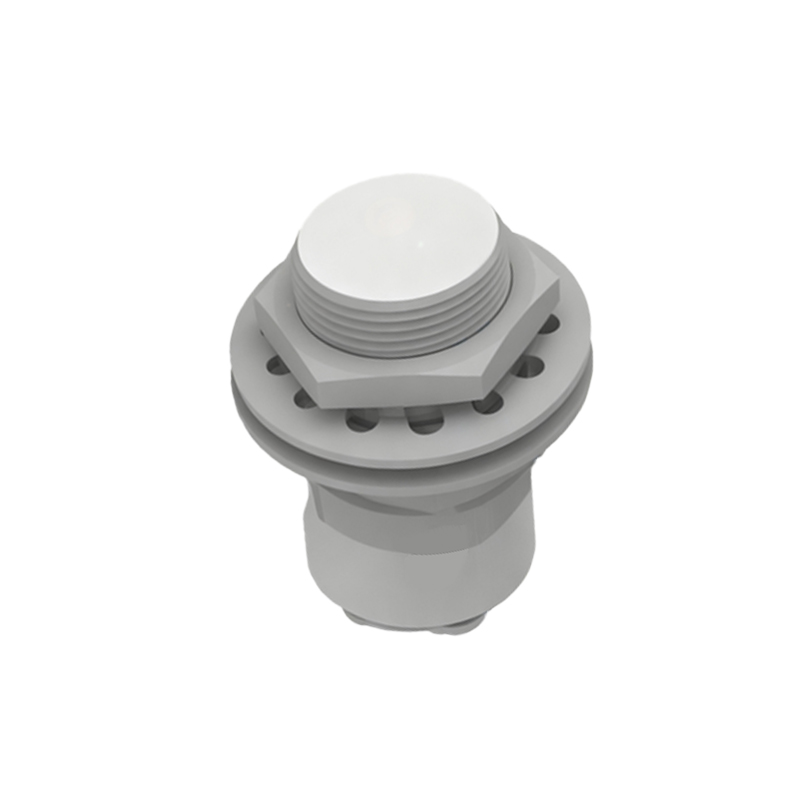
The output configuration is another vital consideration. The two primary types are 3-wire DC sensors with PNP (sourcing) or NNP (sinking) outputs. PNP sensors switch the positive voltage to the load and are prevalent in Europe and many modern PLC systems. NPN sensors switch the negative or ground side and are common in Asia. Choosing the correct type is essential for compatibility with the controller (PLC). Furthermore, many micro switches now incorporate advanced diagnostics, such as short-circuit and overload protection, and even IO-Link capability for smart sensor communication, enabling parameter setting, condition monitoring, and seamless integration into Industry 4.0 frameworks.
Application examples are vast and varied. In packaging machinery, a micro M5 sensor might detect the presence of a metal foil seal on a bottle cap. Within electronic component assembly, they verify the insertion of metal pins or connectors. In robotics, they serve as end-position detectors for grippers or arms made of aluminum or steel. CNC machine tools utilize them for tool presence detection and workpiece positioning. Their speed, often with switching frequencies up to several kHz, allows for detection of very fast-moving parts on high-speed conveyors.
Selecting the right micro proximity switch requires a systematic approach. First, define the target material and required sensing distance, applying the appropriate correction factor. Second, consider the environmental conditions: temperature range, presence of coolants or cleaning agents, and potential for physical damage. Third, determine the electrical requirements: operating voltage (commonly 10-30V DC), output type (PNP/NPN, NO/NC), and connection style (pre-wired cable or quick-disconnect). Finally, the mechanical constraints: available space will dictate the housing style (threaded barrel, rectangular) and size.
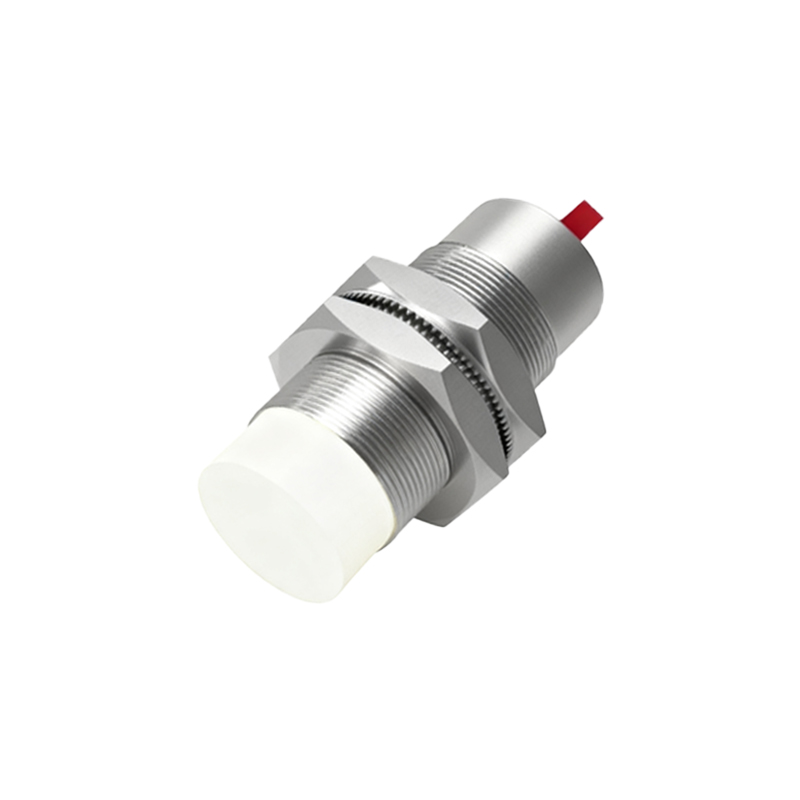
In conclusion, micro inductive proximity switches for metal detection represent a perfect blend of miniaturization, durability, and precision. Their non-contact sensing principle ensures maintenance-free operation and high cycle life, making them a cost-effective and reliable solution for modern automation challenges. As machinery continues to shrink and demands for precision grow, the role of these powerful micro-sensors will only become more central to efficient and intelligent manufacturing and control systems worldwide.