In the rapidly evolving landscape of new energy technologies—spanning electric vehicles (EVs), wind turbines, solar tracking systems, and advanced battery management—the role of precision sensing is paramount. Among the most critical components enabling this precision are proximity sensors. These non-contact detection devices are fundamental to ensuring safety, enhancing efficiency, and enabling automation in complex new energy systems. This article delves into the operational principles of key proximity sensor technologies and their specific applications within the new energy sector.
At its core, a proximity sensor detects the presence or absence of an object within a specified detection range without physical contact. This non-contact nature eliminates mechanical wear, ensures high reliability, and allows for high-speed operation. For new energy applications, which often involve high voltages, moving parts in harsh environments, and stringent safety requirements, this characteristic is indispensable. The primary operating principles employed include inductive, capacitive, and magnetic (Hall effect or reed) sensing.
Inductive proximity sensors are the workhorses in applications involving metallic targets, particularly in EV drivetrains and wind turbine gearboxes. They operate on the principle of electromagnetic induction. The sensor contains a coil driven by a high-frequency oscillator, generating an alternating electromagnetic field at its active face. When a conductive metal object enters this field, eddy currents are induced on the surface of the target. These eddy currents draw energy from the oscillator, resulting in a measurable change in the oscillation amplitude or frequency. This change is detected by the sensor's threshold circuit, which subsequently triggers a solid-state output switch. In new energy systems, inductive sensors are crucial for detecting rotor position in electric motors, monitoring gear teeth speed in wind turbines, and ensuring precise positioning of components in battery module assembly robots. Their robustness against dust, oil, and non-conductive contaminants makes them ideal for these demanding environments.
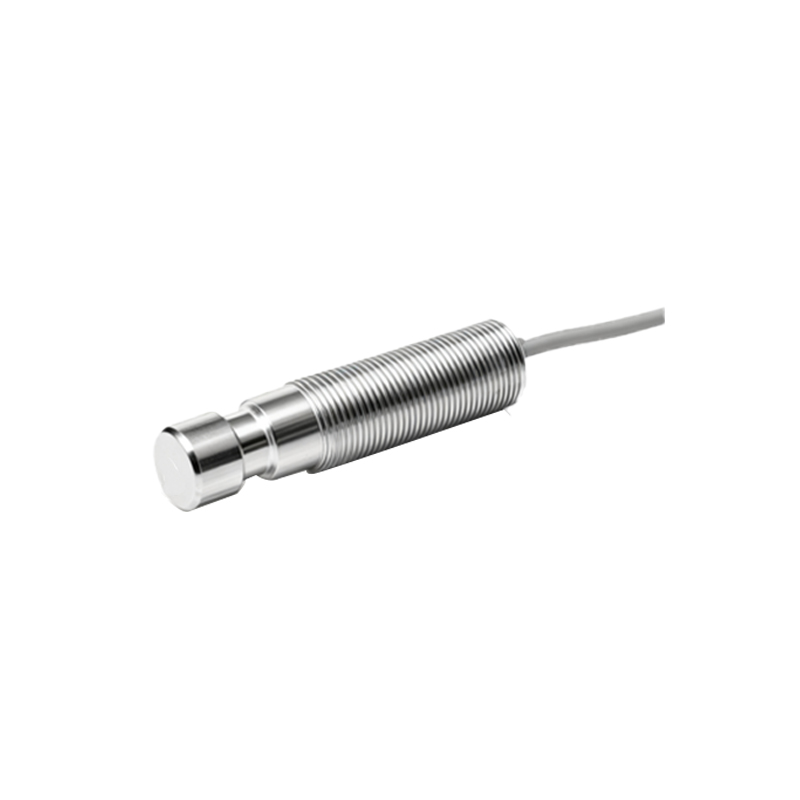
Capacitive proximity sensors, in contrast, can detect both metallic and non-metallic materials, including liquids, plastics, and glass. This versatility is leveraged in several new energy contexts. Their operation is based on the principle of capacitance change. The sensor face and the target act as two electrodes of a capacitor. The oscillator circuit is tuned so that it oscillates only in the presence of a target, which alters the dielectric constant of the surrounding medium and increases the capacitance. When the capacitance reaches a sufficient threshold, it triggers the output circuit. In solar panel manufacturing, capacitive sensors detect the presence of silicon wafers or glass substrates on conveyor belts. Within battery energy storage systems (BESS), they are used for liquid level detection in cooling systems or for monitoring the integrity of non-metallic enclosures. Their sensitivity can be adjusted, allowing them to "see through" certain non-metallic container walls to detect material levels inside.
Magnetic proximity sensors, primarily those utilizing the Hall effect or sealed reed switches, are essential for detecting the presence of permanent magnets. Hall-effect sensors generate a voltage difference (the Hall voltage) across an electrical conductor when a magnetic field is applied perpendicular to the current flow. This analog voltage is proportional to the magnetic field strength and can be converted into a digital switch signal. Reed switches consist of two ferromagnetic reeds sealed in a glass envelope, which close under the influence of a magnetic field. These sensors are pivotal in new energy for position sensing in brushless DC (BLDC) motors and generators used in EVs and wind turbines. They provide critical feedback for electronic commutation, ensuring smooth and efficient motor rotation. Furthermore, they are employed as safety interlocks on high-voltage cabinet doors in charging stations and power conversion units, ensuring power is cut before access is granted.
The integration of these sensors into new energy systems demands careful consideration of environmental challenges. Sensors in wind turbine nacelles must withstand extreme temperature fluctuations, vibration, and moisture. Sensors in EV battery packs and motor compartments face exposure to electromagnetic interference (EMI), thermal cycling, and potential exposure to coolants. Modern proximity sensors are therefore designed with high ingress protection (IP) ratings, robust housing materials like PBT or stainless steel, and advanced shielding against EMI. Analog output variants and IO-Link communication-enabled sensors are increasingly adopted, providing not just a binary on/off signal but continuous data on distance or temperature, feeding into predictive maintenance algorithms.
In conclusion, proximity sensors, through their varied operational principles of induction, capacitance, and magnetism, form an invisible yet critical nervous system within new energy infrastructure. They enable the precise, reliable, and safe operation of technologies that are driving the global energy transition. From ensuring the optimal angle of a solar panel to guaranteeing the safe isolation of a high-voltage circuit in an EV, their non-contact detection capability is a foundational technology for a sustainable energy future. As new energy systems grow more complex and intelligent, the evolution of proximity sensing—towards miniaturization, greater intelligence, and enhanced resilience—will continue in parallel.