In modern electronic design, proximity and ambient light sensors have become integral components across a wide range of devices, from smartphones and tablets to industrial automation equipment. A common question that arises among engineers and product designers is: why do these sensors often remain operational or "awake" even in complete darkness? The answer lies in their fundamental operating principles, system architecture requirements, and the evolving demands of user experience.
At its core, a proximity sensor typically uses an infrared (IR) LED to emit an invisible light beam and a photodetector to measure the reflection. Its primary function is to detect the presence or absence of a nearby object, usually without physical contact. Ambient light sensors (ALS), on the other hand, measure the intensity of visible light in the environment. In many system-on-chip (SoC) designs, these two functions are combined into a single module. The key to understanding their behavior in darkness is to separate the concept of detection capability from system power state.
Even in pitch darkness, a proximity sensor's IR LED may continue to emit pulsed signals at a very low duty cycle. This is because the system needs to be ready to detect an approaching object instantly. For example, in a smartphone, the proximity sensor must work to turn off the display during a call regardless of ambient light conditions. The sensor IC and its associated microcontroller or digital logic are designed to consume minimal power in a standby or "listening" mode. Modern sensors utilize sophisticated algorithms to distinguish between darkness and an object being very close. In total darkness, the photodetector receives virtually no reflected IR signal, which the system interprets as "no object present," but the sensing loop remains active.
From a system architecture perspective, keeping the sensor operational serves critical functions. First, it allows for immediate response. Waking a sensor from a full power-off state involves latency—time to stabilize the oscillator, reference voltages, and signal processing circuitry. In applications like touchless faucets, security systems, or industrial safety barriers, this latency is unacceptable. Second, darkness itself is a valid environmental condition that the system must report. An ambient light sensor continuously measures lux levels, and "0 lux" or an extremely low value is a legitimate data point used by the system to automatically adjust backlighting or trigger dark mode interfaces. Turning the sensor off would mean losing this information.
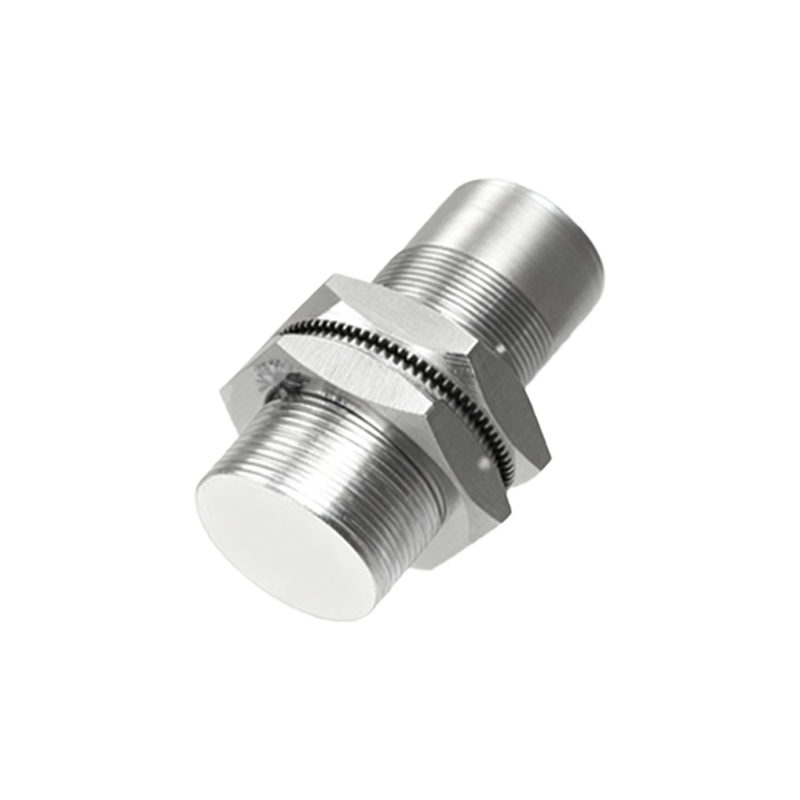
Power management is a crucial consideration. Engineers implement several strategies to minimize energy consumption during dark conditions. These include reducing the IR LED's pulse frequency and intensity, lowering the sampling rate of the analog-to-digital converter (ADC), and putting the digital interface into a low-power mode while waiting for an interrupt. Advanced sensors feature adaptive polling, where the microcontroller queries the sensor less frequently if the environment has been stable and dark for an extended period. The power draw in this state is often in the microampere range, making it negligible for most battery-powered applications.
Furthermore, the operational state in darkness is essential for calibration and baseline tracking. Sensors perform periodic self-calibration to account for component aging, temperature drift, and contamination (like dust on the lens). This process often requires the sensor to be powered and functional. A continuously updated baseline reading—what the sensor sees as "normal" darkness or absence—allows for more accurate detection thresholds and reduces false triggers.
In industrial and automotive applications, the reasons are even more pronounced. A proximity sensor on an automated guided vehicle (AGV) must function in an unlit warehouse. A light sensor in a car's dashboard controls instrument cluster brightness through tunnels at night. Deactivating these sensors would compromise functionality and safety.
In conclusion, the persistent activity of proximity and light sensors in darkness is not a design flaw but a deliberate and engineered feature. It balances the critical needs of instant availability, continuous environmental monitoring, and ultra-low power consumption. This design philosophy ensures that the devices we rely on remain responsive, intelligent, and efficient under all lighting conditions, fulfilling the seamless user experience expected in today's interconnected world.