In industrial automation and control systems, proximity sensors play a critical role in detecting the presence or absence of objects without physical contact. Among these, pressure resistant proximity sensors are specifically engineered to operate reliably in harsh environments where high pressure, hydraulic fluids, coolants, or washdown conditions are present. These sensors are essential in applications such as hydraulic cylinders, injection molding machines, marine equipment, and heavy-duty machinery. This article explores the primary types of pressure resistant proximity sensors, their working principles, and key industry applications.
The most common types of pressure resistant proximity sensors include inductive, capacitive, and magnetic types, each with distinct characteristics suited for different environmental challenges. Inductive pressure resistant proximity sensors are widely used for detecting metallic objects. They generate an electromagnetic field and detect changes caused by a metallic target entering the field. These sensors are typically housed in robust stainless steel (such as 316L or 304) or nickel-plated brass bodies with pressure ratings often exceeding 500 bar. They feature special sealing technologies, such as welded diaphragms or high-grade elastomer seals (e.g., FKM/Viton), to prevent ingress of fluids under high pressure. Common designs include cylindrical threaded barrels (e.g., M8, M12, M18, M30) or rectangular housings with integrated pressure relief channels. Key specifications include sensing distance (from 1 mm to 40 mm, depending on size), switching frequency (up to 5 kHz), and temperature range (typically -25°C to +85°C or wider). They are predominantly used in hydraulic systems, pneumatic cylinders, and machine tools where metal detection under high pressure is required.
Capacitive pressure resistant sensors can detect both metallic and non-metallic materials (plastics, glass, liquids, etc.) by measuring changes in capacitance. Their construction often involves a ceramic or PEEK sensing face and a housing rated for high pressure and chemical resistance. These sensors are ideal for level detection in pressurized tanks, presence sensing of plastic components in injection molding, or interface detection in pipelines. Like inductive types, they employ advanced sealing methods and are rated according to IP standards (e.g., IP67, IP69K) and pressure norms (e.g., DIN EN 60068-2-78). However, capacitive sensors may have shorter sensing ranges and can be influenced by environmental factors like humidity, requiring careful calibration.
Magnetic pressure resistant proximity sensors, often referred to as reed or Hall-effect sensors, are designed to detect magnetic fields, typically from a permanent magnet attached to a moving part like a piston in a hydraulic cylinder. They are extremely pressure tolerant, with some models capable of withstanding over 1000 bar. Their construction usually involves a hermetically sealed glass tube (for reed switches) or solid-state Hall-effect chip encapsulated within a metal housing. Magnetic sensors are highly reliable for position feedback in cylinders, valve position indication, and safety interlocks in high-pressure systems. They are less affected by non-magnetic contaminants like oil or dirt, making them suitable for dirty environments.
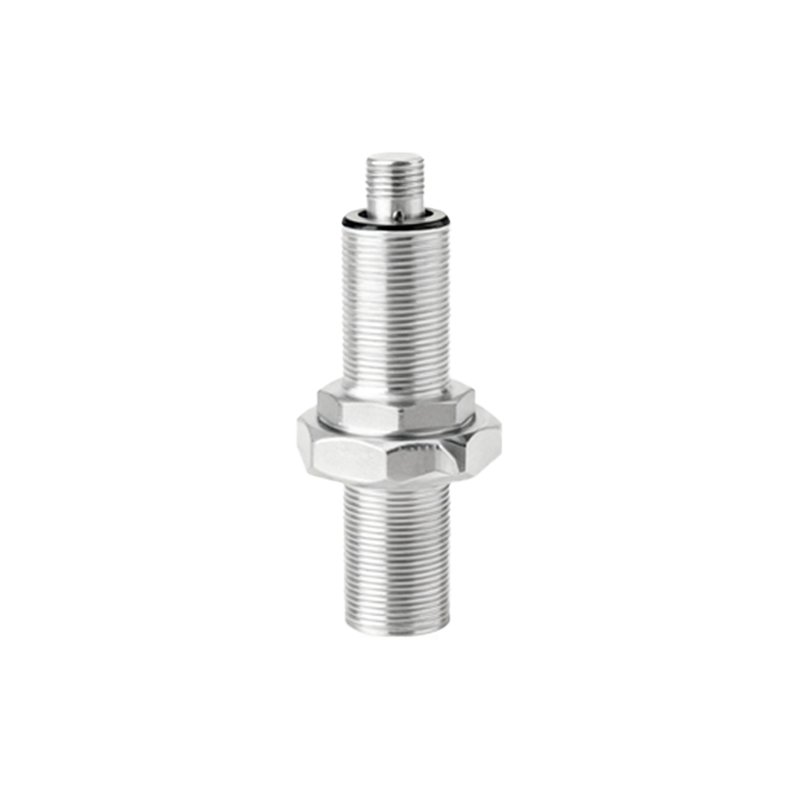
In addition to these core types, specialized variants exist, such as pressure resistant analog output sensors (providing continuous distance or pressure proportional signals) and IO-Link enabled smart sensors that offer diagnostic data and parameterization capabilities for Industry 4.0 applications. Materials and certifications are crucial: housings are often made from corrosion-resistant metals, with sensing faces from PPS, PTFE, or ceramic. Seals must comply with standards like NEMA 6P or ISO 13849 for safety. Applications span offshore drilling rigs (sensors on blowout preventers), food and beverage processing (high-pressure cleaning), chemical plants (corrosive fluid handling), and mobile hydraulics (construction equipment).
Selecting the right pressure resistant proximity sensor involves evaluating pressure rating (both static and dynamic), media compatibility, sensing distance, electrical output (PNP/NPN, NO/NC), connection type (cable or connector with M12, M8 codes), and environmental ratings. Regular maintenance, though minimal, includes checking seal integrity and cleaning sensing faces. With advancements in materials and electronics, modern pressure resistant proximity sensors offer enhanced durability, precision, and connectivity, ensuring operational safety and efficiency in demanding industrial settings.