Inductive proximity sensors are fundamental components in modern industrial automation, and the GBM8 series represents a robust and versatile solution within this category. As an electrical engineer with extensive field experience, I will provide a detailed technical overview of these sensors, focusing on their operating principles, key specifications, application scenarios, and best practices for selection and integration.
The core operating principle of the GBM8 inductive proximity sensor is based on electromagnetic induction. The sensor generates a high-frequency oscillating electromagnetic field via a coil and ferrite core assembly located at its active face. When a metallic target (typically ferrous metals like steel or iron, though non-ferrous metals can also be detected with reduced sensing distance) enters this field, eddy currents are induced on the target's surface. This causes a measurable change in the oscillation amplitude or frequency within the sensor's internal circuit. This change is detected, processed, and triggers a solid-state output switch, signaling the presence of the object without any physical contact.
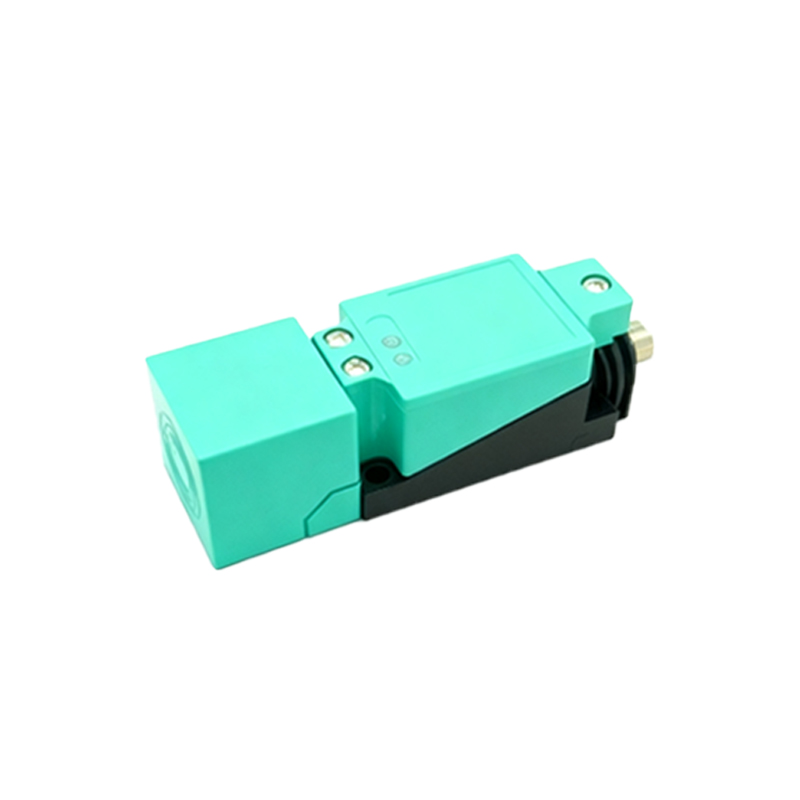
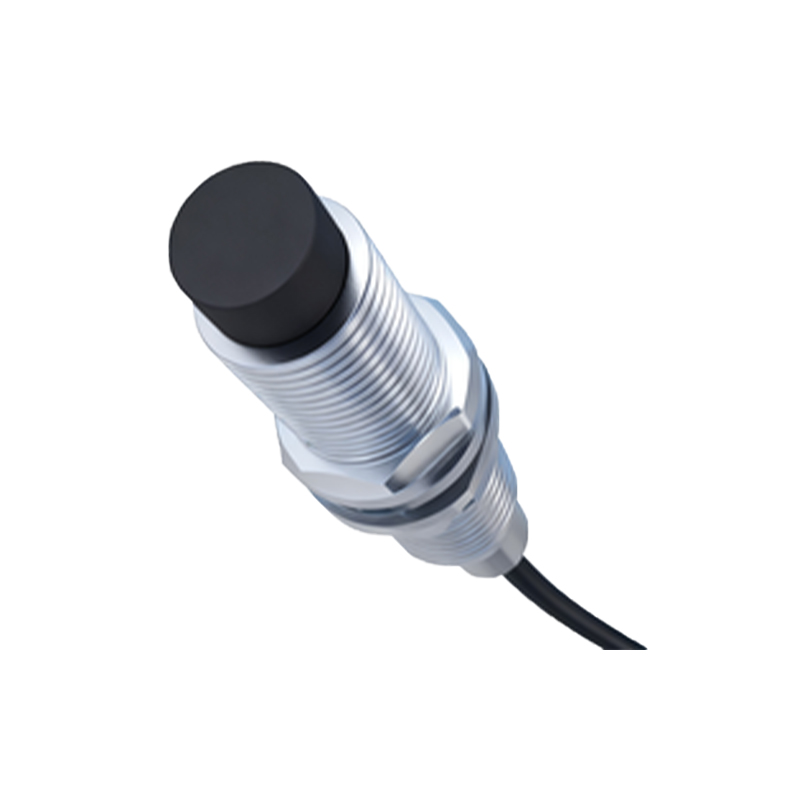
The GBM8 series is characterized by its standardized 8mm cylindrical threaded barrel housing, typically made of nickel-plated brass or stainless steel, offering excellent resistance to industrial environments, including coolants, oils, and mild chemicals. A key specification is its nominal sensing distance (Sn). For a standard GBM8 sensor, this is typically 2mm for steel targets. It is crucial to note that this is the rated operating distance under defined conditions; a safety factor (often 0.7 to 0.9 times Sn) is applied in practice to account for temperature fluctuations, voltage tolerances, and part tolerances. These sensors are available in various output configurations: NPN (sinking) or PNP (sourcing) transistor outputs, normally open (NO) or normally closed (NC) switching logic, and two-wire, three-wire, or four-wire DC versions. Common operating voltages range from 10-30V DC, with some models supporting wider ranges.
One of the primary advantages of the GBM8 is its non-contact operation, leading to virtually infinite mechanical life as there is no wear from physical actuation. It offers high switching frequencies, often up to several hundred Hertz, making it suitable for high-speed counting or position detection tasks. Furthermore, it is inherently resistant to contamination from dust, dirt, and moisture (many models feature IP67 or higher ingress protection ratings), unlike optical or mechanical limit switches.
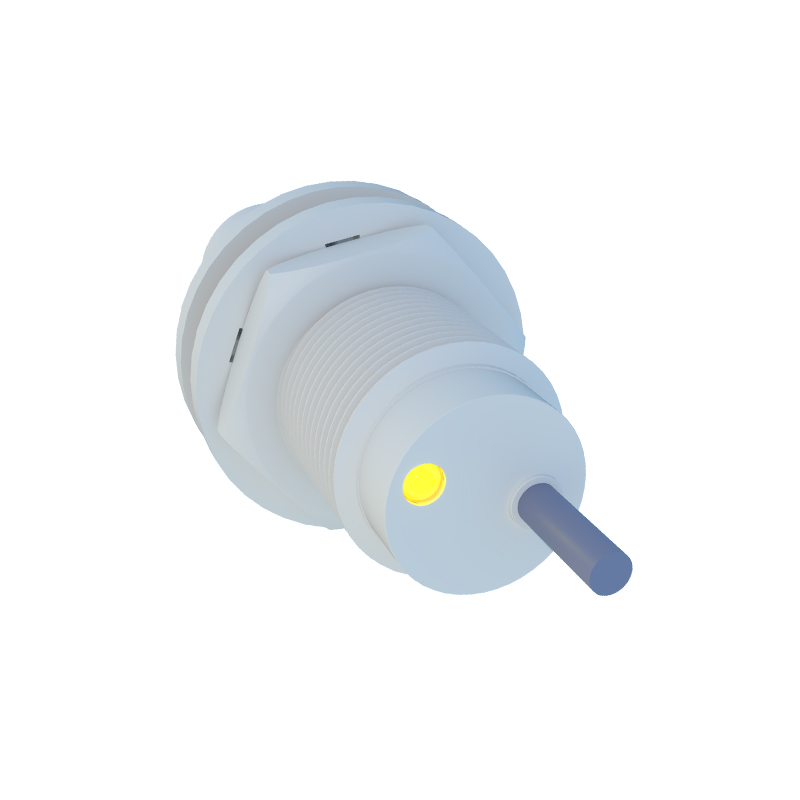
Typical industrial applications for the GBM8 sensor are numerous. They are extensively used for position sensing: detecting the presence of a metal part on a conveyor, verifying the end position of a cylinder piston (via a built-in metal trigger), or confirming the closed position of a metal door or guard. In automated machinery, they serve as limit switches for rotary or linear motion control. They are also pivotal in simple object counting systems for metallic items. A critical application is in safety interlocks, where a sensor confirms a safety guard is securely in place before machine operation can commence.
Selecting the correct GBM8 sensor for an application requires careful consideration of several parameters. First, identify the target material. If the target is mild steel, a standard sensor is sufficient. For stainless steel, aluminum, or copper, a factor-of-reduction must be applied to the sensing distance, and a "non-ferrous" or "all-metal" optimized model may be necessary. The output type must match the control system's input card (PLC, relay, etc.); using an NPN sensor with a PNP input will not function. Environmental factors are paramount: consider ambient temperature, potential for washdowns (requiring high IP ratings like IP69K), and exposure to strong electromagnetic fields from welding equipment or large motors, which may necessitate shielded models. Finally, physical mounting is key. The GBM8's threaded barrel allows for easy installation in a drilled and tapped hole, but designers must ensure adequate clearance around the sensing face (as specified in the datasheet) to prevent interference from the mounting nut or surrounding metal, which can degrade performance.
Installation and wiring must follow standard industrial practices. Always refer to the manufacturer's datasheet for wiring diagrams. For DC models, ensure correct polarity to prevent damage. Use conduit or shielded cable in electrically noisy environments, and ground the shield properly at the controller end only. Maintain the recommended sensing distance margin to account for mechanical tolerances and thermal expansion. Regular maintenance is minimal but should include periodic cleaning of the sensor face to remove metal chips, grease, or debris that could theoretically influence the electromagnetic field, though the "blind range" or "dead band" immediately in front of the face is typically immune to such buildup.
In conclusion, the GBM8 inductive proximity sensor is a workhorse of factory automation. Its reliability, durability, and simplicity make it a first-choice solution for