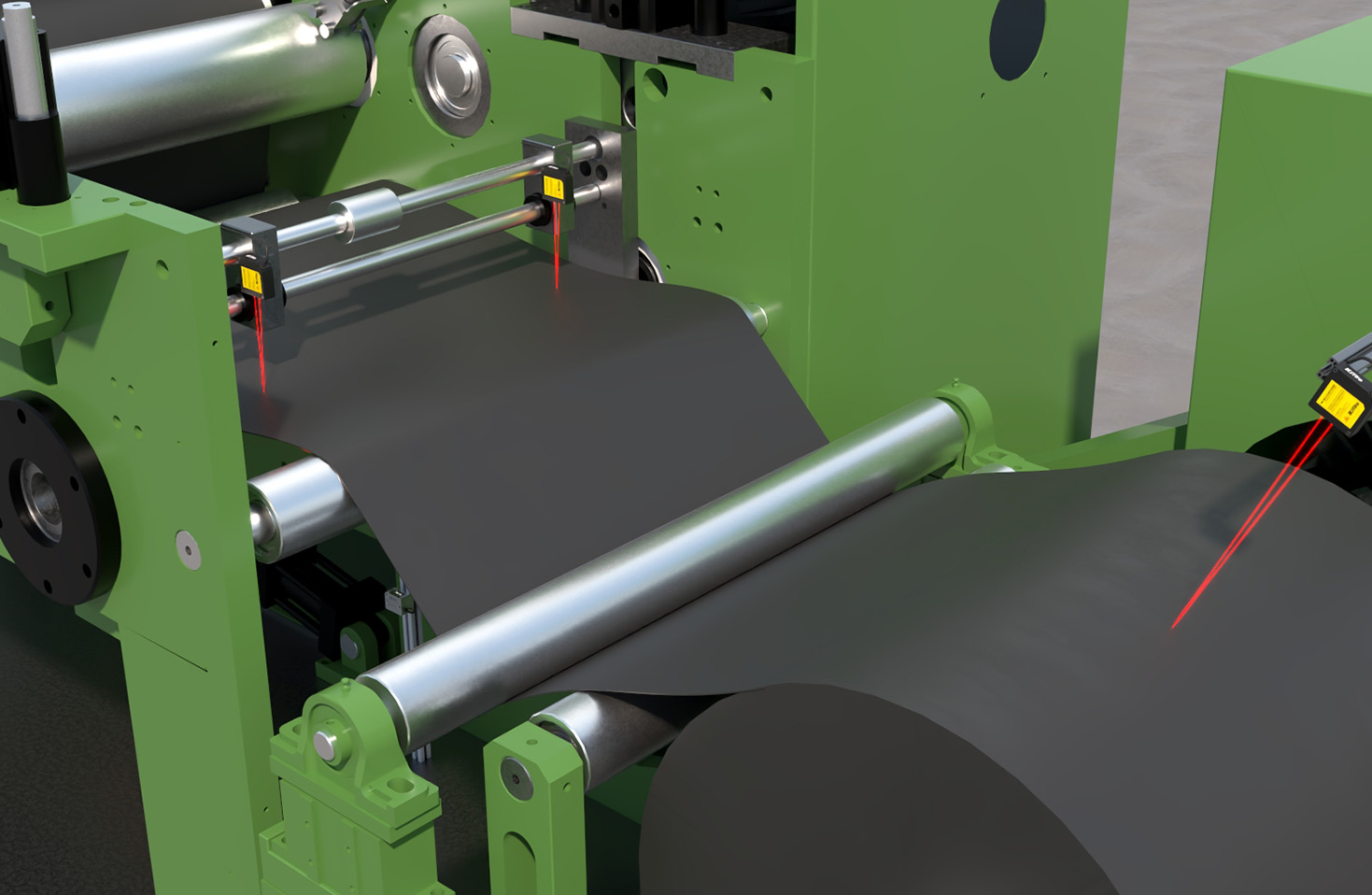
In the realm of industrial automation and precision measurement, laser displacement sensors stand as critical tools for ensuring accuracy, efficiency, and quality control. These non-contact devices utilize laser triangulation or time-of-flight principles to measure distance, thickness, height, and profile with micron-level precision. For engineers and procurement specialists navigating the vast market, selecting the right sensor is paramount. This article provides expert recommendations based on key performance parameters, application suitability, and reliability.
First, consider the fundamental specifications. Measurement range, resolution, linearity, and sampling speed are primary determinants. For high-speed production lines, such as in automotive assembly or electronics manufacturing, sensors with sampling rates exceeding 50 kHz are essential. Models like the Keyence LK-H Series or the Micro-Epsilon optoNCDT 2300 offer exceptional speed and stability. For applications requiring sub-micron resolution, such as semiconductor wafer inspection or precision machining, the Omron ZX-L Series or the Panasonic HG-C Series deliver outstanding performance. The choice between a red laser or a blue laser is also crucial; blue lasers, with their shorter wavelength, provide superior performance on shiny or transparent surfaces, a feature prominent in the SICK DT50 Blue Line sensors.
Environmental robustness cannot be overstated. Industrial settings often involve vibration, dust, coolant, and significant temperature fluctuations. Sensors with high IP ratings (e.g., IP67, IP69K) and robust housing, like the Banner Q4X Series or the Turck Q130 series, are designed to withstand harsh conditions. Additionally, integrated thermal compensation is vital for maintaining accuracy in environments with temperature variations.
Ease of integration and software support significantly impact deployment time and cost. Modern sensors come with intuitive configuration software and support various industrial communication protocols such as Ethernet/IP, PROFINET, EtherCAT, and IO-Link. The ifm O1D series, for instance, is renowned for its simple setup via web interface and strong IO-Link functionality, facilitating seamless integration into Industry 4.0 and IIoT frameworks. Similarly, the Pepperl+Fuchs OD5000 series provides powerful diagnostic tools and flexible parameterization.

Application-specific recommendations are vital. For 3D profile scanning and surface contour measurement, multi-point or line laser sensors are necessary. The Keyence LJ-V7000 series or the Cognex DS1000 series provide excellent solutions for detailed 3D inspection. For challenging measurements on hot surfaces, such as in metal casting or glass manufacturing, specialized sensors with two-color pyrometry or specific filters, like those from Optris or LMI Technologies, are recommended.
Finally, long-term reliability and supplier support are decisive factors. Established brands typically offer comprehensive technical support, calibration services, and readily available spare parts. While initial cost is a consideration, total cost of ownership (TCO), factoring in durability, maintenance, and downtime, should guide the final decision. A sensor failing on a critical production line can incur costs far exceeding the price of the device itself.
In conclusion, there is no universal "best" laser displacement sensor. The optimal choice hinges on a meticulous analysis of the measurement task, environmental conditions, required speed and accuracy, and integration needs. Investing time in specification review and, where possible, conducting on-site trials with sample workpieces will yield the most reliable and cost-effective solution for your specific industrial application.