In the rapidly evolving landscape of industrial automation, building management, and security systems, the demand for reliable, non-contact sensing solutions has never been higher. Among the array of technologies available, Microwave Human Proximity Sensors have emerged as a sophisticated and versatile choice. Unlike traditional passive infrared (PIR) sensors or ultrasonic devices, these sensors operate by emitting low-power microwave signals and analyzing the reflected waves to detect motion and presence. This fundamental principle, based on the Doppler effect, allows them to sense even the slightest movement through various non-metallic materials such as drywall, wood, and plastics, making them exceptionally effective in complex environments.
The core technology hinges on a microwave transceiver module, typically operating in the K-band or X-band frequency ranges (e.g., 10.525 GHz, 24.125 GHz). When the emitted continuous wave encounters a moving object, its frequency shifts. This shift is meticulously processed by integrated circuitry to distinguish human presence from other environmental noise, such as moving machinery or air currents. Modern sensors incorporate advanced signal processing algorithms and adjustable sensitivity parameters, enabling engineers to fine-tune detection ranges and minimize false triggers. A significant advantage is their insensitivity to ambient factors like temperature, humidity, and light, ensuring consistent performance in challenging conditions from freezing warehouses to humid manufacturing floors.
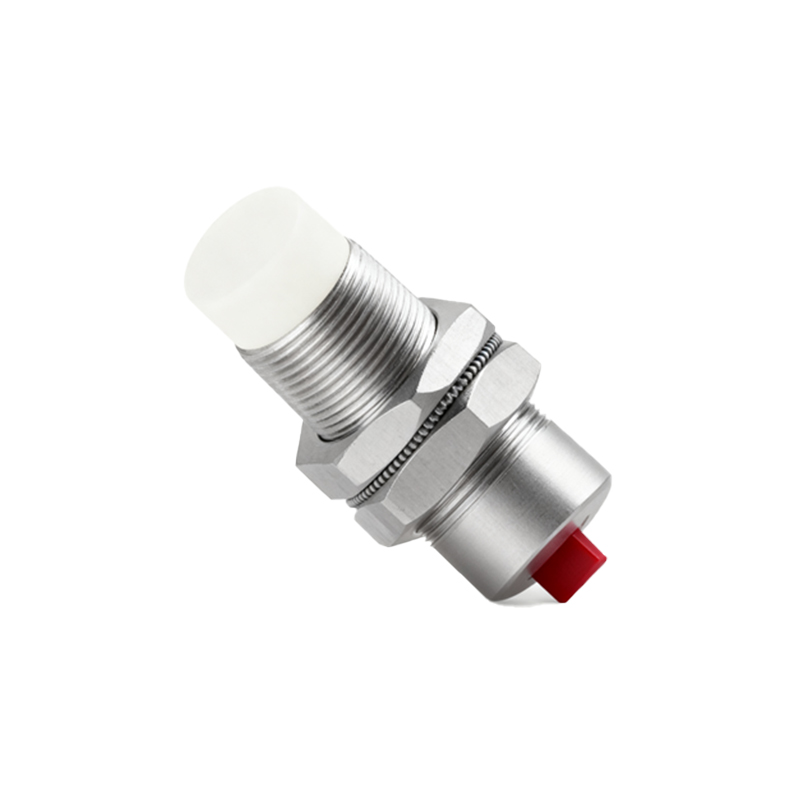
From an engineering perspective, the integration of these sensors into system designs offers remarkable flexibility. They are commonly deployed in automatic lighting control systems for offices and warehouses, where energy efficiency is paramount. Their ability to detect presence through partitions allows for intelligent zone control without requiring direct line-of-sight. In industrial safety, they serve as critical components in machinery guarding systems, instantly halting equipment when a worker enters a hazardous perimeter. Furthermore, the security industry leverages their penetration capability for intrusion detection in areas where concealment is necessary. The automotive sector is also adopting similar radar-based sensors for in-cabin monitoring and gesture control.
When specifying a microwave proximity sensor for a project, key parameters must be evaluated. The detection range, often adjustable from a few centimeters to over 15 meters, must align with the application's spatial requirements. The output signal type—whether a digital switch (NPN/PNP), relay, or analog voltage—determines its compatibility with PLCs (Programmable Logic Controllers) or building management systems. Power supply requirements, typically 12-24V DC, and housing ratings (IP67 for dust and water resistance are common for industrial use) are also critical selection criteria. Engineers must also consider the sensor's mounting orientation and the potential for mutual interference if multiple units are installed in close proximity.
Looking ahead, the convergence of microwave sensing with the Internet of Things (IoT) and artificial intelligence is paving the way for smarter systems. Future iterations are expected to feature enhanced discrimination capabilities, potentially identifying the number of people in a space or distinguishing between different types of movement. This will enable more nuanced automation in smart buildings and advanced robotics. For industry professionals, staying abreast of these developments is crucial. Microwave human proximity sensors represent more than just a component; they are a gateway to creating safer, more efficient, and intelligent automated environments. Their robust performance and adaptability ensure they will remain a cornerstone technology in the engineer's toolkit for years to come.
