Laser sensors have become integral components in numerous industrial applications, ranging from precision manufacturing and robotics to autonomous vehicles and quality control systems. Their ability to provide high-accuracy, non-contact measurements with rapid response times has driven widespread adoption. However, despite their advanced capabilities, laser sensors are not without significant limitations. A thorough understanding of these drawbacks is crucial for engineers and system designers to make informed decisions, implement appropriate safeguards, and explore complementary technologies.
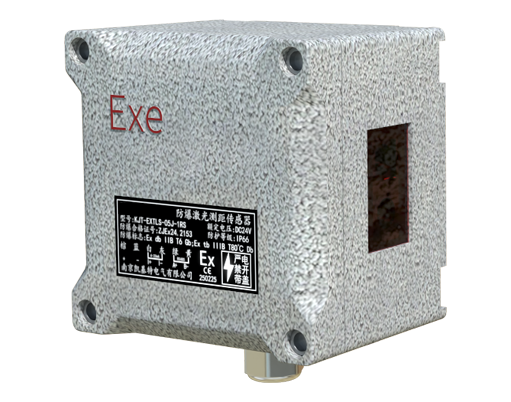
One of the most prominent limitations is their sensitivity to environmental conditions. Laser sensors, particularly those based on triangulation or time-of-flight principles, can be adversely affected by ambient light. Intense sunlight or other strong light sources can saturate the sensor's receiver, leading to measurement errors or complete signal loss. Similarly, environmental contaminants such as dust, smoke, steam, or oil mist can scatter or absorb the laser beam. This interference degrades signal quality, reduces measurement accuracy, and can cause false readings. In harsh industrial environments like foundries, welding shops, or outdoor construction sites, this poses a major reliability challenge, often necessitating protective enclosures or frequent maintenance, which increases system complexity and cost.
The nature of the target surface itself presents another critical constraint. Laser sensors perform optimally on surfaces that are opaque, matte, and uniformly colored. Shiny, reflective, or specular surfaces—common with polished metals, mirrors, or glossy finishes—can cause the laser beam to reflect away from the receiver at unpredictable angles. This results in missed measurements or significant errors. Conversely, transparent surfaces like glass or clear plastics may allow the beam to pass through entirely, failing to register a return signal. Dark, matte black, or highly absorptive materials can absorb too much of the laser's energy, weakening the return signal to a point where it falls below the sensor's detection threshold. This variability necessitates careful sensor selection and calibration for each specific material, limiting flexibility in dynamic or mixed-material applications.
While laser sensors offer high precision, their performance is inherently limited by their inherent design parameters. The concept of the "spot size" is fundamental; the laser beam is not an infinitesimally thin line but has a finite diameter. When measuring very small features, edges, or textured surfaces, this spot size can lead to averaging effects, blurring fine details and reducing effective resolution. Furthermore, all laser sensors have a specified measurement range and stand-off distance. Operating outside this optimal window drastically reduces accuracy. The "dead zone" close to the sensor, where measurements are impossible, can also be a significant constraint in space-constrained installations. Achieving sub-micron precision often requires highly specialized and expensive models, making such accuracy economically unfeasible for many applications.

Safety is a paramount and non-negotiable concern, especially with Class 3B or Class 4 lasers used in some high-power industrial sensors. These lasers can cause severe eye injury and skin burns. Their use mandates strict safety protocols, including protective eyewear, access control to beam paths, and clear warning labels. This introduces regulatory overhead, increases training requirements, and limits where such sensors can be safely deployed, particularly in collaborative workspaces where humans and robots interact closely. The need for laser safety often conflicts with the desire for flexible, open automation cells.
Finally, cost remains a significant barrier. High-performance laser sensors with robust environmental sealing, advanced filtering algorithms for difficult surfaces, and extended ranges are considerably more expensive than many alternative sensing technologies, such as ultrasonic sensors or inductive proximity sensors. The total cost of ownership extends beyond the unit price to include integration effort, calibration time, maintenance, and potential safety infrastructure. For applications where extreme precision is not justified, a laser sensor may represent an unnecessary capital expenditure.

In conclusion, while laser sensors are powerful tools, their limitations regarding environmental interference, target surface properties, inherent design constraints, safety regulations, and cost must be carefully weighed. A holistic system design approach often involves using laser sensors in conjunction with other sensing modalities—like vision systems, capacitive sensors, or ultrasonics—to create a robust and reliable solution. The future likely lies in sensor fusion, where the strengths of one technology compensate for the weaknesses of another, ensuring reliable operation across the diverse and demanding conditions of modern industry.