In modern industrial automation and quality control systems, precise speed measurement is a critical parameter for ensuring operational efficiency, safety, and product consistency. Traditional methods, such as rotary encoders or single-point optical sensors, often face limitations in accuracy, especially in environments with vibration, surface variability, or high-speed dynamics. The integration of dual laser sensors presents a sophisticated solution, offering enhanced reliability and precision for velocity measurement across diverse applications, from manufacturing conveyors to automotive testing.
The fundamental principle of dual laser sensor speed measurement relies on the laser Doppler velocimetry (LDV) technique or time-of-flight correlation. Typically, two laser beams are focused on the moving target surface at a known, fixed distance apart. Each sensor independently detects the surface features or inherent speckle patterns as the object passes. By analyzing the time delay between the correlated signals received by the two sensors, the system calculates the velocity using the formula: v = d / Δt, where 'd' is the separation distance between the laser spots, and 'Δt' is the measured time shift. This differential approach inherently compensates for common errors, such as slight variations in surface reflectivity or minor alignment shifts, which might affect single-sensor systems.
Key advantages of employing dual laser sensors include non-contact measurement, which eliminates wear and mechanical interference. The lasers can measure on a wide range of materials—metallic, plastic, textile, or even liquid surfaces—without physical contact, preserving surface integrity. Furthermore, the system provides high resolution and fast response times, capable of capturing rapid speed fluctuations up to several meters per second with sub-millisecond precision. This is vital in processes like paper production, wire drawing, or rolling mills, where instantaneous speed control directly impacts product quality.
In practical implementation, factors such as sensor alignment, environmental conditions (e.g., ambient light, dust, or temperature), and signal processing algorithms play crucial roles. Modern dual laser systems often incorporate integrated microprocessors for real-time data analysis, filtering out noise and providing analog or digital output compatible with PLCs (Programmable Logic Controllers) or SCADA (Supervisory Control and Data Acquisition) systems. Calibration is straightforward, typically involving a one-time setup to define the exact distance between laser points.
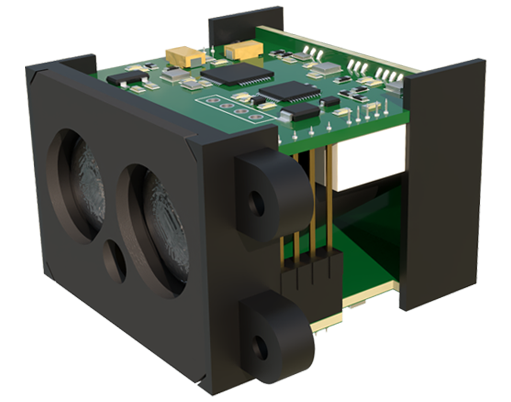
Applications span numerous industries. In printing, dual lasers monitor web speed to prevent misregistration. In automotive, they measure tire rotation or belt drive speeds during testing. In packaging, they ensure conveyor synchronization. The technology also supports safety functions, such as overspeed detection in machinery guards.
Despite its robustness, challenges like highly transparent or specular surfaces may require sensor customization, such as using specialized wavelengths or polarization filters. Regular maintenance, including lens cleaning and verification of alignment, ensures long-term accuracy.
Looking ahead, advancements in laser diode miniaturization and AI-driven signal processing promise even greater integration of dual laser velocimetry into smart factories and IoT-enabled systems, paving the way for autonomous real-time adjustments in industrial processes. By offering a blend of accuracy, versatility, and non-intrusive operation, dual laser sensor systems stand as a cornerstone technology for modern precision speed measurement, driving efficiency and innovation in the electrical and automation engineering landscape.