In the realm of industrial automation, precision measurement is paramount. Laser distance sensors have emerged as a cornerstone technology, offering unparalleled accuracy, speed, and reliability for a vast array of applications. This report provides a detailed technical overview, examines current applications, and outlines critical selection criteria for engineers and system integrators.
Technology and Operating Principles
Laser distance sensors operate primarily on two fundamental principles: time-of-flight (ToF) and triangulation. Time-of-flight sensors calculate distance by measuring the time interval between the emission of a laser pulse and the reception of its reflection. This method is highly effective for long-range measurements, typically from several meters up to hundreds of meters, with accuracies in the millimeter to centimeter range. Common ToF technologies include pulsed ToF and phase-shift measurement, the latter offering higher precision for shorter distances.
Triangulation-based sensors, often used for shorter ranges (from a few millimeters to several meters), project a laser spot onto a target. The reflected light is focused onto a position-sensitive detector (PSD) or a CMOS/CCD array. The position of the reflected spot on the detector shifts proportionally to the target's distance, allowing for sub-micron to micron-level resolution. This method is exceptionally precise but more sensitive to the target's surface properties and angle.
Key Performance Parameters
When evaluating laser distance sensors, engineers must consider several critical parameters:
* Measuring Range: The minimum and maximum distance over which the sensor can operate reliably.
* Accuracy and Resolution: Accuracy refers to the closeness of the measurement to the true value, while resolution is the smallest detectable change in distance. High-precision applications demand careful analysis of these specs.
* Response Time/Sampling Rate: The speed at which the sensor can take and output measurements, crucial for high-speed production lines.
* Laser Class and Safety: Most industrial sensors are Class 1 or Class 2, considered eye-safe under normal operating conditions. Compliance with standards like IEC 60825-1 is mandatory.
* Environmental Robustness: Key ratings include Ingress Protection (IP) for dust and water resistance, and operational temperature range. Models with robust housings (e.g., IP67) are essential for harsh environments.
* Output Interface: Common interfaces include analog (4-20 mA, 0-10 V), digital (RS-232, RS-485), and industrial Ethernet (EtherNet/IP, PROFINET, EtherCAT) for seamless PLC integration.
Industrial Applications
The versatility of laser distance sensors drives their adoption across sectors:
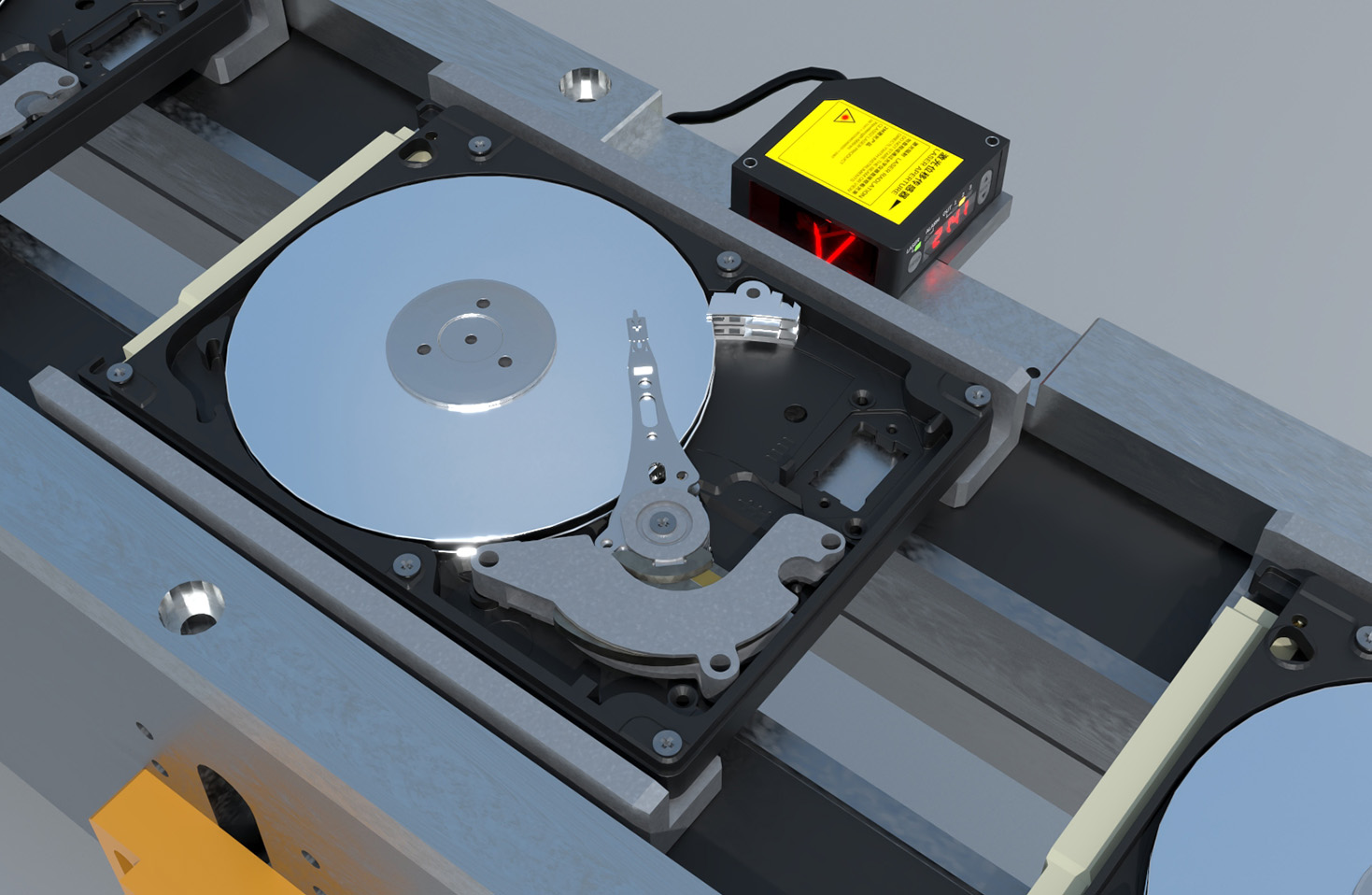
* Manufacturing & Robotics: Precise positioning of parts, robotic guidance, weld seam tracking, and dimensional inspection (e.g., thickness, width, height).
* Logistics & Warehousing: Pallet profiling, level monitoring in silos and containers, and automated guided vehicle (AGV) navigation.
* Metrology & Quality Control: 3D scanning, contour profiling, and on-line inspection systems for ensuring product tolerances.
* Construction & Civil Engineering: Monitoring structural deformation, alignment of large machinery, and volume measurement.
* Automotive: Gap and flush measurement on assembly lines, brake disc thickness monitoring, and component presence verification.
Selection Guidelines and Best Practices
Selecting the optimal sensor requires a systematic approach:
1. Define the Application: Clearly identify what needs to be measured (distance, position, thickness, profile), the required precision, and the operational speed.
2. Characterize the Target: The target's surface (color, material, reflectivity, texture) dramatically affects performance. Dark, matte, or transparent surfaces may require sensors with specialized laser wavelengths or higher output power. Always request sample testing if possible.
3. Assess the Environment: Consider ambient light (sunlight, strobe lights), dust, moisture, vibration, and temperature fluctuations. Choose a sensor with appropriate filtering, housing, and compensation algorithms.
4. Evaluate Integration Needs: Ensure the electrical interface, mounting options, and software configuration tools are compatible with the existing control architecture.
5. Consider Total Cost of Ownership: Beyond the initial purchase price, factor in calibration needs, long-term stability, maintenance requirements, and supplier support.
Future Trends
The evolution of laser distance sensing is intertwined with Industry 4.0. Key trends include the integration of sensor data directly into cloud platforms for predictive analytics, the development of multi-point LiDAR sensors for complex area scanning, and the miniaturization of components leading to more compact and cost-effective devices. Furthermore, advancements in algorithms are improving performance on difficult surfaces and in challenging environmental conditions.
In conclusion, laser distance sensors are indispensable tools for modern industrial engineering. A deep understanding of their operating principles, a careful analysis of application requirements, and a methodical selection process are essential for deploying a successful and reliable measurement solution. As technology advances, these sensors will continue to push the boundaries of precision and enable new levels of automation and quality control.