In the rapidly evolving landscape of industrial automation, precision sensing technology is paramount. Among the various solutions available, Time-of-Flight (ToF) laser sensors have emerged as a critical component for a wide range of applications. This article delves into the operational principles, key advantages, diverse applications, and essential selection criteria for ToF laser sensors, providing a comprehensive overview for engineers and system integrators.
At its core, a ToF laser sensor measures distance by calculating the time it takes for a laser pulse to travel to a target object and back to the sensor. The sensor emits a short, focused pulse of laser light. A high-speed receiver within the sensor detects the reflected light. Using the known constant speed of light, the embedded processor precisely calculates the distance based on the elapsed time. This direct time-of-flight measurement principle allows for highly accurate and fast distance readings, independent of the target's surface color, texture, or material in most conditions, a significant advantage over traditional triangulation-based sensors.

The advantages of integrating ToF laser sensors into industrial systems are substantial. First and foremost is their exceptional long-range capability. Modern industrial-grade ToF sensors can reliably measure distances from a few centimeters up to several hundred meters, depending on the model and laser class. This makes them ideal for large-scale applications like warehouse logistics, bulk material level monitoring, and vehicle detection. Secondly, they offer remarkable measurement speed and update rates. Capable of taking thousands of measurements per second, they are perfectly suited for dynamic processes such as high-speed object counting, robotic guidance, and conveyor belt monitoring where real-time data is crucial.
Another key benefit is their robustness in challenging environments. The focused laser beam is less susceptible to ambient light interference compared to other optical methods. Many models feature robust housings with high Ingress Protection (IP) ratings, making them resistant to dust, moisture, and mechanical vibration—common conditions in factories, foundries, and outdoor installations. Furthermore, their ability to provide a single-point distance value or, in more advanced models, a 3D point cloud, offers tremendous flexibility. This data can be used for simple presence detection, precise positioning, volume calculation, or even basic contour profiling.
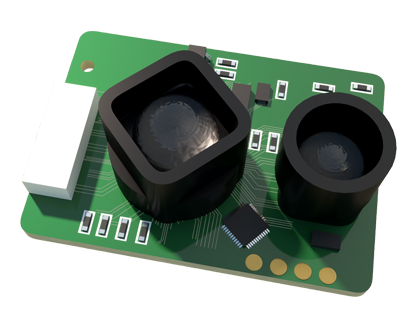
The application spectrum for ToF laser sensors is exceptionally broad. In intralogistics and warehousing, they are deployed for palletizing, dock leveler positioning, and automated guided vehicle (AGV) navigation, ensuring smooth and collision-free material flow. In the automotive industry, they facilitate robot cell safety, part positioning on assembly lines, and vehicle dimensioning. For bulk solids handling, such as in silos or hoppers, they provide continuous, non-contact level measurement of materials like grain, coal, or plastic pellets. In building automation and security, they are used for people counting, occupancy detection, and automatic door control. Even in agricultural machinery, ToF sensors assist in obstacle detection and implement control.
Selecting the right ToF laser sensor for a specific application requires careful consideration of several technical parameters. The primary specification is the *measuring range*, which must encompass the minimum and maximum distances expected in the operation. Closely related is the *measurement accuracy and repeatability*, typically stated in millimeters, which determines the precision of the system. The *update rate or frequency* must be high enough to track the fastest-moving objects in the process. The *laser class* (usually Class 1 or Class 2) is vital for safety compliance, with Class 1 being inherently safe under all conditions of normal use.
Environmental factors are equally important. The sensor's *IP rating* (e.g., IP67) confirms its resistance to dust and water ingress. The operating temperature range must match the installation environment. The type of output interface is also critical; common options include analog voltage/current (4-20 mA), discrete digital signals (PNP/NPN), and industrial communication protocols like IO-Link, PROFINET, or EtherNet/IP. IO-Link, in particular, offers advanced benefits such as parameterization, diagnostics, and condition monitoring directly from the controller. Finally, the physical characteristics like housing material (often stainless steel or ruggedized plastic), size, and mounting options must be compatible with the mechanical design of the machinery.
In conclusion, ToF laser sensors represent a versatile and powerful sensing technology that addresses the growing demands for accuracy, speed, and reliability in modern industrial automation. By understanding their fundamental working principle, recognizing their distinct advantages over other sensor types, and meticulously evaluating application requirements against key specifications, engineers can effectively leverage these sensors to enhance system performance, optimize processes, and drive innovation across countless industries. As technology advances, we can expect future generations of ToF sensors to offer even greater ranges, higher speeds, and smarter, more integrated functionalities, further solidifying their role as indispensable tools in the smart factory and beyond.