Parallel ranging laser sensors represent a significant advancement in distance measurement technology, offering high precision, speed, and reliability for various industrial applications. These sensors operate by emitting laser beams in parallel configurations, enabling simultaneous measurement of multiple points or surfaces with exceptional accuracy. Unlike traditional single-point laser sensors, parallel ranging systems can capture detailed spatial data, making them invaluable in automation, robotics, quality control, and safety monitoring.
The core principle behind parallel ranging laser sensors involves time-of-flight (ToF) or phase-shift measurement techniques. In ToF systems, the sensor calculates distance based on the time taken for a laser pulse to reflect off a target and return to the detector. Parallel configurations enhance this by using multiple emitters and receivers aligned in arrays, allowing for rapid scanning of wide areas without mechanical movement. This reduces wear and tear, increases operational lifespan, and supports real-time data acquisition—critical for dynamic environments like assembly lines or autonomous vehicles.
In industrial settings, parallel ranging laser sensors are deployed for tasks such as 3D profiling, object detection, and collision avoidance. For instance, in manufacturing, these sensors monitor product dimensions during production, ensuring compliance with tight tolerances. They can detect defects like surface irregularities or misalignments in milliseconds, minimizing waste and downtime. In logistics, parallel sensors facilitate automated guided vehicles (AGVs) by mapping surroundings and navigating complex warehouse layouts safely. Additionally, they play a role in structural monitoring, measuring deformations in bridges or buildings with sub-millimeter precision.
Key advantages of parallel ranging laser sensors include their non-contact nature, which prevents damage to sensitive materials, and immunity to ambient light interference due to advanced filtering algorithms. Modern sensors integrate with IoT platforms, enabling data analytics for predictive maintenance and process optimization. However, challenges persist, such as high initial costs and sensitivity to extreme environmental conditions like fog or dust. Ongoing research focuses on improving affordability and robustness through solid-state designs and AI-enhanced calibration.
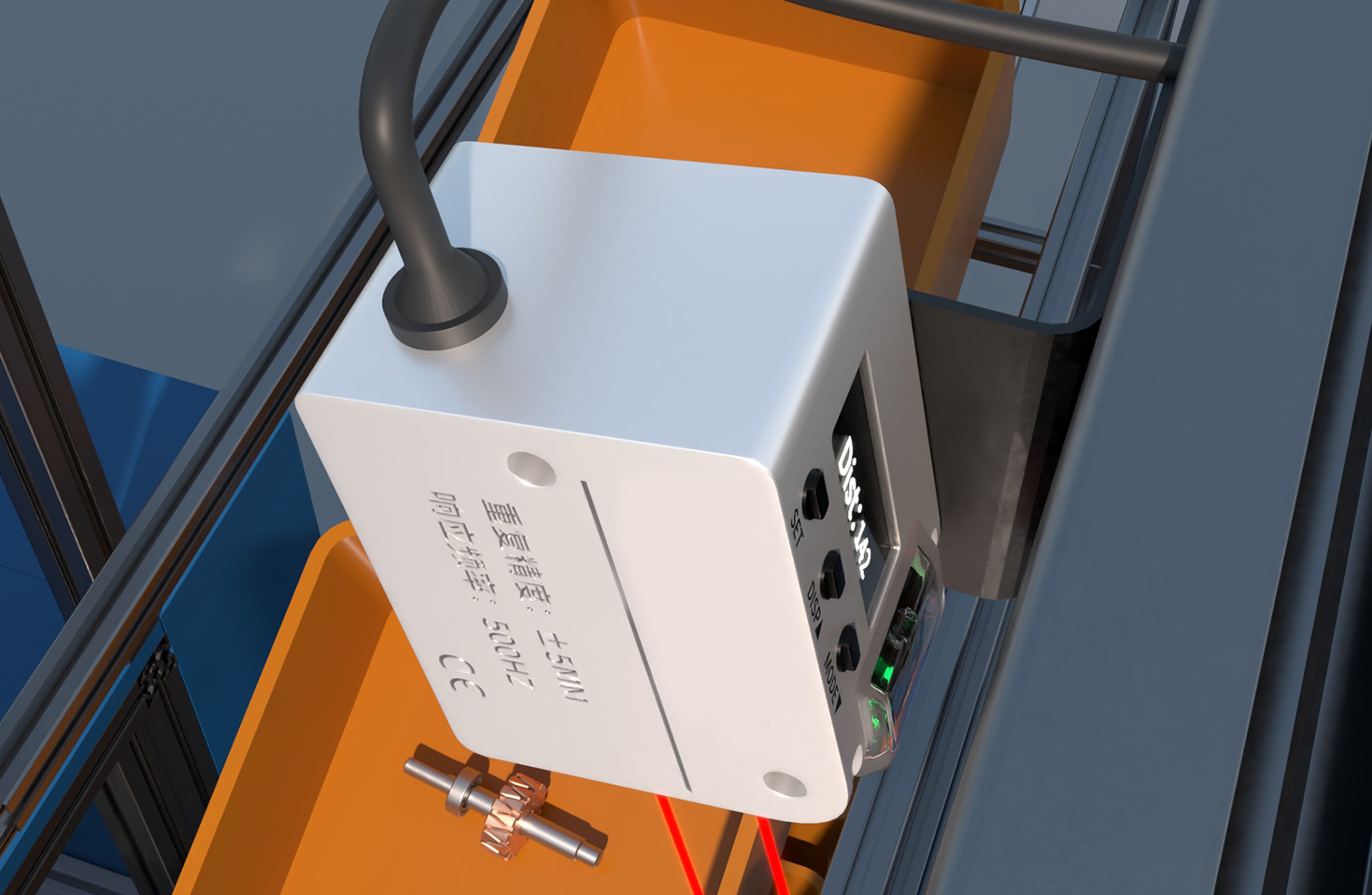
As industries embrace Industry 4.0, the demand for parallel ranging laser sensors is expected to grow. Innovations in miniaturization and energy efficiency will expand their use in sectors like aerospace, agriculture, and healthcare. By providing accurate, real-time spatial data, these sensors empower smarter decision-making and enhance operational efficiency, solidifying their role as a cornerstone of modern industrial automation.
