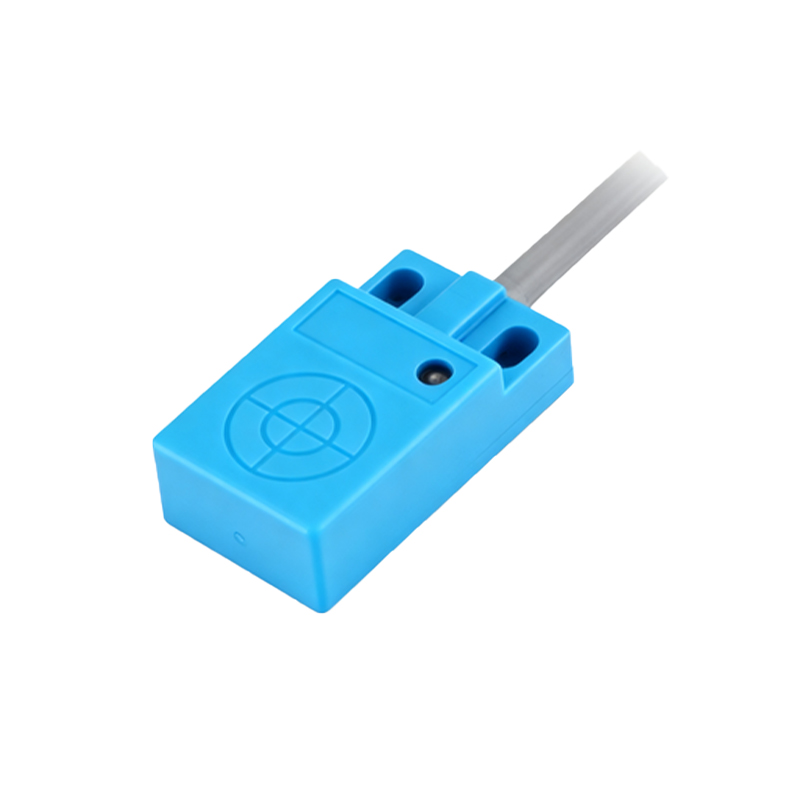
Capacitive proximity sensors are widely used in industrial automation for non-contact detection of objects, particularly non-metallic materials like plastics, glass, and liquids. Their accuracy is critical for ensuring reliable operation in applications such as level sensing, part presence verification, and assembly line control. Accuracy in capacitive sensors refers to the consistency and repeatability of detection under varying environmental and operational conditions. Several factors influence this accuracy, including sensor design, target material properties, environmental interference, and installation practices.
The core principle of capacitive sensing involves changes in capacitance between the sensor's electrode and a target object. When an object enters the sensing field, it alters the dielectric constant, leading to a measurable capacitance shift. However, this shift can be affected by external variables. For instance, humidity and temperature fluctuations can modify the dielectric properties of both the target and the surrounding medium, causing drift in sensor readings. Industrial environments often contain contaminants like dust, oil, or moisture, which may accumulate on the sensor surface, altering its sensitivity and leading to false triggers or missed detections.
Target material characteristics play a significant role in accuracy. Materials with higher dielectric constants, such as water-based substances, are easier to detect with high precision, while low-dielectric materials like dry wood or certain polymers may require careful calibration. The size, shape, and orientation of the target also impact the sensing field uniformity. For optimal accuracy, sensors should be calibrated for specific materials and distances during installation. Modern capacitive sensors often feature adjustable sensitivity settings and shielding options to minimize interference from adjacent objects or electrical noise.
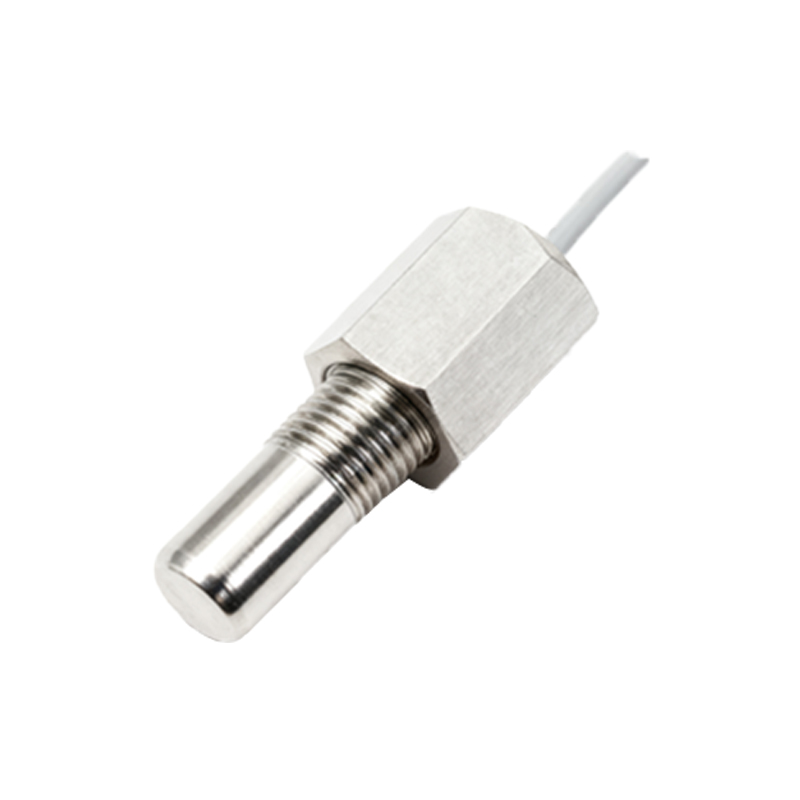
Installation and mounting are practical considerations that directly affect accuracy. Sensors should be positioned to avoid physical contact with the target and shielded from metal backgrounds or moving parts that could cause parasitic capacitance. Proper grounding is essential to reduce electromagnetic interference from nearby motors or power lines. Additionally, using sensors with temperature compensation circuits can mitigate thermal effects, especially in environments with wide temperature ranges. Regular maintenance, including cleaning the sensor face and verifying calibration, helps sustain long-term accuracy.
Advancements in sensor technology have introduced features like self-diagnostics, digital output interfaces, and programmable logic to enhance accuracy. For example, some sensors incorporate algorithms to filter out transient environmental changes, providing stable readings. In precision-critical applications, such as pharmaceutical packaging or food processing, selecting sensors with high repeatability (often specified as ±0.5% or better) is crucial. Engineers should consult datasheets for accuracy metrics, including hysteresis, linearity, and response time, to match sensor capabilities with application demands.
Ultimately, achieving high accuracy with capacitive proximity sensors requires a holistic approach. This involves selecting the right sensor model, configuring it appropriately for the target and environment, and implementing robust installation practices. By addressing factors like material variability, environmental stability, and electrical noise, industries can leverage capacitive sensing for reliable, efficient automation. As technology evolves, innovations in materials and signal processing are expected to further improve accuracy, expanding the potential applications of these versatile sensors.