Structural light laser sensors represent a cornerstone technology in modern industrial metrology and automation. Unlike traditional contact measurement tools or simple laser triangulation sensors, these systems project a precise pattern of light—typically lines, grids, or more complex coded patterns—onto a target surface. A camera, positioned at a known angle relative to the laser projector, captures the deformation of this pattern. Sophisticated algorithms then analyze this distortion to calculate highly accurate three-dimensional coordinates of the object's surface. This non-contact, high-speed, and high-resolution capability makes structural light sensors indispensable across numerous demanding sectors.
The core principle hinges on active triangulation. The projected light pattern acts as a known reference. Any variation in the height or contour of the target object causes the pattern to appear distorted from the camera's perspective. By calibrating the spatial relationship between the projector and the camera, the system can translate pixel displacements in the captured image into precise depth or height measurements. Advanced systems utilize blue laser technology for improved performance in ambient light conditions, as blue light has a shorter wavelength, resulting in less scattering and sharper pattern definition compared to traditional red lasers. This is crucial for applications requiring micron-level accuracy.
In automotive manufacturing, structural light sensors are deployed for comprehensive inline inspection of body panels, gap-and-flush measurements, and weld seam profiling. They ensure that dimensional tolerances are maintained throughout the assembly process, preventing costly downstream rework. The electronics industry relies on them for solder paste inspection (SPI), component coplanarity checks, and the precise alignment of micro-electro-mechanical systems (MEMS). By verifying the volume and shape of solder paste deposits before reflow, these sensors drastically reduce defects like bridging or insufficient solder.

Furthermore, in logistics and warehousing, these sensors empower robotic bin-picking systems. By generating a complete 3D point cloud of randomly oriented parts in a bin, the system guides a robotic arm to reliably grasp items, overcoming the limitations of traditional 2D vision. In reverse engineering and quality control, they facilitate the rapid digitalization of complex geometries for comparison against CAD models, enabling first-article inspection and tooling wear analysis.
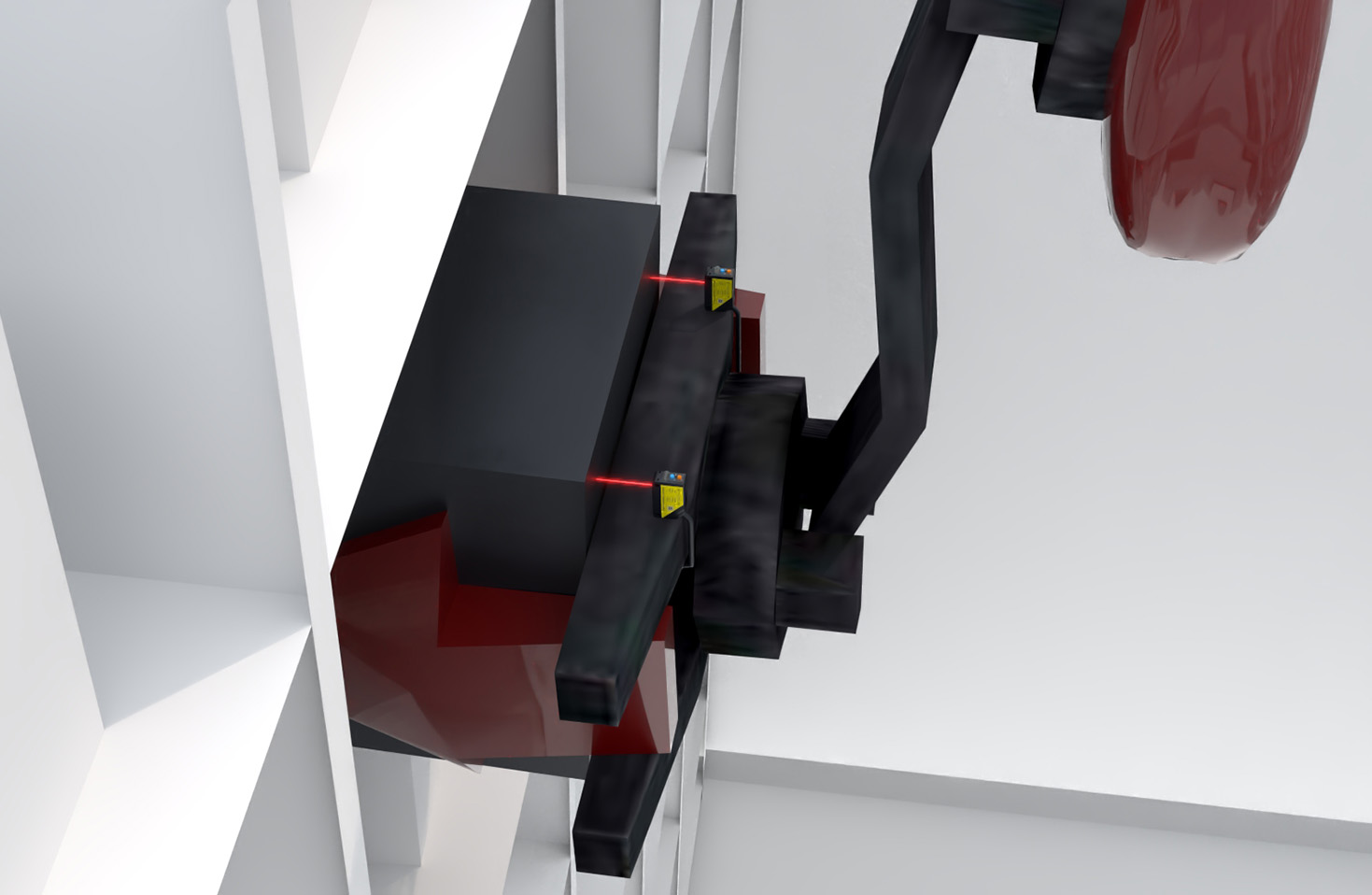
The advantages are manifold: exceptional accuracy and repeatability, fast data acquisition suitable for high-throughput production lines, and robustness in varied industrial environments. However, challenges persist. Highly reflective, transparent, or optically absorptive surfaces can disrupt the pattern projection and reflection, requiring specialized coatings or alternative sensing strategies. The computational demand for real-time 3D reconstruction is significant, though this is being mitigated by more powerful embedded processors and optimized algorithms.
Looking ahead, the integration of structural light sensing with artificial intelligence and machine learning is a key trend. AI can enhance point cloud processing, enabling the sensor not only to capture geometry but also to automatically classify defects or identify complex assemblies. The miniaturization of components is leading to more compact sensor heads, allowing integration into tighter spaces on robotic end-effectors. Another emerging trend is the fusion of structural light data with other sensor modalities, such as 2D RGB imaging or thermal imaging, to provide a multi-dimensional dataset for superior decision-making in automated systems.
In conclusion, structural light laser sensors are a transformative technology driving precision and intelligence in Industry 4.0. Their ability to deliver reliable, high-density 3D data in real-time addresses critical needs in manufacturing, logistics, and beyond. As hardware advances and software intelligence grows, their role in enabling flexible, automated, and quality-centric production environments will only expand, solidifying their status as a vital tool for engineers and automation specialists worldwide.