Backscatter laser sensors represent a sophisticated class of optoelectronic devices that have become indispensable in modern industrial automation and process control. Unlike traditional through-beam sensors that require a separate emitter and receiver, backscatter sensors operate on a single-ended principle. The core component emits a focused laser beam towards a target. A portion of this light is scattered or reflected directly back towards the sensor's integrated receiver. The sensor then analyzes the properties of this returned light—its intensity, phase, or time-of-flight—to derive critical information about the target, such as presence, distance, color, or surface characteristics.
The fundamental operating principle hinges on the interaction between laser light and matter. When the coherent, monochromatic laser beam strikes a surface, photons are scattered in various directions. The fraction that travels back along the incident path (the backscatter) is collected. For distance measurement, Time-of-Flight (ToF) is a prevalent method. The sensor precisely measures the time delay between the emission of a laser pulse and the detection of its backscattered reflection. Given the constant speed of light, this time interval is directly proportional to the distance to the target. This allows for highly accurate, non-contact measurements even over considerable ranges.
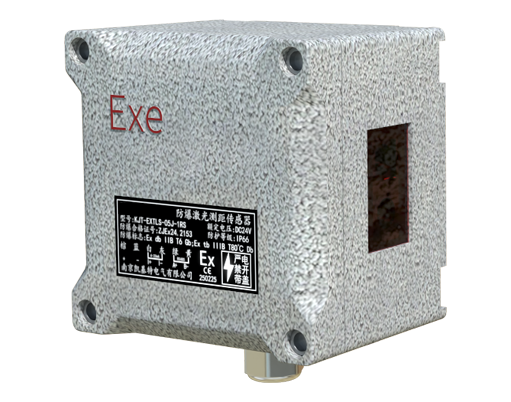
Another critical technique is based on intensity analysis. Here, the sensor evaluates the amplitude of the returned signal. This amplitude is influenced by several factors: the distance to the target (following the inverse square law), the target's reflectivity or color, and the surface finish. A highly reflective, light-colored surface close to the sensor will produce a strong backscatter signal, while a dark, absorbent, or distant target will yield a weak one. Advanced sensors can differentiate materials based on these subtle differences in reflected intensity.
The advantages of backscatter laser sensors are numerous, driving their widespread adoption. Their single-unit design simplifies installation, eliminating the precise alignment required for through-beam systems. This makes them ideal for applications with limited space or where mounting a separate receiver is impractical. They are exceptionally versatile, capable of detecting objects regardless of color, transparency, or material, though signal strength will vary. Modern sensors offer high switching frequencies and response times, making them suitable for high-speed production lines. Furthermore, their ability to perform precise distance measurements opens doors to applications far beyond simple object detection.
In industrial settings, the applications are vast and varied. A primary use is precise positioning and distance monitoring. They are deployed to control the fill level in silos or tanks, monitor the diameter of rolled materials like paper or textiles, and ensure correct positioning in robotic assembly cells. In packaging and material handling, they reliably detect the presence of products on conveyor belts, even if the products are transparent like glass bottles or have inconsistent orientations. They are also crucial in quality control, where they can identify surface defects, verify label presence, or sort objects based on color or reflectivity.
Looking forward, the evolution of backscatter laser sensors is tightly linked to broader technological trends. The integration of Industrial Internet of Things (IIoT) capabilities is a major frontier. Sensors are becoming smarter, equipped with onboard diagnostics, Ethernet connectivity, and IO-Link interfaces. This allows for remote configuration, real-time data streaming for predictive maintenance, and seamless integration into cloud-based analytics platforms. Another trend is the miniaturization of components, leading to more compact sensor designs without sacrificing performance. Furthermore, advancements in laser diode technology and signal processing algorithms are continuously pushing the boundaries of measurement resolution, accuracy, and range. The fusion of laser measurement data with other sensor inputs, like vision or inertial data, through sensor fusion techniques, promises even more robust and intelligent automation solutions.
In conclusion, backscatter laser sensors are a cornerstone of contemporary industrial sensing. Their unique operating principle, combining the precision of laser technology with the practicality of a single-ended design, provides a powerful solution for a myriad of detection and measurement challenges. As they evolve with smarter connectivity and enhanced capabilities, their role in enabling more efficient, flexible, and intelligent manufacturing processes is set to expand even further, solidifying their status as a critical tool for engineers and system integrators worldwide.