Laser sensors have become indispensable tools across a vast spectrum of industries, prized for their precision, speed, and non-contact measurement capabilities. Unlike mechanical probes or other sensing methods, lasers provide accurate data without physically touching the target object, making them ideal for delicate materials, high-speed processes, and harsh environments. This article explores some of the most commonly used laser sensor types, explaining their fundamental operating principles and typical applications.
One of the most prevalent categories is the Laser Distance Sensor. These sensors measure the interval between the sensor and a target object. They primarily operate on two principles: time-of-flight and triangulation. Time-of-flight sensors calculate distance by measuring the time it takes for a laser pulse to reflect back to the detector. They are excellent for long-range measurements, from several meters to hundreds of meters, and are widely used in surveying, forestry, and vehicle navigation systems. Triangulation sensors, on the other hand, use a laser spot, a lens, and a position-sensitive detector. The angle of the reflected light changes with distance, allowing for extremely high precision at shorter ranges, typically from a few millimeters to several meters. This makes them perfect for industrial automation tasks like verifying part dimensions, monitoring thickness, or controlling robot positioning.
Another critical type is the Laser Displacement Sensor. Often considered a subset of distance sensors, displacement sensors are specifically engineered for measuring small variations, deformation, or vibration of a surface with exceptional resolution. They are the go-to choice for quality control in manufacturing, where micron-level accuracy is required to check flatness, warp, or runout of components like semiconductor wafers, precision bearings, or automotive parts. Their high sampling speed also allows them to capture vibration patterns in machinery, enabling predictive maintenance.
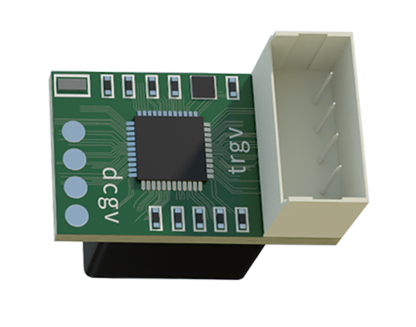
For applications requiring recognition of an object's presence or specific features, Laser Photoelectric Sensors are extensively deployed. These sensors consist of a laser emitter and a receiver. In the through-beam configuration, the object breaks the laser beam between separate emitter and receiver units, offering the longest sensing range and high reliability. In the retro-reflective mode, the sensor and reflector are paired, and the object breaks the beam reflected back. The diffuse-reflective type has the emitter and receiver in one housing, detecting light reflected directly from the target itself. Laser photoelectric sensors are fundamental in packaging, material handling, and assembly lines for tasks like counting, jam detection, and part positioning due to their small, visible spot and consistent performance.
Laser Profile Sensors (or laser line scanners) represent a more advanced category. Instead of a single point, they project a laser line onto a target. A camera then captures the deformation of this line, and sophisticated software constructs a detailed 2D or 3D profile of the object's surface. This technology is revolutionary for inspection tasks, such as verifying weld seam quality, inspecting tire treads, measuring cross-sectional dimensions of extruded materials, or performing full 3D scans for reverse engineering and robotic bin picking. They provide a rich dataset far beyond what a single-point measurement can offer.
Furthermore, Laser Micrometer Sensors are designed for non-contact measurement of outer diameters, thicknesses, and gaps with supreme accuracy. They often use a parallel laser beam curtain; the shadow cast by an object passing through this curtain is measured by a high-resolution detector array. This method is immune to surface color or reflectivity variations, making it robust for in-line inspection of wires, cables, rods, and glass tubes at high production speeds.
In specialized fields, other laser sensors play vital roles. Laser Confocal Sensors use precise optical sectioning to measure height and thickness of transparent layers, such as coatings or glass. Laser Marking Sensors are used not for measurement but for identification, reading barcodes, DataMatrix codes, or alphanumeric text directly marked on parts, even on challenging surfaces.
The selection of the appropriate laser sensor depends heavily on the specific requirement: required accuracy, measurement range, target surface properties (color, material, texture), environmental conditions (dust, light interference), and necessary response speed. Understanding the core principles behind these common types—distance, displacement, photoelectric, profile, and micrometer sensors—provides a solid foundation for choosing the right tool to enhance automation, ensure quality, and drive innovation in any technical or industrial process.