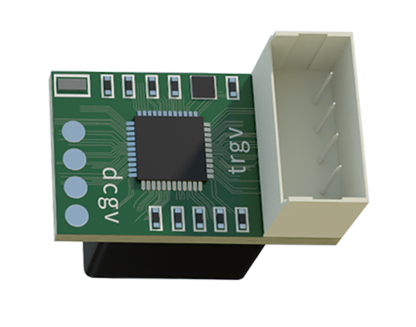
DLS laser distance sensors represent a significant advancement in precision measurement technology, widely adopted across various industrial sectors. These sensors utilize laser triangulation or time-of-flight principles to deliver non-contact, high-accuracy distance measurements, making them indispensable in automation, robotics, quality control, and logistics.
The core technology behind DLS sensors involves emitting a focused laser beam toward a target surface. The reflected light is captured by a receiver, and the distance is calculated based on the beam's angle or the time taken for the light to return. This method ensures minimal interference from environmental factors like dust, vibration, or ambient light, provided the sensor is appropriately specified. Key specifications include measuring range, resolution, repeatability, and response time. For instance, a typical DLS sensor might offer a range from a few millimeters up to several hundred meters, with resolutions down to micrometer levels in close-range models.

In manufacturing, DLS sensors are pivotal for dimensional inspection, thickness monitoring, and positioning tasks. On assembly lines, they verify component placement and detect defects without physical contact, preserving product integrity. Robotics applications leverage these sensors for obstacle detection, navigation, and precise movement control, enhancing operational safety and efficiency. Logistics and warehousing benefit from DLS technology in inventory management, palletizing, and automated guided vehicle (AGV) systems, where accurate distance data optimizes space utilization and workflow.
Selecting the right DLS sensor requires careful consideration of the operating environment. Factors such as target material, surface reflectivity, temperature fluctuations, and exposure to contaminants can impact performance. For example, highly reflective or transparent surfaces may require sensors with adjustable sensitivity or specialized filters. Industrial-grade DLS sensors often feature robust housings (IP67 or higher) to withstand harsh conditions, including moisture, chemicals, and mechanical shocks.

Integration with industrial networks like PROFINET, EtherNet/IP, or IO-Link is another critical aspect. Modern DLS sensors support digital communication protocols, enabling seamless data exchange with PLCs, HMIs, and SCADA systems. This connectivity facilitates real-time monitoring, predictive maintenance, and data analytics, contributing to Industry 4.0 initiatives. Calibration and alignment are essential during installation to ensure accuracy; many sensors include user-friendly software for configuration and diagnostics.
Despite their advantages, challenges persist. Interference from other light sources, extreme temperatures, or rapid target movement can affect readings. However, advancements in signal processing and adaptive algorithms continue to mitigate these issues. Future trends point toward miniaturization, enhanced smart features (e.g., edge computing), and integration with AI for predictive analytics.
In summary, DLS laser distance sensors offer reliable, precise measurement solutions that drive efficiency and innovation in industrial settings. By understanding their technology, applications, and selection criteria, engineers can harness their full potential to optimize processes and maintain competitive edges.