M18 proximity sensors with 3-wire configuration represent a cornerstone of modern industrial automation, offering reliable non-contact detection for a vast array of applications. These cylindrical sensors, measuring 18mm in diameter, are prized for their robust construction, consistent performance, and straightforward integration into control systems. Unlike their 2-wire counterparts, 3-wire sensors provide distinct advantages in stability and output options, making them a preferred choice for precision-driven environments.
The fundamental operating principle hinges on electromagnetic fields. Inductive-type M18 sensors generate an oscillating electromagnetic field from their sensing face. When a metallic target enters this field, it induces eddy currents that dampen the oscillation. The sensor's internal circuit detects this change and triggers a solid-state switching output. This mechanism allows for the detection of ferrous and non-ferrous metals, with sensing ranges typically up to 8mm, depending on the specific model and target material.
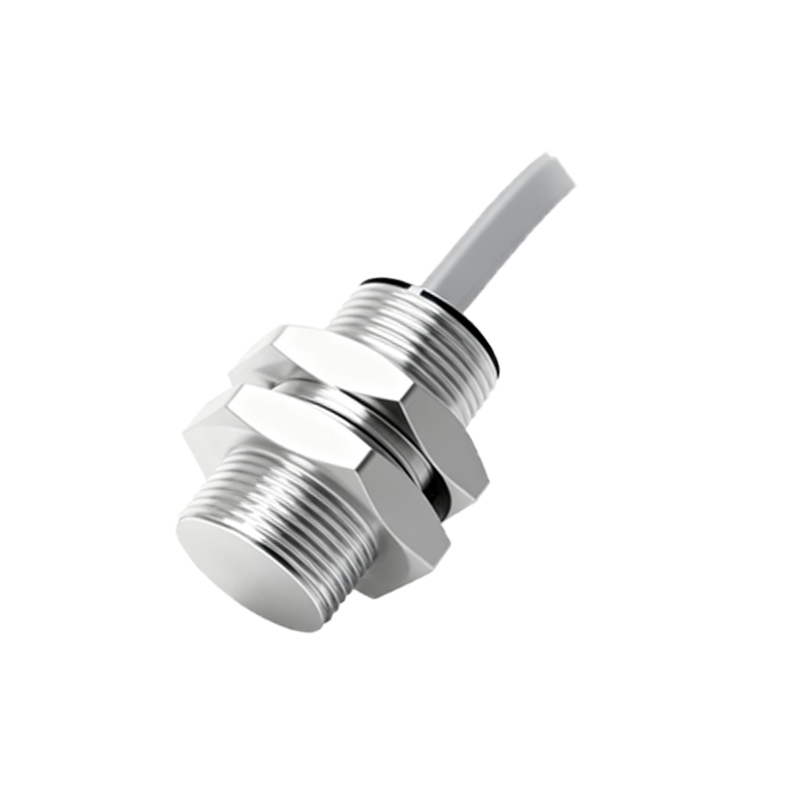
The defining feature is the three-wire DC configuration, which includes a dedicated positive supply wire (typically brown), a negative/common wire (typically blue), and a switched output wire (typically black for NPN or black/white for PNP). This separation of power and signal paths is key to its performance. The sensor's internal electronics are powered directly from the supply voltage, commonly 10-30V DC, ensuring the oscillator and amplifier circuits operate with high stability. The output is then a clean, discrete signal from a transistor switch, either sinking current to common (NPN) or sourcing current from the positive supply (PNP). This design minimizes leakage current and provides excellent immunity to electrical noise, leading to more reliable switching, especially with low-current or sensitive PLC inputs.
Selecting between NPN (sinking) and PNP (sourcing) outputs is a critical decision dictated by the control system's architecture. NPN sensors are prevalent in regions like Asia and Europe, where they connect the load between the output and the positive supply. Conversely, PNP sensors, often used in North America, connect the load between the output and common. Understanding the PLC or controller's input module specification is essential for correct compatibility. Furthermore, output types can be Normally Open (NO) or Normally Closed (NC), providing flexibility for fail-safe logic design.
Installation and application best practices are vital for optimal performance. Proper mounting in a metal or stable bracket, while maintaining the specified lateral and axial clearance from other metal objects, prevents false triggering. Environmental factors such as temperature extremes, coolant immersion, or heavy vibration must be considered, with many M18 models offering IP67 or IP68 ratings for protection against dust and water. Typical applications include position sensing on conveyor lines, part presence verification in assembly machines, end-of-travel detection on actuators, and counting metallic objects. Their speed, capable of switching frequencies up to several kilohertz, makes them suitable for high-speed counting and indexing tasks.
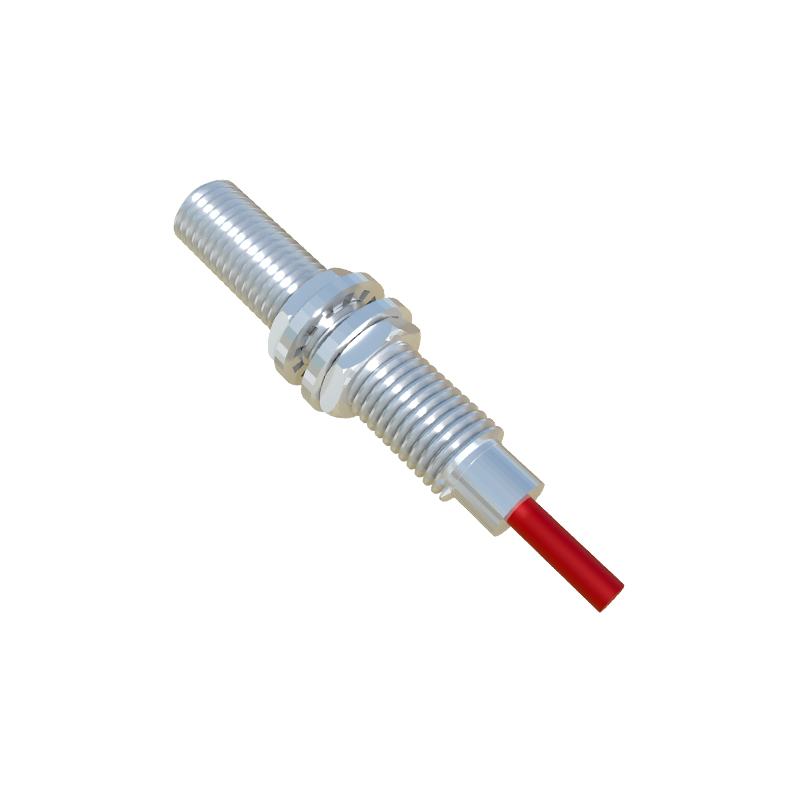
When troubleshooting, a systematic approach is recommended. First, verify the power supply voltage at the sensor terminals under load. Next, check the output state with a multimeter or a simple indicator to see if it toggles when a target is presented. Ensure the target material and size are within the sensor's specifications, as non-metallic objects or small fasteners may not be detected reliably. Finally, inspect for physical damage, accumulated metallic swarf on the sensing face, or excessive wear.
In summary, the M18 3-wire proximity sensor is a versatile and dependable workhorse in industrial sensing. Its design offers superior electrical characteristics over 2-wire versions, granting designers and maintenance personnel a reliable tool for enhancing machine automation, safety, and efficiency. By carefully matching the sensor's specifications—output type, sensing range, housing material, and environmental rating—to the application's demands, engineers can ensure long-term, trouble-free operation in the most demanding plant floor conditions.