In the realm of industrial automation and control systems, proximity sensors are indispensable components for non-contact detection of objects. Among the various configurations available, the 3-wire proximity sensor stands out as one of the most common and versatile types deployed across countless applications. This article delves into the fundamentals, wiring methodologies, operational principles, and key considerations for implementing 3-wire DC proximity sensors effectively.
At its core, a proximity sensor detects the presence or absence of an object within its sensing range without physical contact. The 3-wire DC sensor typically operates on a supply voltage ranging from 10 to 30 VDC. The "3-wire" designation refers to the three distinct conductors within its cable: one for power supply positive (often brown wire), one for power supply negative or common (often blue wire), and one for the output signal (often black wire for NPN or black/white for PNP). This configuration separates the power and output circuits, offering significant advantages over 2-wire sensors, particularly in terms of lower leakage current and more reliable switching performance.
The operation hinges on the internal electronics, usually based on inductive, capacitive, or photoelectric principles. For instance, an inductive 3-wire sensor generates an electromagnetic field. When a metallic target enters this field, it causes a change in oscillation amplitude, which is detected by the sensor's circuit. This detection triggers a solid-state switching element—either a transistor configured as NPN (sinking) or PNP (sourcing). In an NPN sensor, the output transistor connects the signal wire (load) to the negative supply line when active. Conversely, a PNP sensor connects the signal wire to the positive supply line when active. Understanding this distinction is paramount for correct integration with Programmable Logic Controllers (PLCs), relays, or other control devices.
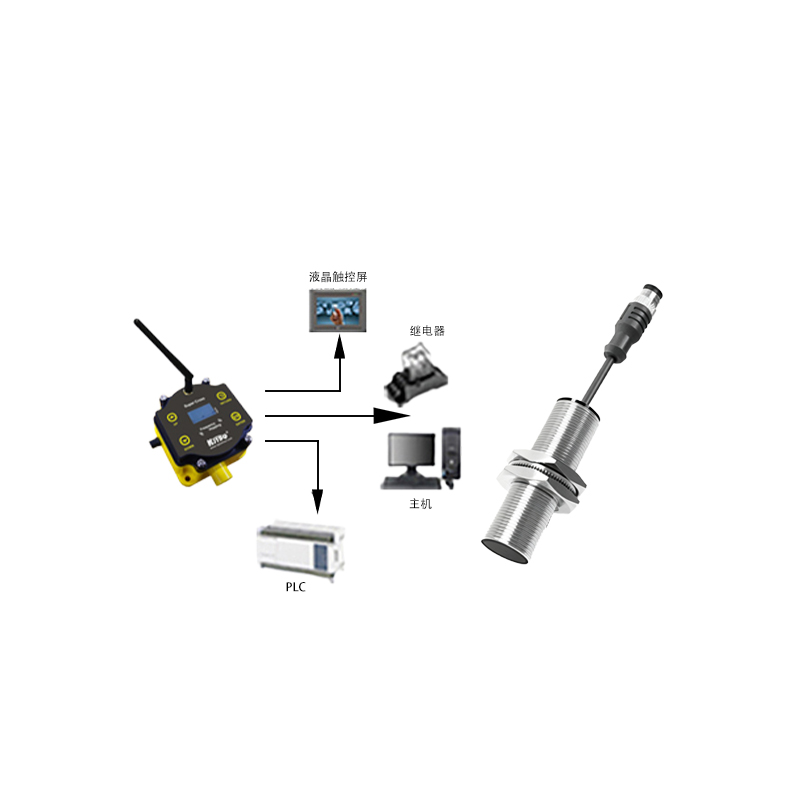
Wiring a 3-wire sensor is a systematic process. First, ensure the power is disconnected. Connect the brown wire to the positive DC supply terminal and the blue wire to the negative DC supply terminal (0V). The choice of the third wire's connection depends entirely on the sensor's output type and the load. For a typical NPN sensor (sinking output), the black output wire is connected to one terminal of the load (e.g., a PLC input). The other terminal of that load must then be connected to the positive supply voltage. When the sensor activates, it completes the circuit by sinking current from the load to ground. For a PNP sensor (sourcing output), the output wire is connected to the load, and the load's other terminal is connected to the negative supply. The sensor sources current to the load upon activation. Incorrect wiring is a common source of malfunction, so always consult the sensor's datasheet.
Key advantages of the 3-wire design include superior performance with low-power control inputs, minimal residual current (leakage) when in the "off" state, and the ability to handle a wider range of load currents. They are less susceptible to voltage drop issues compared to 2-wire sensors. However, they do require an additional wire, which can slightly increase installation complexity and cost.
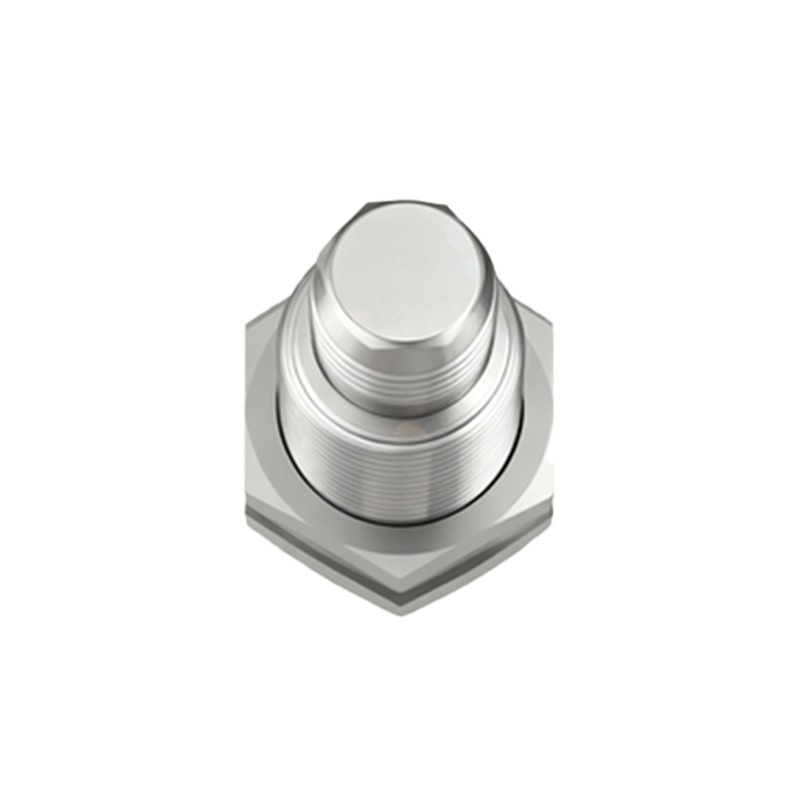
In practical industrial applications, 3-wire proximity sensors are ubiquitous. They are used for precise position detection on assembly lines, counting products on conveyors, monitoring the end position of cylinders in pneumatic systems, and ensuring safety in automated machinery by confirming the presence of guards or tools. Their robustness, fast response time, and immunity to environmental factors like dirt and oil (for suitably rated models) make them ideal for harsh manufacturing environments.
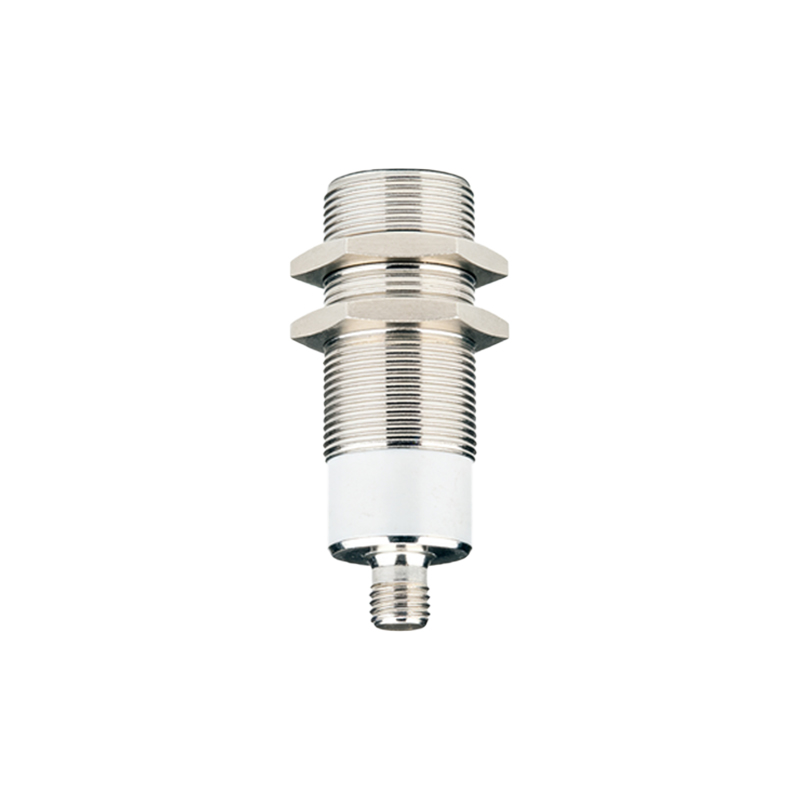
When selecting and applying a 3-wire sensor, engineers must consider several factors: the required sensing distance, the material and size of the target object, the output type (NPN/PNP) compatibility with the control system, the operating voltage, the housing material (e.g., stainless steel for washdown areas), and the required output configuration (normally open or normally closed). Proper mounting, alignment, and environmental protection are also crucial for long-term reliability.
In conclusion, the 3-wire proximity sensor is a fundamental building block in modern industrial control. Its straightforward yet effective design provides a reliable interface between the physical world and digital control systems. A solid grasp of its wiring conventions, operational modes, and application nuances empowers engineers and technicians to design, troubleshoot, and maintain automated systems with greater confidence and efficiency, ensuring seamless and productive operations on the factory floor.