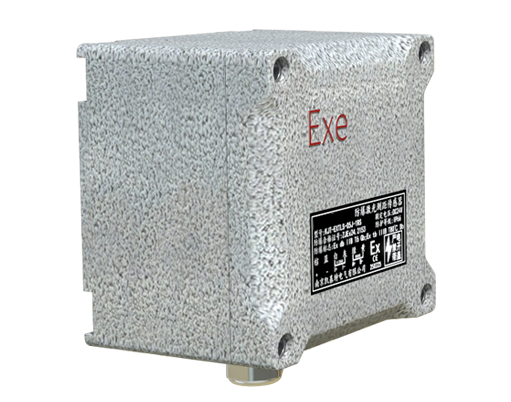
Laser displacement sensors, also known as laser triangulation sensors, are pivotal components in modern industrial automation and quality control systems. These devices operate on the principle of optical triangulation to measure distance, height, thickness, and position with exceptional accuracy and speed. A typical sensor consists of a laser diode that projects a visible or infrared spot onto a target surface. The reflected light is then focused onto a position-sensitive detector, such as a CCD or CMOS array. By calculating the angle of the reflected beam, the sensor's internal processor determines the precise distance to the target. This non-contact measurement method is ideal for applications involving delicate, hot, or fast-moving objects where physical probes would be impractical or damaging.
The versatility of laser displacement sensors is demonstrated across numerous industries. In automotive manufacturing, they ensure precise gap and flush measurements between body panels. In electronics, they verify component placement and solder paste thickness on printed circuit boards. The semiconductor industry relies on them for wafer thickness and warpage inspection. Furthermore, in metal processing, these sensors monitor material thickness and surface profile during rolling and coating processes. Key performance parameters include measuring range, resolution, linearity, spot size, and sampling rate. For instance, a high-resolution sensor might offer sub-micron accuracy, while a long-range model could measure distances up to several meters. The choice between a red laser and a blue laser depends on the application; blue lasers, with their shorter wavelength, often perform better on organic materials or shiny surfaces by reducing dispersion and improving focus.
Integration into automated systems is streamlined through various analog and digital outputs, such as 4-20 mA, 0-10 V, Ethernet/IP, PROFINET, or RS-232. This allows for real-time data transmission to PLCs (Programmable Logic Controllers) and SCADA (Supervisory Control and Data Acquisition) systems for immediate process adjustment. Environmental factors like ambient light, dust, steam, and target surface characteristics (color, reflectivity, texture) can influence performance. Manufacturers address these challenges with advanced features: automatic exposure control adjusts laser power for different surfaces, and peak-hold algorithms select the optimal reflection from transparent or multi-layered materials. Regular calibration against certified reference standards is essential to maintain long-term accuracy and traceability.
Recent advancements focus on enhancing robustness and intelligence. CMOS technology has improved detection speed and resistance to ambient light interference. Some sensors now incorporate integrated logic and analysis functions, enabling in-sensor decision-making for pass/fail judgments, reducing the computational load on central controllers. The development of confocal chromatic sensors offers another high-precision variant, using white light to measure even transparent films and liquids. As Industry 4.0 evolves, laser displacement sensors are becoming integral nodes in the Industrial Internet of Things (IIoT), providing critical data for predictive maintenance and digital twin models. Their role in ensuring product quality, optimizing production efficiency, and enabling fully automated, flexible manufacturing lines continues to expand, solidifying their status as indispensable tools in precision metrology and industrial automation.