Laser sensors have become indispensable tools across various industrial sectors due to their exceptional precision, reliability, and versatility. These devices operate by emitting a focused beam of light to detect, measure, or inspect objects with remarkable accuracy. One of the primary advantages of laser sensors is their high precision. Unlike conventional sensors, laser sensors can achieve micrometer-level resolution, making them ideal for applications requiring exact measurements, such as in semiconductor manufacturing, automotive assembly, and quality control processes. This precision ensures minimal errors, enhancing overall product quality and reducing waste.
Another significant benefit is the non-contact nature of laser sensing. Since the laser beam does not physically touch the target object, it eliminates the risk of damage or contamination. This feature is particularly valuable in industries handling delicate materials, like electronics or pharmaceuticals, where even slight contact could compromise integrity. Additionally, non-contact sensing allows for high-speed measurements, enabling real-time monitoring in dynamic environments such as conveyor belts or robotic systems. This capability boosts efficiency and supports automation initiatives.
Laser sensors also offer excellent stability and repeatability. They are less susceptible to environmental factors like temperature fluctuations, humidity, or electromagnetic interference compared to other sensor types. This robustness ensures consistent performance over time, reducing maintenance needs and downtime. For instance, in harsh industrial settings—such as metalworking or chemical plants—laser sensors maintain accuracy, contributing to safer and more reliable operations.

Versatility is another key advantage. Laser sensors can be configured for diverse tasks, including distance measurement, edge detection, thickness gauging, and surface inspection. Advanced models incorporate features like background suppression, which ignores irrelevant objects, and teach-in functions for easy calibration. This adaptability makes them suitable for complex applications, from logistics (e.g., barcode scanning) to aerospace (e.g., component alignment).
Furthermore, laser sensors are energy-efficient and compact. Their low power consumption aligns with sustainability goals, while their small size facilitates integration into tight spaces or mobile equipment. With the rise of Industry 4.0, these sensors often include connectivity options like IO-Link or Ethernet, enabling seamless data exchange with control systems for predictive analytics and smart manufacturing.
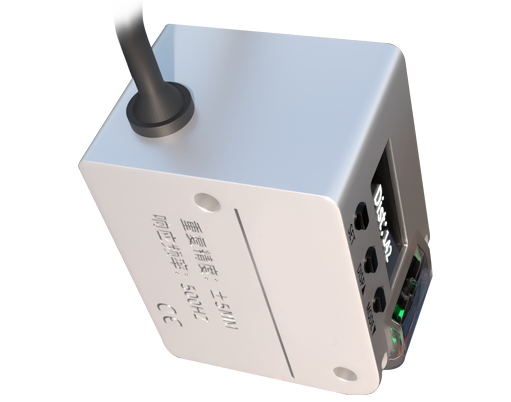
In summary, laser sensors provide unparalleled advantages in precision, non-contact operation, stability, versatility, and efficiency. As industries continue to evolve toward automation and digitalization, the adoption of laser sensors is poised to grow, driving innovation and operational excellence. By leveraging these benefits, companies can enhance productivity, ensure quality, and maintain a competitive edge in the global market.
