In the realm of industrial maintenance, process control, and research & development, the laser tachometer stands as a pivotal tool for non-contact rotational speed measurement. Its principle of operation is elegantly simple: a focused laser beam is directed at a rotating target, often equipped with a reflective marker. The sensor detects the reflected light pulses, and an internal processor calculates the rotational speed (RPM or RPS) based on the frequency of these pulses. However, to select and utilize the ideal instrument for a specific application, a deep understanding of its key technical parameters is paramount. This article delves into the critical specifications that define laser tachometer performance and capability.
The primary and most fundamental parameter is the Measurement Range, typically expressed in Revolutions Per Minute (RPM). This range defines the minimum and maximum rotational speeds the device can accurately measure. For instance, a range of 0.5 to 99,999 RPM caters to a vast array of applications, from very slow-moving shafts to high-speed turbines. It is crucial to ensure your expected operational speeds fall comfortably within this specified range, preferably not at the absolute extremes where accuracy might degrade.
Closely tied to range is Accuracy, usually denoted as a percentage of the reading (±0.05%) or a fixed value (±1 RPM). High-accuracy models are essential for calibration purposes, balancing operations, or precise process control where minute speed variations are critical. For general maintenance and troubleshooting, a standard accuracy (e.g., ±0.1%) is often sufficient. Resolution, the smallest speed change the device can display (e.g., 0.1 RPM or 1 RPM), determines the fineness of the reading. Higher resolution is beneficial for detecting subtle speed fluctuations.
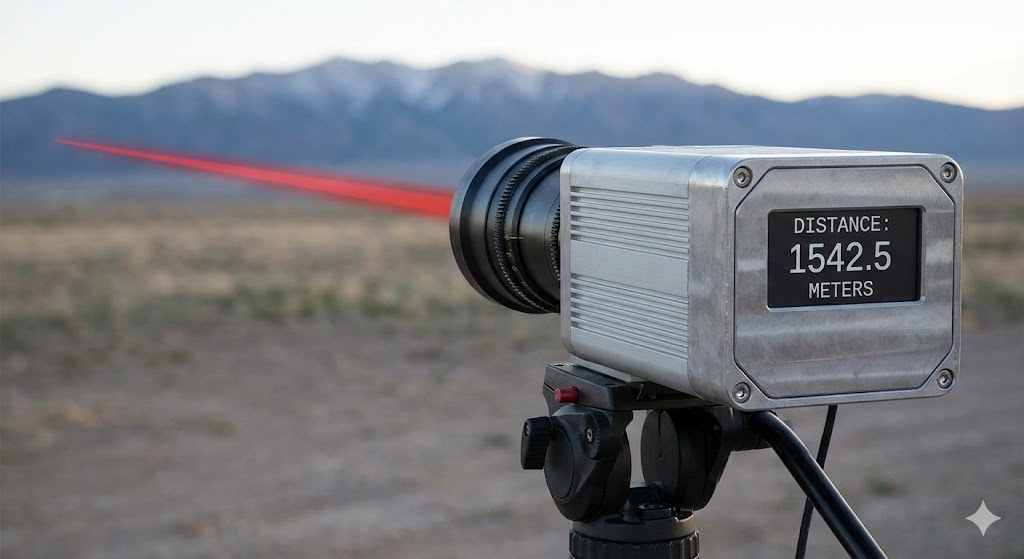
The Measuring Distance specifies the optimal operational range between the tachometer's lens and the target. This parameter is vital for safety and practicality, allowing measurements on hazardous, hot, or otherwise inaccessible machinery. Common distances range from 50mm to over 500mm. A related specification is the Laser Spot Size at a given distance. A smaller, well-defined spot allows for precise targeting on small objects or specific points on a rotating component, minimizing errors from background reflections or misalignment.
Response Time indicates how quickly the tachometer updates its display to reflect an actual speed change. A fast response time (e.g., 0.5 seconds) is necessary for monitoring dynamic speed transients, startups, or shutdowns. For steady-state measurements, a slower update rate is acceptable. Another critical feature is the Operating Mode. Beyond basic RPM measurement, advanced tachometers offer modes like continuous measurement (for real-time monitoring), maximum/minimum/average value hold, and differential measurement (comparing a measured value to a preset reference).

The device's Sampling Time defines the duration over which pulses are counted to calculate the speed. A longer sampling time averages out irregularities for a more stable reading at lower speeds, while a shorter time provides quicker updates at high speeds. Users should select the appropriate sampling time based on the application's need for stability versus responsiveness.
Laser Safety Class (according to international standards like IEC 60825-1) is a non-negotiable safety parameter. Most handheld laser tachometers are Class 2 lasers, which are safe for momentary exposure but should not be stared into directly. Users must always be aware of the laser class and adhere to all safety warnings to prevent eye injury.
Environmental specifications such as Operating Temperature Range and Ingress Protection (IP) Rating determine the instrument's robustness. An IP54 rating, for example, offers protection against dust and water splashes, making it suitable for use in typical industrial environments. For harsher conditions, a higher IP rating (like IP67) may be required.

Finally, consider Data Output and Connectivity. Modern tachometers often feature analog (4-20mA) or digital (USB, Bluetooth) outputs for data logging, integration with control systems, or real-time charting on a PC. This functionality transforms the device from a simple measurement tool into a component of a larger monitoring and analysis system.
In conclusion, selecting a laser tachometer is not merely about choosing a device that measures RPM. It is a deliberate process of matching these detailed technical parameters—measurement range, accuracy, distance, response time, and environmental ratings—to the specific demands of the application. A thorough evaluation ensures not only accurate and reliable data but also enhanced safety, operational efficiency, and longevity of the instrument itself. Always consult the manufacturer's detailed datasheet and, when in doubt, seek expert advice to make an informed investment for your measurement needs.